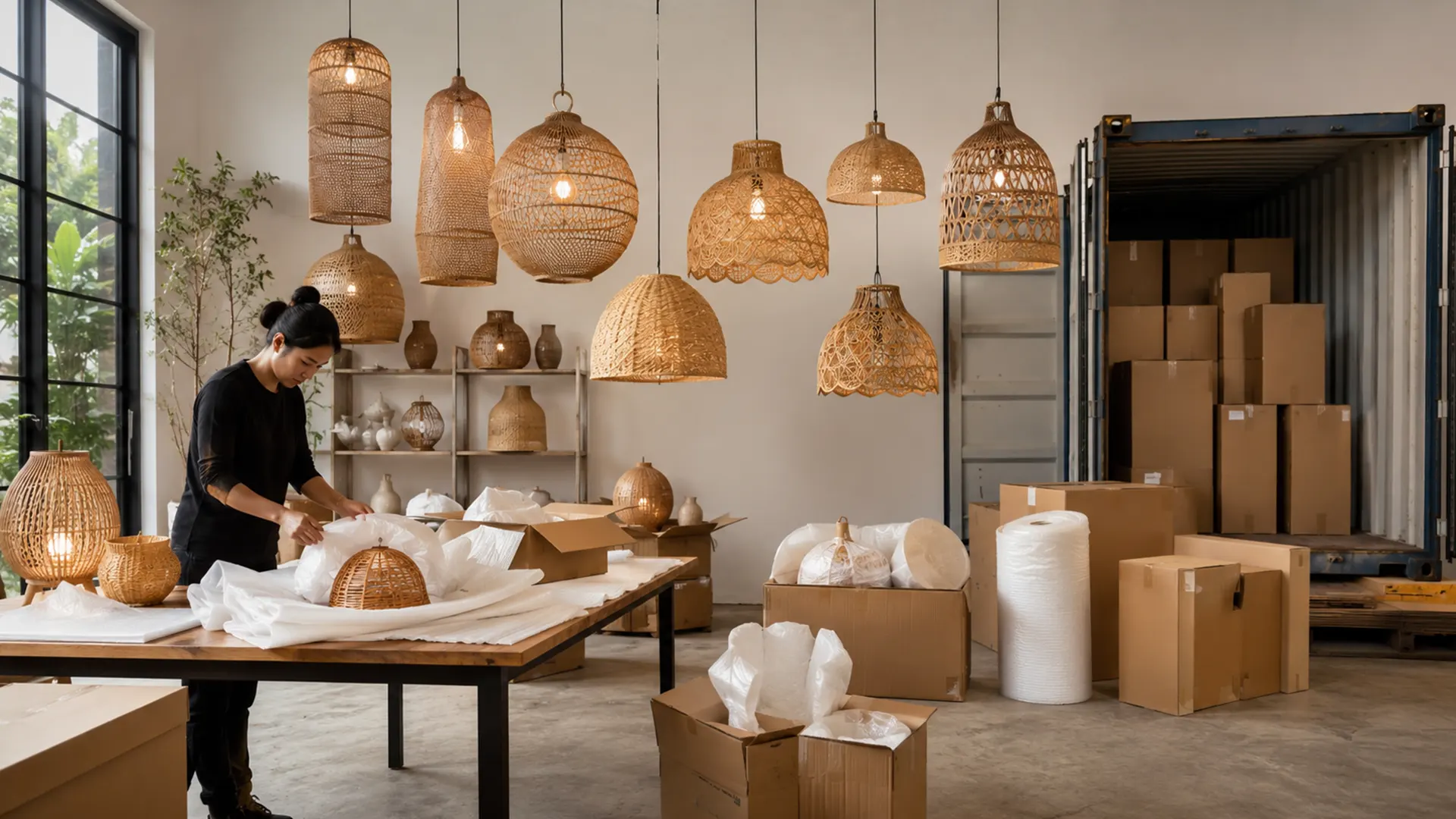
 Hướng dẫn người mua của Rattan Export: Cách Lập Kế Hoạch Xếp Container Cho Nội Thất Mây.
Một container loading plan cho đồ nội thất mây nên được xây dựng trước khi truck đến factory gate và trước khi container doors được mở. Đối với importer, wholesaler, distributor, retail chain, hospitality buyer và project procurement team, container loading không chỉ là warehouse task. Đây là một commercial planning process kết nối packed dimensions, CBM, SKU quantities, carton strength, product fragility, container type, loading sequence và final landed cost.
Rattan furniture đặc biệt nhạy cảm với container planning vì nhiều sản phẩm lightweight nhưng bulky. Chỉ một thay đổi nhỏ trong carton dimensions, nesting efficiency hoặc knock-down construction cũng có thể thay đổi đáng kể number of saleable units fit trong 20ft, 40ft hoặc 40HC. Buyer vì vậy nên evaluate container utilization cùng lúc với product price, packaging và quality.
Hướng dẫn này giải thích cách xây dựng practical container loading plan cho rattan, bamboo và natural-fibre furniture, bao gồm single-SKU containers, mixed-container orders, packed CBM calculations, loading maps, weight distribution, moisture control và final loading verification.
Bắt Đầu Với Final Packed Dimensions, Không Phải Product Dimensions
Rule quan trọng nhất rất đơn giản: container planning phải dựa trên final packed dimensions, không phải bare dimensions của furniture.
Một chair có thể có một size trong showroom nhưng chiếm volume rất khác sau:
- Protective wrapping
- Leg protection
- Corner protection
- Carton clearance
- Nesting
- KD disassembly
- Hardware packaging
- Cushion placement
Dùng product dimensions thay vì packed dimensions có thể tạo unrealistic loading estimates và misleading freight calculations.
Buyer sourcing từ Việt Nam nên tích hợp final packing data vào quy trình sourcing và production furniture tại Việt Nam rộng hơn thay vì coi container planning là last-minute logistics task.
Step 1: Tạo SKU Loading Sheet
Tạo một dòng cho mỗi SKU trong order. Tối thiểu nên record:
- SKU hoặc model number
- Product description
- Order quantity
- Units per carton
- Carton length
- Carton width
- Carton height
- Gross weight per carton
- Net weight per carton khi required
- CBM per carton
- CBM per saleable unit
- Total cartons
- Total CBM by SKU
Bảng này là foundation của loading plan.
Step 2: Tính CBM Đúng
Với rectangular carton:
CBM = Length × Width × Height tính bằng mét
Ví dụ illustrative, carton 1.00 m × 0.60 m × 0.50 m:
CBM = 1.00 × 0.60 × 0.50 = 0.30 m³
Nếu carton có hai saleable chairs, illustrative packed CBM per chair là 0.15 m³.
Các figures này chỉ là examples. Actual rattan furniture CBM thay đổi đáng kể theo product dimensions, packed dimensions, nesting, KD construction, units per carton và protective packaging.
Step 3: Tính Total CBM Theo SKU
Total SKU CBM = CBM per carton × number of cartons
Sau đó cộng tất cả SKUs để estimate total packed volume.
Theoretical cargo CBM không bằng physically usable container space. Carton shapes, loading gaps, door dimensions, internal projections, stacking restrictions và fragility đều làm practical utilization thấp hơn.
Không Plan Container Ở 100% Theoretical Volume
Importer không nên assume mọi cubic meter trong container đều usable cho furniture.
Actual utilization phụ thuộc:
- Carton geometry
- Stacking compatibility
- Fragility
- Weight distribution
- Loading access
- Mixed carton sizes
- Door clearance
- Protective gaps
Loading plan realistic nên được physically validated hoặc dùng reliable loading software với final carton dimensions.
Step 4: Chọn 20ft, 40ft Hoặc 40HC
Best container phụ thuộc actual order structure.
20ft có thể phù hợp:
- Trial orders
- Smaller projects
- Higher-value products với lower volume
- Buyer testing new supplier
40ft hoặc 40HC có thể phù hợp hơn khi:
- Order đủ volume
- Products lightweight nhưng bulky
- Freight allocation per unit tốt hơn với larger equipment
- Buyer cần wider SKU mix
40HC đặc biệt useful cho bulky furniture vì additional internal height có thể tạo usable volume, nhưng chỉ khi carton stacking cho phép.
Container decision nên là một phần của quy trình export, freight và container planning tổng thể.
Step 5: Xác Định Single-SKU Hay Mixed-SKU
Single-SKU container đơn giản hơn vì cartons thường repeat size.
Mixed containers phức tạp hơn vì buyer phải balance:
- Commercial demand by SKU
- MOQ per SKU
- Carton dimensions
- Total CBM
- Fragility
- Weight
- Loading sequence
- Destination unloading needs
Objective không chỉ là fill mọi visible gap mà là load đúng product mix safely và commercially.
Step 6: Ưu Tiên SKU Mix
| Priority | Meaning | Planning Approach |
|---|---|---|
| A | Core seller hoặc essential project item | Protect target quantity first |
| B | Important supporting SKU | Adjust moderately if needed |
| C | Optional hoặc filler SKU | Use to optimize remaining volume |
Điều này tránh việc reduce high-priority items chỉ để fit low-priority bulky cartons.
Step 7: Xác Định Cartons Stack Safely Được
- Stackable
- Limited stacking
- Top-load only
- Fragile
- Do not place heavy cartons above
Vertical load nên transfer qua strong structural areas hơn là delicate woven panels.
Step 8: Phân Bổ Weight Đồng Đều
Rattan furniture thường volume-limited nhưng mixed containers có thể có heavy tables, cabinets, metal-frame products hoặc stone components.
Không nên concentrate excessive weight vào một small area. Heavy cartons nên được distributed phù hợp và không crush lighter furniture.
Step 9: Load Heavy Và Strong Cartons Trước
Trong nhiều configuration, heavier và structurally stronger cartons nằm lower, lighter và fragile cartons nằm above.
Principle này không nên apply mechanically vì strong-looking carton có thể chứa fragile tabletop hoặc woven cabinet.
Step 10: Protect Fragile Woven Surfaces
- Heavy cartons không press trực tiếp vào woven panels
- Sharp carton corners không puncture adjacent packaging
- Chair arms không dùng như load-bearing support
- Decorative loops và bindings không bị compressed
Step 11: Xem Carton Orientation
Một số products có thể load theo nhiều orientation, một số phải upright. Carton marks nên identify orientation khi cần.
Step 12: Dùng Container Height, Không Chỉ Floor Area
Container utilization tốt hơn khi practical internal height được use safely.
Câu hỏi đúng không phải “còn fit được carton không?” mà là “fit được mà không tạo unacceptable compression risk không?”.
Step 13: Tạo Visual Loading Map
Loading map có thể là simple diagram hoặc software-generated plan.
- Container front và doors
- SKU blocks
- Carton orientation
- Stack height
- Heavy product zones
- Fragile product zones
- Final filler spaces
Step 14: Plan Loading Sequence
Container loading đi từ front wall về doors. Vì vậy sequence phải xác định cartons nào vào trước.
Nếu destination warehouse muốn unload một số product trước, chúng có thể đặt gần doors nếu safe.
Project shipment có thể plan theo:
- Room
- Floor
- Building zone
- Installation phase
Step 15: Dùng Filler SKUs Cẩn Thận
Small stools, side tables, accessories hoặc compact cartons có thể use leftover space hiệu quả.
Nhưng filler SKU vẫn phải commercially useful. Add unwanted inventory chỉ để container nhìn full có thể tốn nhiều hơn tiết kiệm.
Step 16: Tránh Excessive Empty Voids
Large uncontrolled gaps cho cartons move trong transit, gây abrasion, crushed packaging và impact damage.
Void management không nên bằng cách force cartons vào space quá nhỏ.
Step 17: Account For Door Clearance
Plan trên paper có thể fail nếu carton không pass qua container door.
- Door height
- Door width
- Carton turning space
- Forklift hoặc manual handling access
Step 18: Verify Packing Trước Loading Day
- Actual carton dimensions
- Actual carton count
- SKU quantities
- Carton labels
- Carton condition
- Gross weights khi relevant
Nếu carton dimensions thay đổi sau quotation, recalculate plan trước loading.
Step 19: Inspect Moisture Và Carton Condition
Natural-material furniture không nên loaded chỉ vì cartons đã ready. Damp cartons, visible mold, abnormal odor hoặc improperly cured furniture cần investigate.
Moisture, packaging và finished-product checks nên thuộc quality-control và pre-shipment inspection program rộng hơn.
Step 20: Inspect Empty Container
- Container identification
- Interior cleanliness
- No obvious water ingress
- No major holes hoặc structural damage
- Floor reasonably dry
- No strong abnormal odor
- Doors operating correctly
Step 21: Supervise Actual Loading
- Correct SKU loaded
- Correct carton orientation
- Correct loading sequence
- Fragile cartons protected
- Heavy cartons không crush light furniture
- Cartons không drag hoặc throw
- Visible gaps controlled
- Final rows near doors stable
Step 22: Record Loading Photos
- Empty container condition
- First rows loaded
- Mid-loading arrangement
- Final loading condition
- Carton marks
- Container number
- Seal number
Step 23: Reconcile Final Carton Count
- Total cartons
- Total units
- Quantity by SKU
- Quantity by colour hoặc finish
- Replacement hoặc spare units
Step 24: Record Container Seal
Sau loading, seal number nên được record và match shipping documentation.
Single-SKU Loading Example
Illustrative order có một chair model packed hai units per carton sẽ đơn giản hơn vì cartons identical. Supplier có thể test nhiều stacking configurations để tìm best protection và space efficiency.
Mixed-Container Loading Example
Một illustrative mixed order có thể gồm dining chairs, lounge chairs, side tables, cabinets và accessories. Buyer có thể reserve target quantities cho core chairs trước, sau đó allocate tables và cabinets, cuối cùng dùng compact accessories để optimize remaining usable space.
Dùng Loading Matrix Cho Mixed Orders
| SKU | Cartons | CBM/Carton | Total CBM | Priority | Stacking Rule |
|---|---|---|---|---|---|
| Dining Chair A | Buyer data | Final packed data | Calculated | A | Stackable if approved |
| Lounge Chair B | Buyer data | Final packed data | Calculated | A | Limited stacking |
| Side Table C | Buyer data | Final packed data | Calculated | B | Strong carton |
| Accessory D | Buyer data | Final packed data | Calculated | C | Use as filler where safe |
Container Utilization vs Landed Cost
Container loading cuối cùng là landed-cost issue. Lower FOB price không tự động tạo lower landed cost nếu product dùng container space inefficiently.
- FOB price per unit
- Packed CBM per unit
- Estimated units per container
- Freight allocation per unit
- Expected damage risk
- Destination handling cost
Slightly higher FOB product với better nesting hoặc KD packing đôi khi tạo better landed cost hơn cheaper bulky alternative.
Packaging Changes Có Thể Thay Đổi Toàn Bộ Plan
Nếu supplier tăng carton dimensions, đổi units per carton hoặc thêm protective material sau khi plan approved, calculation phải update.
OEM Development Nên Bao Gồm Container Engineering
- Removable legs
- Detachable frames
- Nested chair geometry
- Reduced unused carton space
- Hardware placement
- Cushion placement inside frames
Logistics efficiency không nên compromise stability, assembly experience hoặc quality.
Mixed Containers Và MOQ
Mixed-container plan cũng phải respect supplier MOQ. Buyer có thể đủ total CBM cho 40HC nhưng không đạt minimum quantity cho individual finishes hoặc SKUs.
- MOQ
- SKU mix
- Production batch
- Container size
- Final CBM
Các Container Loading Mistakes Phổ Biến
- Dùng product dimensions thay vì packed dimensions
- Dùng estimated carton sizes khi final data đã có
- Assume theoretical volume bằng usable volume
- Bỏ qua door dimensions
- Loading không có SKU plan
- Đặt heavy cartons trên fragile woven furniture
- Không classify stacking limits
- Bỏ qua unloading sequence
- Để low-priority products consume quá nhiều space
- Bỏ qua carton-dimension changes
- Loading damp cartons
- Skip empty-container inspection
- Không photograph loading
- Không reconcile final carton count
- Không record seal number
Container Loading Plan Checklist
| Planning Area | Buyer Should Confirm |
|---|---|
| SKU data | Model, quantity, units per carton |
| Packed dimensions | Final actual carton dimensions |
| CBM | Per carton, per unit và total by SKU |
| Container type | 20ft, 40ft hoặc 40HC |
| Priority | Core, supporting và filler SKUs |
| Stacking | Safe stacking limits |
| Weight | Distribution of heavy cartons |
| Fragility | Protected woven và finished surfaces |
| Sequence | Loading và unloading order |
| Moisture | Products và cartons suitable for loading |
| Container | Dry, clean và suitable |
| Verification | Photos, final carton count và seal number |
Câu Hỏi Thường Gặp
Có thể calculate container loading chỉ bằng CBM không?
Không. CBM rất quan trọng nhưng actual loading còn phụ thuộc carton shape, dimensions, stacking limitations, fragility, weight distribution, door access và loading sequence.
Container nào tốt nhất cho rattan furniture?
Không có universal answer. Best choice phụ thuộc final packed dimensions, SKU mix, order volume và freight economics.
40HC có luôn tốt hơn 40ft không?
Không. Additional height chỉ tạo value nếu cartons dùng được safely.
Container nên full đến mức nào?
Mục tiêu là high practical utilization mà không tạo unsafe compression hoặc handling risk. Theoretical 100% volume không phải realistic universal rule.
Mixed containers có thể có nhiều SKUs không?
Có, nếu MOQ, production timing, packaging, CBM và loading compatibility cho phép.
Supplier có nên provide loading plan không?
Supplier có thể cung cấp valuable practical data, nhưng buyer nên verify assumptions, packed dimensions và SKU priorities.
Khi nào loading plan nên finalized?
Lý tưởng là sau final packaging approved và actual carton dimensions known, nhưng trước mass loading và final shipment planning.
Container Loading Plan Là Một Commercial Tool
Một good loading plan làm nhiều hơn việc fit cartons vào steel box. Nó bảo vệ product quality, cải thiện freight allocation, giảm handling damage, hỗ trợ mixed-SKU planning và cho importer view chính xác hơn về landed cost.
Với rattan furniture, plan mạnh nhất bắt đầu bằng final packed dimensions, chuyển thành accurate SKU-level CBM, kết hợp stacking và fragility rules rồi validate với actual container. Container quantity luôn product-specific vì dimensions, packing method, nesting, KD construction và loading geometry có thể thay đổi result đáng kể.
Nếu bạn đang xây dựng order 20ft, 40ft hoặc 40HC cho rattan, bamboo hoặc natural-fibre furniture, bao gồm mixed-container, OEM, ODM hoặc private label, hãy gửi wholesale RFQ, SKU quantities và packed-dimension requirements của bạn để container strategy được evaluate cùng quotation, packaging và export planning.