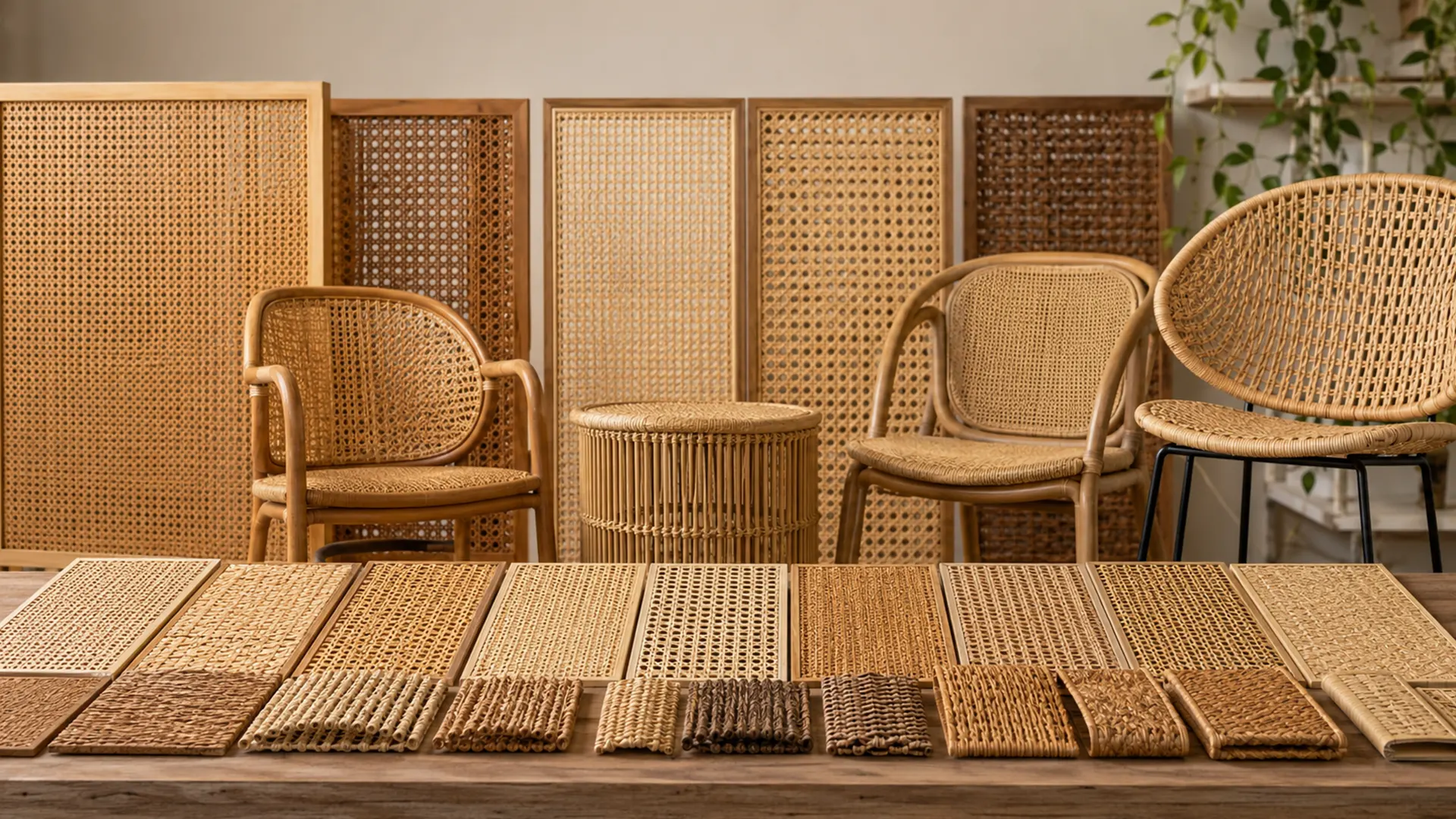
Guía para compradores de Rattan Export: Checklist De Control De Calidad De Muebles De Ratán Para Importadores.
El control de calidad de los muebles de ratán debería comenzar mucho antes de que se cargue el container. Para importadores, mayoristas, distribuidores, cadenas retail, hospitality buyers y equipos de project procurement, un buen proceso de inspection no consiste simplemente en una revisión visual final. Es un sistema documentado que conecta approved sample, product specifications, material requirements, workmanship standards, packaging instructions y shipment conditions con measurable acceptance criteria.
Esto es especialmente importante en muebles de ratán, bambú y fibras naturales porque estos materiales presentan variaciones naturales de color, veta, diámetro y superficie. El buyer debe distinguir acceptable natural variation de defect que afecten apariencia, durabilidad, seguridad, montaje, packaging o commercial usability.
La siguiente checklist está diseñada para programas B2B profesionales con pedidos 20ft, 40ft, 40HC, mixed-container, OEM, ODM, private label y project procurement y puede adaptarse al producto, supplier y destination market.
El Quality Control Comienza Con Un Estándar Aprobado Claro
Un inspector no puede decidir de forma fiable si un producto es acceptable cuando la purchase order simplemente indica “good quality” o “export quality”. Son expresiones subjetivas.
Antes de producción, el buyer debería preparar un reference package con:
- Approved product sample
- Technical drawings
- Confirmed dimensions y tolerances
- Bill of materials
- Especificaciones para rattan, bamboo, wood, metal y textiles
- Approved weaving pattern
- Approved finish y colour sample
- Cushion y fabric specification
- Hardware list
- Packaging specification
- Label y carton-mark requirements
- Testing o compliance criteria necesarios
El mismo paquete debería estar disponible para producción, QC personnel y third-party inspector.
1. Verificar Product Identification
- SKU o model number
- Product description
- Finish code
- Colour code
- Size o variant
- Customer reference
- Latest approved revision
Un producto perfectamente fabricado puede ser comercialmente inutilizable si corresponde a una revisión, color o tamaño equivocado.
2. Revisar Las Materias Primas
- Visible mold
- Excessive staining
- Splits o cracks
- Severe insect damage
- Soft o deteriorated areas
- Abnormal deformation
- Material no conforme
- Variation fuera del approved visual range
La natural variation no debe clasificarse automáticamente como defect.
3. Moisture Control Y Mold Prevention
Moisture es uno de los risk areas más importantes en natural-material furniture.
- Raw-material storage condition
- Work-in-progress storage
- Finished-goods storage
- Visible mold o mildew
- Unusual odor
- Damp packaging
- Moisture readings cuando se requieran
- Tiempo entre finishing y packing
- Container condition antes de loading
No existe un universal moisture figure válido para todo producto. Los límites dependen de material, construction, destination climate, finishing system y buyer requirements.
Los buyers pueden integrar estos controles en un programa de quality control, inspection y compliance más amplio.
4. Verificar Dimensiones
- Overall width
- Overall depth
- Overall height
- Seat height
- Seat depth
- Arm height
- Tabletop height y thickness
- Shelf spacing
- Cabinet opening dimensions
- Component dimensions
- Assembly clearances
Las tolerances deberían definirse antes de producción cuando las dimensiones sean críticas.
5. Revisar Frame Construction
- Frame alignment
- Symmetry
- Joint fit
- Internal reinforcement
- Screws, bolts, dowels o brackets
- Loose joints
- Visible gaps
- Cracked members
- Distorted frame components
- Unapproved construction changes
6. Stability Y Wobble
- Todos los legs hacen contacto adecuado
- No excessive wobble
- Cabinets square
- Doors no causan instability
- Tables stable
- Stackable products stable cuando se apilan
7. Rattan Bending Y Shape
- Curve consistency
- Left-right symmetry
- Cracking at bends
- Flattening o crushing
- Burn marks o discoloration
- Surface damage
8. Weaving Quality
- Correct weaving pattern
- Strand width y material
- Spacing consistency
- Weaving tension
- Loose strands
- Broken strands
- Protruding ends
- Uneven edges
- Missing sections
- Visible repair marks
- Symmetry entre matching areas
El furniture handwoven no será mecánicamente idéntico pieza por pieza; el objetivo es controlled consistency.
9. Binding Y Wrapped Joints
- Binding position
- Consistent width
- Correct number of wraps
- Tension
- Secure ends
- No loose sections
- Reasonable symmetry
10. Surface Preparation
- Rough surfaces
- Sharp fibres
- Splinters
- Excessive sanding marks
- Glue residue
- Tool marks
- Unfilled defects
- Dirty surfaces
11. Finish Y Colour Inspection
- Overall colour
- Acceptable natural variation
- Gloss level
- Coverage consistency
- Runs o drips
- Blisters
- Dust in coating
- Orange-peel texture
- Bare spots
- Overspray
- Uneven stain absorption
- Finish damage
Las fotografías digitales no deben utilizarse como único colour standard.
12. Glue Y Adhesive Work
- Excess glue
- Glue staining
- Adhesive visible through weaving
- Loose components por bonding insuficiente
13. Hardware Inspection
- Correct hardware type
- Correct quantity
- Correct finish
- No corrosion
- No stripped screw heads
- Fasteners correctamente apretados
- Hinges aligned
- Drawer slides operativos
- Bolts e inserts alineados
- Hardware bags complete
14. Knock-Down Assembly Check
- Parts fit correctamente
- Holes align
- Correct tools indicados
- Hardware quantity complete
- Assembly sequence logical
- Finished product stable
- Instructions coinciden con el product
KD engineering afecta customer experience y packed CBM.
15. Cushion Y Upholstery Inspection
- Correct fabric
- Correct colour
- Fabric direction
- Cushion dimensions
- Foam specification
- Seam quality
- Piping
- Zippers
- Loose threads
- Stains
- Pattern alignment
- Fit sobre furniture
- Removable covers
16. Functional Checks
- Doors abren y cierran correctamente
- Drawers funcionan bien
- Hinges no se bloquean
- Folding components lock correctamente
- Swivel mechanisms funcionan
- Adjustable components mantienen posición
- Stacking funciona como previsto
17. Safety Y User-Contact Areas
- Sharp edges
- Exposed staples
- Protruding nails o screws
- Sharp rattan ends
- Pinch points
- Broken fibres
- Unstable components
- Loose hardware
18. Appearance Y Workmanship
- Visible asymmetry
- Uneven gaps
- Misaligned panels
- Colour mismatch
- Incorrect weaving orientation
- Poor edge finishing
- Visible repairs
- Surface contamination
- Excessive natural variation
19. Limpieza Del Producto
Finished furniture debería embalarse limpio y seco, sin dust, sanding residue, fingerprints, oil marks, adhesive residue o workshop debris.
20. Labels Y Private Label
- Product labels
- Brand labels
- Country-of-origin marking cuando corresponda
- SKU labels
- Barcodes
- Care labels
- Warning labels
- Assembly labels
- Customer-specific stickers
21. Export Packaging
- Correct carton dimensions
- Correct units per carton
- Carton strength y condition
- Protective wrapping
- Corner protection
- Edge protection
- Surface separators
- Hardware protection
- Moisture-control materials
- Product movement dentro del carton
- Carton closure
Packaging debe equilibrar protection y logistics efficiency.
22. Carton Marks
- SKU
- Product name
- Quantity
- Carton number
- Purchase-order number
- Destination marks
- Handling symbols
- Barcode
- Gross y net weight cuando corresponda
- Carton dimensions cuando corresponda
23. Packed Dimensions Y CBM
Las actual packed dimensions deberían ser coherentes con los datos utilizados para logistics planning. Cartones mayores de lo previsto pueden empeorar landed cost y container utilization.
Container loading y shipment responsibilities deberían integrarse en el proceso general de exportación y container planning.
24. Quantity Verification Antes Del Shipment
- Total cartons
- Total units
- Quantity per SKU
- Quantity per colour o finish
- Replacement o spare quantities
25. Sampling Plan Y AQL
Muchas professional inspections utilizan statistical sampling. AQL puede ser útil, pero inspection level y acceptance limits deben corresponder al commercial risk.
- Inspection level
- Critical defect definition
- Major defect definition
- Minor defect definition
- Acceptance y rejection criteria
No existe una configuración AQL universal para todo furniture order.
Critical, Major Y Minor Defects
| Defect Type | Significado | Ejemplos Ilustrativos |
|---|---|---|
| Critical | Potencial problema safety, legal o severe usability | Exposed sharp metal, structural failure, prohibited component |
| Major | Defect probable causa de rejection o serious functional problem | Wrong dimensions, severe wobble, broken weaving, incorrect finish, missing hardware |
| Minor | Problema workmanship menor | Small cosmetic variation dentro de agreed limit |
26. Pre-Shipment Inspection Checklist
| Área | Key Checks |
|---|---|
| Product identity | SKU, model, colour, finish, revision |
| Dimensions | Overall y functional dimensions |
| Frame | Alignment, joints, reinforcement, damage |
| Weaving | Pattern, tension, loose o broken strands |
| Surface | Sanding, sharp fibres, glue, contamination |
| Finish | Colour, consistency, coating defects |
| Stability | Wobble, alignment, stability |
| Hardware | Type, quantity, installation |
| Cushions | Fabric, dimensions, seams, fit |
| Moisture | Mold, odor, measurements |
| Labels | SKU, barcode, branding, warnings |
| Packaging | Protection, carton condition, packing method |
| Carton marks | PO, SKU, carton number, destination |
| Quantity | Units y cartons por SKU |
| Packed CBM | Coherencia con logistics plan |
27. Container Inspection Antes Del Loading
- Container reasonably clean
- No obvious water ingress
- No strong abnormal odor
- No visible major damage
- Floor condition acceptable
- Doors close correctly
- Container identification coincide con documents
28. Monitorizar Container Loading
- Correct SKU sequence cuando corresponda
- Heavy cartons no aplastan vulnerable products
- Cartons no se lanzan ni arrastran
- Unused gaps se gestionan correctamente
- Products no se fuerzan en posiciones dañinas
- Final carton count registrado
- Container seal number documentado
29. Documentar Defects Con Evidencia
Un inspection report útil debe documentar defects con fotografías, quantities, product references y descripciones claras.
30. Definir Corrective Action Antes Del Shipment
- Defect a corregir
- Quantity affected
- Rework method
- Responsibility
- Reinspection requirement
- Revised shipment timing cuando sea necesario
Errores Comunes De Quality Control
- Inspeccionar solo finished goods
- Usar términos vagos como “export quality”
- No aprobar un physical sample
- No definir natural variation
- Ignorar moisture y mold risk
- Revisar appearance pero no stability o assembly
- Revisar packaging demasiado tarde
- Usar estimated CBM sin comprobar actual cartons
- No clasificar critical, major y minor defects
- Permitir specification changes sin documentar
- Omitir reinspection después de major rework
- Aprobar shipment por deadline pressure
Quality Control Para Mixed Containers
Los mixed containers aumentan la inspection complexity. Conviene crear una inspection matrix por SKU en lugar de una única checklist genérica.
Quality Control Para OEM Y Private Label
OEM y private-label programs requieren strict revision control. La mass production debe corresponder a la final approved version.
Quality Control Como Herramienta De Supplier Development
Inspection data puede identificar recurring defects, weak production processes, packaging failures, moisture incidents y repeated specification misunderstandings y hacer supplier performance medible a lo largo del tiempo.
Preguntas Frecuentes
¿Debe inspeccionarse cada pieza?
No necesariamente. Depende de order size, risk, supplier history, product complexity y buyer requirements.
¿Cuál es el principal quality risk?
No existe uno solo. Frame strength, weaving, moisture, finish, stability, packaging y specification accuracy pueden ser importantes.
¿Cuánta natural variation debe aceptarse?
Debe definirse mediante approved samples y specifications.
¿Debe comprobarse moisture antes del shipment?
Sí cuando el riesgo sea relevante, utilizando método y límites específicos para el producto.
¿Es suficiente una pre-shipment inspection?
Puede ser suficiente para repeat orders estables. Para nuevos suppliers o complex products pueden ser apropiadas también inspecciones incoming e in-process.
¿Quién debe realizar la inspection?
Supplier QC, buyer team, independent inspection company o una combinación. Lo importante es una independencia adecuada al commercial risk.
Una Buena Checklist Protege Mucho Más Que La Calidad Del Producto
Un sistema disciplinado de quality control protege inventory, freight spend, launch schedule, customer satisfaction y supplier relationship. En container-based rattan furniture imports, los problemas descubiertos después de la llegada suelen ser mucho más costosos.
El mejor sistema comienza con una clear specification, continúa con material y production controls, verifica finished goods y packaging y termina únicamente después del loading correcto en un container adecuado.
Si está preparando un pedido 20ft, 40ft, 40HC, mixed-container, OEM, ODM, private label o project procurement de muebles de ratán, bambú o fibras naturales, puede enviar su wholesale RFQ y sus quality-control requirements para evaluar el proyecto sobre una base técnica, de inspección y logística clara.