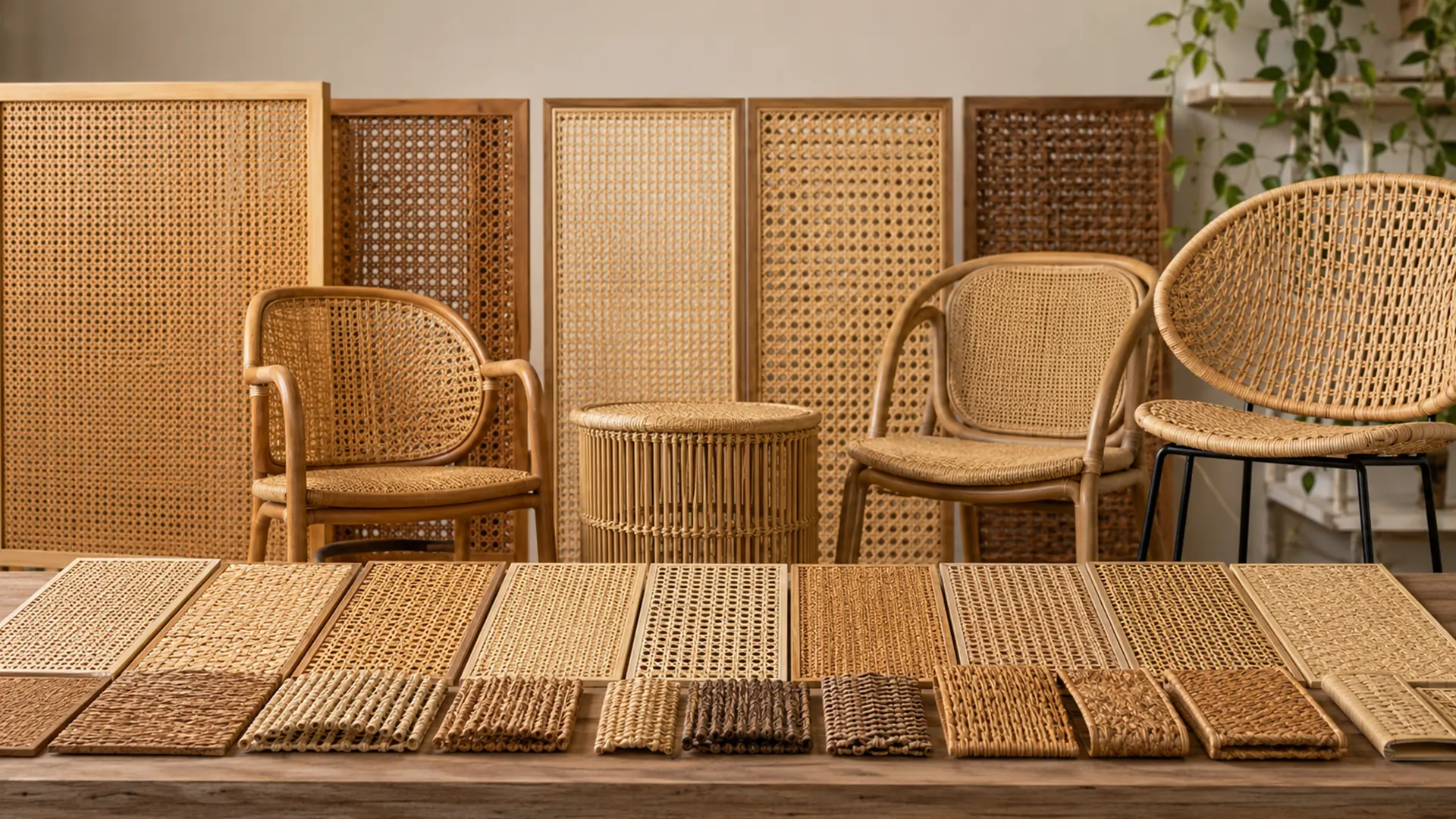
 Hướng dẫn người mua của Rattan Export: Độ Ẩm, Nấm Mốc Và Nứt: Rủi Ro Lớn Khi Xuất Khẩu Nội Thất Mây.
Độ ẩm, nấm mốc và nứt là ba trong số những rủi ro thương mại nghiêm trọng nhất trong xuất khẩu đồ nội thất mây, tre và sợi tự nhiên. Chúng có thể ảnh hưởng đến appearance, structural integrity, packaging, customer acceptance và resale value của toàn bộ shipment. Đối với importer, wholesaler, distributor, retail chain, hospitality buyer và project procurement team, những vấn đề này không nên được xem là defect ngẫu nhiên chỉ được phát hiện sau khi hàng đến nơi. Đây là supply-chain risks cần được kiểm soát từ raw-material preparation, production, finishing, storage, export packing, container loading cho đến ocean transit.
Natural rattan có tính hygroscopic, nghĩa là vật liệu có thể trao đổi moisture với môi trường xung quanh. Bamboo, timber và các plant-based component khác cũng phản ứng tương tự ở mức độ khác nhau. Nếu material quá ẩm, finished product có thể gặp mold, staining, odor, finish failure hoặc dimensional movement. Nếu drying quá mạnh hoặc không đồng đều, cracking, splitting, distortion và joint problems có thể xuất hiện. Vì vậy buyer cần một moisture-control strategy cân bằng thay vì instruction đơn giản rằng product phải “khô nhất có thể”.
Hướng dẫn này giải thích moisture đi vào export process bằng cách nào, tại sao mold phát triển, cracking xảy ra như thế nào, warning signs nào importer cần theo dõi và cách professional buyer xây dựng preventive controls thực tế cho chương trình 20ft, 40ft, 40HC, mixed-container, OEM, ODM, private label và project furniture.
Tại Sao Natural Rattan Furniture Nhạy Cảm Với Moisture?
Rattan có nguồn gốc từ cấu trúc thực vật tự nhiên gồm fibre và cellular material phản ứng với humidity xung quanh. Ngay cả sau processing, vật liệu không hoạt động như plastic hoặc metal inert. Nó vẫn có thể hấp thụ hoặc giải phóng moisture tùy environmental conditions.
Điều này không tự động là defect. Natural material luôn có một mức environmental responsiveness nhất định. Commercial risk xuất hiện khi moisture condition không được control hoặc các phần khác nhau của product thay đổi với tốc độ khác nhau.
Ví dụ, một rattan chair có thể kết hợp large frame members, thinner binding material, woven strands, wooden reinforcement, steel hardware, adhesives, coatings và cushions. Mỗi component phản ứng khác nhau với moisture, drying và temperature. Vì vậy một export product ổn định phụ thuộc vào toàn bộ construction system, không chỉ riêng rattan.
Ba Rủi Ro Có Liên Quan Nhưng Không Giống Nhau
Moisture, mold và cracking thường được nói cùng nhau, nhưng buyer nên phân biệt rõ.
- Moisture là một condition. Nó có thể đến từ raw material, humid production area, wet floor, rain exposure, finishing process, storage, packaging hoặc condensation.
- Mold là biological growth có thể phát triển khi environmental conditions phù hợp. Excess moisture là một enabling factor lớn, nhưng surface contamination, temperature, airflow và time cũng quan trọng.
- Cracking là physical failure có thể đến từ material stress, rapid drying, uneven drying, poor bending, unsuitable material selection, structural design hoặc environmental change.
Giảm một risk không tự động loại bỏ risk khác. Over-drying material để tránh mold có thể tạo cracking hoặc distortion nếu drying process không được kiểm soát tốt.
Risk Stage 1: Raw-Material Receiving
Moisture control nên bắt đầu khi raw rattan, bamboo hoặc timber vào production facility. Nếu unsuitable material được chấp nhận vào production, inspection sau này có thể chỉ phát hiện problem sau khi đã đầu tư nhiều labour.
Buyer hoặc factory controls có thể gồm:
- Visual inspection cho mold hoặc mildew
- Kiểm excessive staining
- Kiểm splits và existing cracks
- Kiểm insect damage hoặc deterioration
- Review material dimensions và consistency
- Kiểm storage history khi available
- Moisture measurement khi thuộc agreed specification
Supplier cũng nên separate compromised material rõ ràng thay vì mix vào general production stock.
Risk Stage 2: Raw-Material Storage
Material tốt vẫn có thể deteriorate nếu storage condition kém. Rattan và bamboo đặt trực tiếp trên damp floor, sát wet wall hoặc dưới roof leak có thể hấp thụ moisture trước khi production bắt đầu.
Professional storage practice có thể gồm keeping material elevated khỏi floor, tách khỏi exterior wall, đảm bảo appropriate airflow, bảo vệ khỏi rain và theo dõi humidity hoặc condensation problem rõ ràng.
Importer đánh giá supplier tại Việt Nam có thể đưa storage practice vào việc review rộng hơn về môi trường sourcing và sản xuất vật liệu tự nhiên tại Việt Nam. Tuy nhiên regional reputation không bao giờ nên thay thế factory-level verification.
Risk Stage 3: Material Preparation Và Drying
Drying không chỉ đơn giản là giảm một con số trên moisture meter. Process cần chuẩn bị material cho stable production và expected destination environment.
Problem có thể phát triển khi:
- Material được process trước khi sufficiently stabilized
- Outer surface khô nhanh hơn nhiều so với internal material
- Heat quá cao
- Drying quá nhanh
- Material bundle đóng quá chặt làm airflow kém
- Các material thickness khác nhau được xử lý giống nhau
- Material đã dried nhưng lại tiếp xúc high humidity trước production
Không có một moisture-content figure duy nhất đúng universal cho mọi rattan product. Appropriate range phụ thuộc species hoặc material type, component thickness, construction, destination, finishing system và buyer requirements. Buyer vì vậy không nên copy một generic number vào mọi RFQ mà không có technical justification.
Tại Sao Over-Drying Cũng Có Thể Gây Vấn Đề?
Importer đôi khi nghĩ rằng material càng khô càng an toàn. Điều này có thể misleading. Excessive hoặc aggressive drying có thể tăng internal stress và góp phần tạo cracking, splitting, distortion hoặc khó assembly.
Mục tiêu thực sự là stable material phù hợp với product và conditions nó sẽ trải qua. Supplier drying procedure vì vậy nên được đánh giá như một process thay vì dựa vào một isolated measurement.
Risk Stage 4: Bending Và Frame Formation
Nhiều rattan frame phụ thuộc bending. Material có thể được conditioned để shaping, sau đó stabilized. Điều này tạo thêm một moisture-management stage.
Inspector nên tìm:
- Hairline cracks tại bends
- Flattened sections
- Crushed fibres
- Burning hoặc heat marks
- Asymmetrical curves
- Splitting gần fasteners hoặc joints
Một frame có thể nhìn acceptable ngay sau bending nhưng develop cracking sau đó nếu residual stress còn lại hoặc product movement đáng kể trong drying và finishing.
Risk Stage 5: Weaving Materials
Thin weaving strands có thể phản ứng với moisture nhanh hơn thick structural members. Nếu weaving được apply trong một condition rồi sau đó dries hoặc absorbs moisture đáng kể, tension có thể thay đổi.
Potential problems gồm:
- Loose weaving
- Over-tight weaving
- Broken strands
- Warping của woven panels
- Gaps phát triển giữa strands
- Binding loosening quanh joints
Buyer vì vậy nên inspect weaving tension và consistency sau khi product đã qua finishing và stabilization, không chỉ ngay sau weaving.
Risk Stage 6: Adhesives Và Mixed Materials
Modern rattan furniture có thể gồm adhesives, plywood, solid timber, engineered panels, foam, fabric, steel và aluminium. Moisture-related failure có thể xảy ra tại nơi các material gặp nhau.
Ví dụ gồm veneer movement, adhesive failure, rust staining từ unsuitable hardware, cushion odor, panel swelling hoặc joint movement do expansion và contraction behavior khác nhau.
Đây là một lý do quality control phải assess complete bill of materials thay vì coi “rattan furniture” là một homogeneous material category.
Risk Stage 7: Finishing
Stain, paint, clear coating và finish khác có thể thay đổi cách moisture di chuyển qua surface. Finishing cũng đưa liquid và drying time vào manufacturing process.
Potential problems gồm:
- Coating được apply trước khi material sufficiently stable
- Uneven drying giữa coated và uncoated surfaces
- Trapped moisture
- Blistering
- Cloudy coating
- Poor adhesion
- Uneven stain absorption
- Finish cracking khi underlying material movement
Buyer nên confirm supplier cho đủ curing và stabilization trước packing.
Không Nên Pack Ngay Sau Finishing Nếu Chưa Có Control
Một furniture piece cảm giác khô khi chạm không có nghĩa chắc chắn đã sẵn sàng cho sealed export packaging. Finish, adhesive và internal component vẫn có thể release moisture hoặc solvent.
Packing quá sớm có thể tạo enclosed microenvironment trong carton. Nếu airflow bị hạn chế và moisture vẫn cao, odor, finish marking hoặc mold risk có thể tăng trong storage và transit.
Risk Stage 8: Finished-Goods Storage
Finished furniture có thể absorb moisture trở lại sau production. Product có thể rời finishing area trong acceptable condition rồi nằm nhiều ngày hoặc tuần trong humid warehouse chờ các SKU khác của mixed-container order.
Inspector nên xem:
- Warehouse floor condition
- Distance khỏi exterior walls
- Roof leaks
- Ventilation
- Rain exposure khi movement
- Cách cartons được stacked
- Finished products có packed quá lâu hay không
Mixed-container program cần attention đặc biệt vì SKU hoàn thành đầu tiên có thể chờ lâu hơn nhiều so với SKU cuối.
Mold Phát Triển Như Thế Nào?
Mold không xuất hiện đơn giản vì product đi qua một quốc gia nhiệt đới. Mold risk tăng khi sufficient moisture, suitable temperature, biological material, contamination và time kết hợp trong condition thuận lợi.
Natural rattan, bamboo, wood, paper cartons và một số packaging materials có thể tạo surface cho mold phát triển. Poor airflow và enclosed packaging có thể khiến problem nghiêm trọng hơn.
Mục tiêu của mold-prevention program vì vậy là control environment trong toàn process thay vì dựa vào một chemical treatment hoặc một final moisture reading.
Visible Mold Không Phải Warning Sign Duy Nhất
Buyer cũng nên coi trọng:
- Musty odor
- Unusual spotting
- Grey, white, green hoặc dark surface growth
- Damp cartons
- Condensation marks
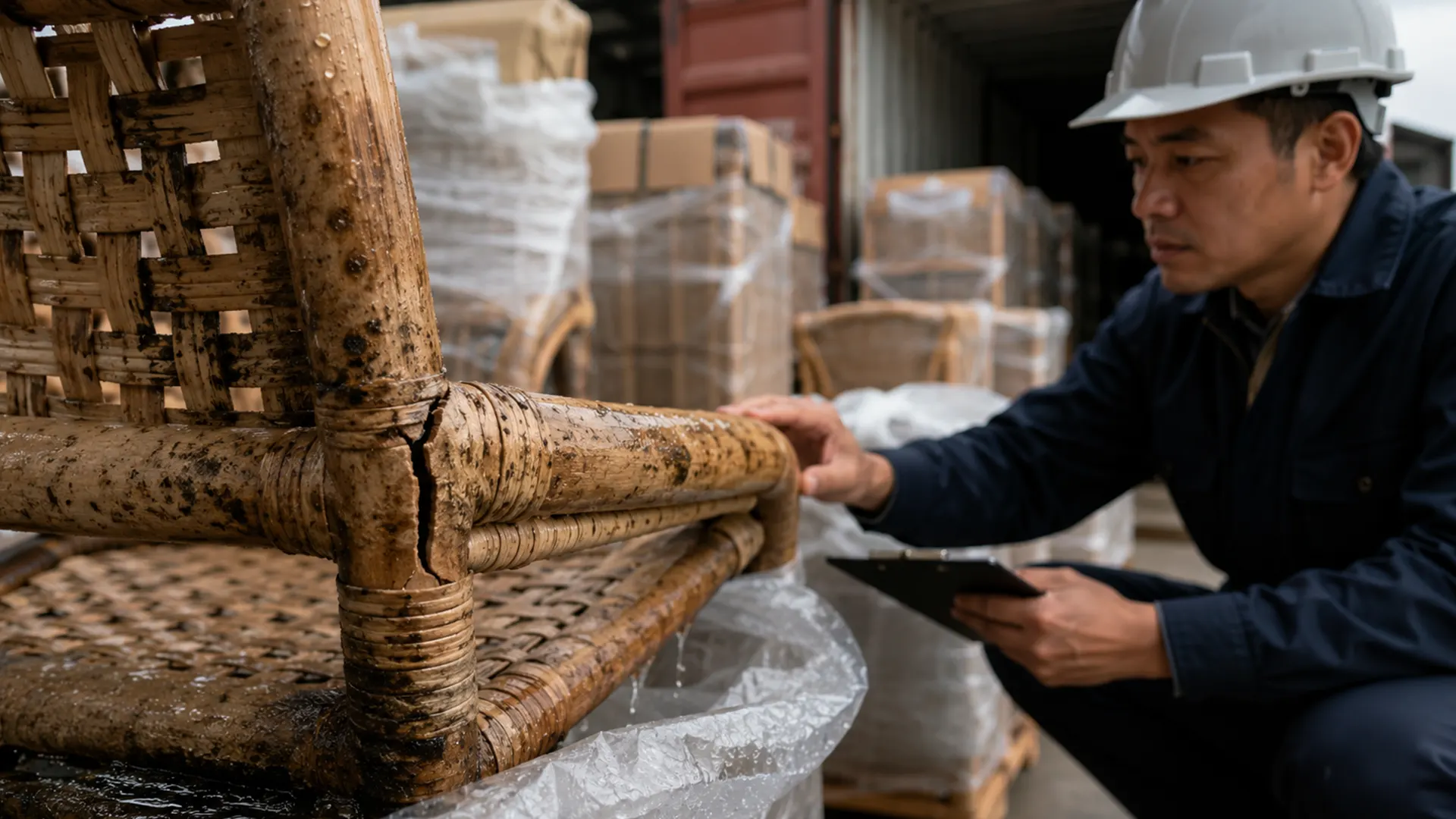
- Staining quanh bindings hoặc joints
- Finish haze hoặc surface cloudiness
Không phải mọi discoloration đều là mold, đặc biệt với natural fibre, vì vậy questionable findings nên được investigate thay vì tự động classify không có evidence.
Tại Sao Mold Có Thể Biến Thành Container-Level Loss?
Mold không cần ảnh hưởng mọi piece mới tạo serious commercial problem. Importer có thể gặp customer rejection, retailer claims, warehouse segregation, cleaning cost, reinspection, destruction hoặc reputational damage nếu shipment đến với visible biological growth hoặc strong odor.
Vì furniture bulky, reworking full container tại destination có thể đắt hơn rất nhiều so với correcting problem ở origin.
Cracking: Vì Sao Xảy Ra?
Cracking có thể đến từ nhiều interacting factors:
- Material đã damaged trước production
- Rapid moisture loss
- Uneven moisture distribution
- Incorrect bending process
- Excessive mechanical stress
- Poor joint design
- Fasteners quá gần vulnerable areas
- Environmental change sau production
- Material thickness không phù hợp design
Cracking có thể immediate hoặc delayed. Đây là lý do sample approval không guarantee mass production sẽ stable sau packing và shipment.
Hairline Cracks Và Structural Cracks
Không phải mọi small surface mark có cùng commercial importance. Buyer nên classify crack theo location, size, depth và effect.
| Condition | Possible Assessment |
|---|---|
| Minor superficial mark ở non-structural area | Có thể cosmetic tùy approved natural appearance |
| Visible crack tại bend | Cần closer evaluation vì stress có thể tiếp tục |
| Split xuyên structural frame member | Có khả năng major hoặc potentially critical tùy product use |
| Crack quanh screw hoặc joint | Có thể chỉ structural stress hoặc poor fastening method |
| Multiple repeated cracks trong production | Có thể là systemic material hoặc process issue |
Các example này chỉ illustrative. Defect classification nên được define cho từng product và risk profile.
Cracking Có Thể Tiếp Tục Sau Shipment
Một trong những importer risk quan trọng nhất là delayed movement. Product có thể pass factory inspection nhưng crack sau khi acclimatize trong environment khác.
Khả năng này đặc biệt relevant khi goods di chuyển từ humid production environment sang destination rất khô hoặc heated indoor environment. Good material preparation và stable construction giảm risk nhưng không thể biến natural material thành một chất hoàn toàn dimensionally inert.
Risk Stage 9: Export Packaging
Packaging phải bảo vệ furniture về physical đồng thời hỗ trợ moisture management hợp lý. Excessively sealed packaging quanh insufficiently stabilized products có thể gây problem, trong khi inadequate packaging có thể expose furniture với changing humidity hoặc water.
Buyer nên review:
- Carton condition
- Plastic wrapping strategy
- Surface protection
- Ventilation khi relevant
- Moisture-control materials khi specified
- Separation giữa product và damp surfaces
- Packaging timing sau finishing
Correct packaging approach phụ thuộc product design, finish, transit route, destination và distribution model. Buyer nên tránh universal packaging formulas.
Desiccants Không Thay Thế Dry Products
Moisture-control materials có thể hữu ích trong một số export program, nhưng không nên dùng để compensate cho furniture packed quá wet hoặc leaking container.
Amount, placement và type của moisture-control material nên dựa trên actual shipment và packaging system. More không tự động better.
Risk Stage 10: Container Condition
Trước loading, container phải được inspect. High-quality furniture shipment không nên được đưa vào container có obvious water ingress hoặc unsuitable internal condition chỉ để tránh shipping delay.
Typical checks gồm:
- Interior cleanliness
- Visible holes hoặc daylight penetration
- Wet flooring
- Roof hoặc wall damage
- Strong abnormal odor
- Door condition
- Evidence của previous water ingress
Container preparation và loading nên được tích hợp vào quy trình export và container shipping tổng thể.
Container Rain Và Condensation
Trong ocean transport, temperature changes có thể góp phần tạo condensation trong container. Moisture có thể move giữa cargo, packaging và container environment khi temperature thay đổi trong day-night cycles và geographic transit.
Hiện tượng này đôi khi được gọi container rain hoặc container sweat. Practical implication là cargo nên vào container trong stable condition, packaging phải appropriate và obvious moisture sources nên được minimize trước sealing.
Không Nên Đồng Nhất Condensation Risk Với Một Climate Duy Nhất
Condensation không chỉ là “tropical export” issue. Nó có thể xảy ra bất cứ khi nào temperature và moisture conditions tạo condensation trong closed container environment.
Complete route, season, destination và cargo condition đều nên được xem xét.
Risk Stage 11: Container Loading
Poor loading cũng có thể gián tiếp góp phần tạo cracking. Furniture bị force vào inappropriate position có thể chịu stress trong transit. Heavy cartons đặt lên weaker products có thể distort frame hoặc tạo pressure point.
Loading supervision nên check:
- Correct carton orientation
- Reasonable stacking
- Không excessive crushing pressure
- Protection khỏi container walls khi necessary
- Không visibly damp cartons
- Final container condition trước sealing
- Container seal number
Risk Stage 12: Destination Handling
Risk management không kết thúc khi vessel arrive. Goods có thể gặp humidity và temperature khác nhiều trong customs clearance, inland transport và warehouse storage.
Importer nên tránh storing natural-material furniture trong persistently damp facility và cân nhắc acclimatization khi product design hoặc local climate làm điều này relevant.
Đưa Moisture Requirements Vào RFQ
Moisture control nên được discussed trước price confirmation thay vì thêm sau purchase order.
RFQ có thể gồm requirements về:
- Material preparation
- Moisture measurement method khi required
- Inspection stage
- Storage expectations
- Visible mold acceptance criteria
- Packaging method
- Container inspection
- Pre-shipment verification
Requirement nên technically realistic và agreed với supplier thay vì copy blind từ product category khác.
Pre-Production Sample Evaluation
Sample review nên bao gồm nhiều hơn appearance. Buyer nên inspect bends, joints, weaving tension, finish, hardware locations và bất kỳ area dễ crack sau movement.
Nếu sample cho thấy early cracking, repair marks hoặc unstable binding, mass production không nên bắt đầu cho đến khi cause được hiểu rõ.
In-Process Inspection
Với new supplier, complex product hoặc large order, in-process inspection có thể identify moisture và cracking problem trước khi spread qua full production batch.
Useful checks gồm:
- Raw-material condition
- Frame cracking trong bending
- Joint stress
- Weaving condition
- Storage practices
- Finish preparation
- Recurring defects theo production team
Tìm systemic problem khi 20% hoặc 30% production complete thường manageable hơn khi tất cả goods đã packed.
Pre-Shipment Inspection
Pre-shipment inspection nên gồm direct checks cho moisture-related và cracking risks trước release.
Practical checklist có thể gồm:
- Không visible mold
- Không abnormal musty odor
- Không damp cartons
- Không significant cracks
- Không repeated splitting tại bends
- Bindings remain secure
- Weaving tension acceptable
- Finish đã cure appropriate
- Required moisture measurements completed
- Packaging match approved specification
Inspection criteria nên tích hợp vào framework quality control và pre-shipment inspection rộng hơn của buyer.
Moisture Meter Readings: Hữu Ích Nhưng Không Phải Phép Màu
Moisture meter có thể cung cấp data hữu ích khi correct instrument, material setting, calibration method và test location phù hợp. Tuy nhiên một reading không nên được xem là definitive proof rằng toàn container safe.
Result có thể vary theo material species, thickness, surface finish, meter technology và test location. Buyer nên define cách measurement được performed nếu readings là một phần acceptance criteria.
Tạo Measurement Procedure
Một professional procedure có thể specify:
- Component nào được measured
- Bao nhiêu units được check
- Reading lấy ở đâu trên product
- Instrument nào được dùng
- Result được recorded như thế nào
- Làm gì nếu readings vượt agreed limits
Exact procedure nên reflect product thay vì cố tạo một universal rule.
Quality-Control Responsibility
Moisture và mold control không nên thuộc về chỉ một person ở cuối production. Responsibility có thể phân bổ giữa purchasing, production, warehouse, QC, packaging và logistics teams.
Importer nên biết ai có authority stop packing hoặc loading nếu conditions unsuitable.
Các Câu Hỏi Importer Nên Hỏi Supplier
- Raw rattan và bamboo được stored như thế nào?
- Material được dried hoặc stabilized trước production ra sao?
- Stage nào có moisture checks?
- Supplier prevent mold trong finished goods như thế nào?
- Bao lâu giữa finishing và packing?
- Goods được stored thế nào khi chờ container loading?
- Packaging nào dùng cho long ocean transit?
- Container được inspect trước loading như thế nào?
- Cracked frame component được xử lý ra sao?
- Corrective action nào được thực hiện nếu mold được discover?
Red Flags Khi Factory Evaluation
- Raw material đặt trực tiếp trên damp floor
- Visible mold trong storage
- Strong musty warehouse odor
- Leaks hoặc obvious rain exposure
- Finished products packed ngay sau wet finishing processes
- Repeated frame cracks chỉ được cosmetic repair
- Không documented separation của rejected material
- Supplier từ chối reasonable moisture-related inspection
- Damp cartons chờ loading
- Visible condensation hoặc water trong proposed container
Một observation không tự động chứng minh supplier unsuitable, nhưng repeated unresolved condition cần serious attention.
Corrective Action Cho Mold
Nếu mold được phát hiện trước shipment, correct response phụ thuộc severity, product materials, finish, affected quantity và buyer requirements. Chỉ wipe visible surface có thể không address root cause.
Corrective action có thể cần segregation, investigation moisture source, cleaning hoặc rework bằng agreed method, drying hoặc stabilization, packaging replacement và reinspection trước shipment approval.
Với serious hoặc widespread contamination, buyer nên tránh approving shipment cho đến khi commercial và technical risk được evaluate đúng.
Corrective Action Cho Cracking
Cracking cũng nên được xử lý theo cause thay vì cosmetically hidden. Repeated cracks ở cùng location có thể chỉ poor material selection, unsuitable drilling, excessive fastening pressure, incorrect bending hoặc structural design weakness.
Nếu defect systemic, chỉ replacing visibly cracked pieces có thể không solve problem. Production method hoặc component design có thể cần revision.
Tại Sao Cosmetic Repairs Có Thể Nguy Hiểm?
Filler, stain hoặc wrapping đôi khi có thể hide crack visually. Nếu underlying structural stress còn lại, defect có thể reopen sau shipment. Buyer vì vậy nên distinguish legitimate finishing repair với repair che giấu structural failure.
Mixed Containers Tạo Additional Risk
Mixed-container program có thể kéo dài total production và storage period vì nhiều SKU phải completed trước consolidation. Early-completed products có thể nằm storage lâu hơn đáng kể.
Buyer planning nên xem:
- Production sequence
- Storage duration theo SKU
- Packaging timing
- Final moisture và mold inspection của early-completed goods
- Có cần reopen cartons để reinspection trước loading hay không
OEM Và New Product Development
New OEM design có thể có cracking risk cao hơn established repeat product vì frame geometry, bending radius, fastener locations và material thickness chưa được fully proven.
Prototype và pre-production samples vì vậy nên được evaluate sau reasonable stabilization thay vì approve ngay sau manufacture.
Hospitality Và Project Furniture
Với hotel, resort và commercial project order, moisture hoặc cracking problem có thể đặc biệt disruptive vì replacement product cần match existing rooms hoặc installation schedule.
Project buyer nên establish spare-parts hoặc replacement procedures khi appropriate và giữ clear record về approved finish, material và dimensions cho future replacement production.
Practical Risk-Control Matrix
| Stage | Main Risk | Buyer Control |
|---|---|---|
| Raw material | High moisture, existing mold, cracks | Incoming inspection và material segregation |
| Storage | Reabsorption of moisture | Dry, elevated, ventilated storage |
| Drying | Under-drying hoặc over-drying | Controlled stabilization procedure |
| Bending | Stress cracks và crushing | Frame inspection trong production |
| Weaving | Loose hoặc broken strands sau movement | Post-stabilization weaving inspection |
| Finishing | Trapped moisture và coating failure | Curing và stabilization control |
| Warehouse | Humidity exposure trước shipment | Finished-goods storage inspection |
| Packaging | Moisture trapped trong cartons | Controlled packing timing và specification |
| Container | Water ingress hoặc condensation risk | Container inspection và appropriate moisture management |
| Loading | Frame stress và damp cargo loaded | Loading supervision |
| Transit | Condensation và environmental changes | Stable cargo và appropriate export packing |
| Destination | Acclimatization và damp storage | Suitable warehouse và handling procedures |
Các Sai Lầm Phổ Biến Của Importer
- Chỉ check moisture vào ngày shipment
- Dùng một universal moisture number cho mọi product
- Giả định desiccants có thể fix wet furniture
- Packing ngay sau finishing
- Bỏ qua raw-material storage
- Chấp nhận cosmetic repair của recurring cracks
- Bỏ qua musty odor vì không thấy visible mold
- Loading vào visibly wet container vì vessel cutoff gần
- Không reinspect early-produced SKUs trong mixed-container program
- Giả định tropical sourcing đồng nghĩa mold unavoidable
- Giả định driest possible material luôn safest
- Không document corrective action sau repeated defects
Câu Hỏi Thường Gặp
Moisture level của rattan furniture trước shipment nên là bao nhiêu?
Không có một universal number phù hợp mọi rattan product. Target phù hợp phụ thuộc material, component thickness, construction, finish, destination environment và buyer specification. Measurement method cũng cần được define.
Mold có thể phát triển trong sealed carton không?
Có, nếu conditions trong packaging hỗ trợ growth. Packing furniture chưa sufficiently stabilized vào closed environment có thể tăng risk, đặc biệt trong long storage hoặc transit.
Desiccants có thể prevent mọi mold không?
Không. Moisture-control materials có thể useful khi specified đúng, nhưng không thay thế correct material preparation, dry storage, appropriate packaging hoặc suitable container.
Tại sao rattan crack sau delivery?
Possible causes gồm residual stress, rapid environmental change, unsuitable drying, poor bending, weak material, joint design hoặc dimensional movement sau acclimatization.
Buyer có nên reject mọi hairline crack không?
Không nhất thiết. Crack classification nên xem location, depth, structural significance và approved natural appearance. Structural hoặc repeated cracking cần concern cao hơn nhiều so với minor superficial mark.
Mold chủ yếu là problem của Việt Nam phải không?
Không. Mold risk liên quan moisture, storage, production, packaging và environmental conditions, không phải nationality. Natural-material furniture từ bất kỳ sourcing country nào cũng cần appropriate controls.
Khi nào nên inspect moisture?
Với higher-risk program, controls có thể phù hợp tại raw-material receiving, during production, before packing và before container loading thay vì chỉ final inspection.
Moisture Management Nên Được Thiết Kế Ngay Trong Order
Cách đáng tin cậy nhất để control moisture, mold và cracking không phải là tìm problem chỉ khi goods sẵn sàng ship. Buyer nên define expectations trước production, verify supplier practices, inspect materials và processes, cho đủ stabilization, confirm packaging và check container conditions trước release.
Natural rattan luôn giữ characteristics của natural material, bao gồm một mức normal variation và environmental response. Professional quality control không cố loại bỏ characteristics đó. Mục tiêu là prevent uncontrolled moisture, biological growth, structural cracking và avoidable commercial loss.
Nếu bạn đang chuẩn bị đơn 20ft, 40ft, 40HC, mixed-container, OEM, ODM, private label hoặc project order cho rattan, bamboo hoặc natural-fibre furniture từ Việt Nam, hãy gửi wholesale RFQ, product specifications và moisture-control requirements của bạn để sourcing và export program được đánh giá trước khi production bắt đầu.