
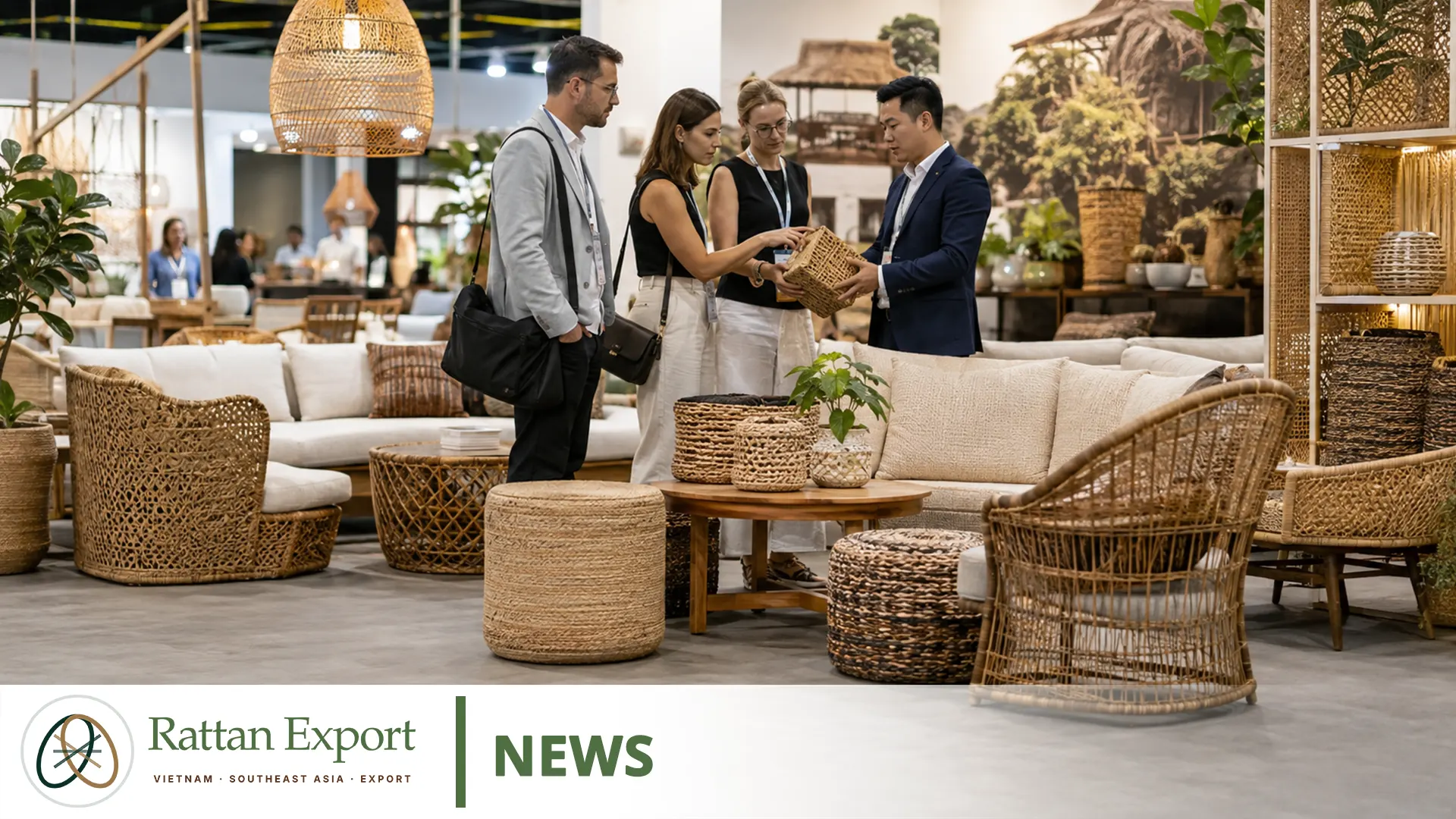
El natural-fibre furniture está ganando terreno en 2026 mientras los buyers internacionales buscan productos que combinen tactile texture, craftsmanship reconocible y la posibilidad de desarrollar estrategias de materiales con menor impacto ambiental. En la furniture y handicraft supply base de Vietnam, rattan, bamboo, seagrass, water hyacinth y otras fibras aparecen cada vez más en chairs, cabinets, benches, lighting, storage, occasional furniture y mixed-material collections, superando los tradicionales baskets y decorative accessories. El cambio está impulsado por nuevas interior aesthetics, mayor interés por material identity y requisitos más exigentes sobre origen, producción y environmental performance.
Texture se convierte en un requisito comercial de diseño
Una señal clara llegó del HawaExpo 2026 Furniture Forum. Las discusiones sobre contemporary interior design identificaron un movimiento desde interiores exclusivamente minimalist e industrial hacia espacios más cálidos, humanos y táctiles. Natural materials, handcrafted details, softer forms y textured surfaces están adquiriendo mayor protagonismo.
Para international sourcing teams, texture no es solamente una tendencia visual. Puede diferenciar productos en furniture categories donde las basic silhouettes son fáciles de comparar. Un woven rattan back, seagrass panel, bamboo detail o water-hyacinth surface puede proporcionar una fuerte material identity sin fabricar todo el SKU en una sola fibre.
| Buyer Objective | Natural-Fibre Response | Aplicación |
|---|---|---|
| Tactile interiors | Visible weave y natural texture | Chair backs, cabinet doors y benches |
| Warm visual language | Plant-based fibres con wood | Living, dining y hospitality |
| Handcrafted differentiation | Manual weaving y artisan details | Lighting, storage y accent furniture |
| Mixed-material design | Fibre con metal, timber, ceramic o textile | Retail y project collections |
| Lower-impact positioning | Renewable y plant-based options | Cuando existe evidence ambiental |
Vietnam ya posee una base comercial importante
Las estadísticas preliminares anuales de General Department of Customs registraron aproximadamente US$900,06 millones de bamboo y rattan product exports en 2025. El mismo informe registró alrededor de US$17.200 millones de wood y wooden products y US$3.830 millones de furniture of other materials. Las categorías aduaneras son diferentes y no deben sumarse como una única cifra de mercado, pero muestran la amplitud del export ecosystem en el que operan las natural fibres.
Vietnam cuenta además con weaving communities, export manufacturers y compañías capaces de combinar fibras naturales con industrial frames y components. Muchos productos comercialmente interesantes son hybrid constructions y no piezas fabricadas completamente en rattan o bamboo.
Natural fibre entra en furniture y no solamente en home accessories
Los HawaExpo 2026 supplier profiles muestran esta ampliación. Viet Source Handicraft presenta bamboo furniture, storage baskets, lamps, rugs y home decorations en bamboo, rattan, seagrass, water hyacinth y palm leaf. Nature Craft combina rattan, seagrass y water hyacinth con lighting, pottery y home décor. Vietnam Housewares opera entre wooden furniture, woven handicrafts y ceramic garden décor, creando una estructura adecuada para mixed-material programmes.
Esto permite utilizar natural fibre como design language de toda una collection. Una range puede incluir timber dining chair con woven rattan back, cabinet con cane doors, water-hyacinth storage, seagrass pendant y occasional furniture con wood y woven details.
Cada fibre produce un resultado diferente
| Material | Carácter | Furniture Role | Buyer Consideration |
|---|---|---|---|
| Rattan | Flexible, fine o substantial weave | Frames, cane panels, chair backs | ¿Structural o decorative? |
| Bamboo | Linear, rigid o split | Frames, components, lighting y shelving | Species, treatment y construction |
| Water hyacinth | Fibre gruesa y visualmente suave | Surfaces, stools y storage | Identificar supporting frame |
| Seagrass | Natural texture más compacta | Panels, baskets, seating details y rugs | Moisture, color y weave consistency |
Estas diferencias influyen en labor time, weave density, strength, testing, geometry y finishing. Una specification precisa es fundamental cuando el product pasa de showroom sample a container-level production.
Craftsmanship se convierte en parte del product value
En mass-market sourcing, craftsmanship se consideraba en ocasiones difícil de estandarizar. En 2026 se utiliza cada vez más como elemento de differentiation. Una visible handwoven surface comunica human input y diferencia el product de formas completamente machine-produced.
Esto no significa aceptar uncontrolled variation. El objetivo comercial consiste en conservar señales del trabajo manual mientras se definen límites para dimensions, weave density, pattern, color range y finish. Un approved master sample sigue siendo esencial.
Lower impact requiere evidence y no assumptions
El interés en natural fibres también está relacionado con material strategies potencialmente menos intensivas. Plant-based fibres son materiales biológicos renovables y pueden ofrecer alternativas útiles en determinadas aplicaciones. Pero la palabra “natural” no demuestra por sí sola una mejor environmental performance.
El Green Transition Forum de HawaExpo 2026 insistió precisamente en esta diferencia. Las empresas deberían medir environmental impact, optimizar operations, integrar sustainability criteria en management y solamente después realizar green positioning. También se discutieron Life Cycle Assessment, carbon data, material traceability y greenwashing risk.
- Origen y sourcing de la fibre.
- Documentation de cultivation o harvesting cuando proceda.
- Energía utilizada en drying y processing.
- Dyes, coatings, adhesives y treatments.
- Durability y expected product life.
- Tipo y cantidad de supporting frame.
- Packaging y container utilization.
- Repair, reuse y end-of-life options.
Una natural-fibre chair suele ser mixed-material
El material visible en una fotografía puede representar solamente una parte del SKU. Una woven dining chair puede incluir solid-wood frame, rattan o seagrass, metal fasteners, adhesive y textile cushion. Un cabinet puede estar fabricado principalmente en engineered board y utilizar rattan-cane door panels.
Por ello, sourcing database y RFQ deberían separar primary material, structural material, secondary material y accessory material. Llamar “rattan furniture” a todos los woven products crea errores de costing, classification, compliance review y supplier matching.
Quality control cambia con materiales naturales
Natural fibres presentan controlled variability. Diameter, color, texture y moisture cambian entre raw-material batches. Handmade weaving puede provocar pequeñas diferencias dimensionales. Professional sourcing necesita tolerances realistas y no una expectativa imposible de uniformidad absoluta.
- Raw-material inspection: comprobar fibre identity, condition, moisture y grading.
- Frame inspection: verificar timber o metal structure antes del weaving.
- First-piece approval: confirmar dimensions, pattern, tension y finish.
- In-process checks: detectar deformation e inconsistency pronto.
- Final appearance standard: definir acceptable natural variation.
- Packaging inspection: proteger frente a crushing, abrasion y moisture.
Container economics puede decidir la viabilidad comercial
Natural-fibre furniture puede ser lightweight pero muy voluminoso. Chairs y pendant lamps pueden consumir mucho container space. Nesting, stacking, removable legs y knock-down construction pueden tener tanto peso comercial como unit price.
| Logistics Question | Commercial Impact |
|---|---|
| ¿Puede hacerse nesting? | Aumenta units/container |
| ¿Puede enviarse knock-down? | Reduce CBM |
| ¿Cuál es el carton CBM? | Permite comparar freight cost/unit |
| 20ft / 40ft / 40HQ quantity? | Relaciona design y landed cost |
| ¿Cómo se controla moisture? | Importante durante ocean transit |
Dos natural-fibre chairs similares deben compararse utilizando FOB price, packed dimensions, loading quantity, damage risk y assembly requirements conjuntamente.
La tendencia también impulsa ODM y collection development
Natural fibres se adaptan bien a ODM porque pequeños cambios de weave, material combination, proportion y finish pueden crear productos claramente distintos sin rediseñar toda la structural platform. Un mismo timber chair frame puede utilizar diferentes woven-back options.
Private-label buyers pueden desarrollar coordinated ranges con una identidad reconocible. Los mejores programas combinan local material knowledge del supplier con target price, market positioning, dimensions, compliance requirements y merchandising strategy.
Qué debería preguntar el buyer
- ¿Cuál es la exact fibre y su commercial name?
- ¿Qué component soporta realmente la carga?
- ¿Qué procesos son in-house y cuáles subcontracted?
- ¿Qué natural variation se considera acceptable?
- ¿Cómo se controlan drying y moisture?
- ¿Qué MOQ existe por SKU, color y finish?
- ¿Pueden consolidarse varios SKUs en un container?
- ¿Cuáles son carton dimensions y loading quantities?
- ¿Qué evidence respalda environmental claims?
- ¿Puede repetirse el mismo material y finish en repeat orders?
Qué significa para Rattan Export Vietnam
El creciente interés por texture, craftsmanship y potentially lower-impact materials está directamente relacionado con el sourcing model desarrollado por Rattan Export Vietnam. Los international buyers necesitan más que una categoría genérica de “natural furniture”. Necesitan product identity, supplier linkage, material classification y commercial information precisos.
Nuestro catálogo de productos se estructura alrededor de supplier-linked products y material records más claros para rattan, bamboo, seagrass, water hyacinth, jute, wood, metal, fabric, lacquer y otros components. Los buyers pueden además revisar nuestro enfoque de quality y compliance, conocer Vietnam sourcing y exportación o enviar specifications, quantities, destination markets, packaging requirements y container targets mediante la wholesale inquiry.
Natural-fibre furniture gana terreno porque responde a varias necesidades de los buyers a la vez: mayor tactile identity, visible craftsmanship, material diversity y posibilidad de desarrollar productos con un environmental profile más considerado. Los mejores programas B2B serán, sin embargo, aquellos que verifiquen fibre, construction, environmental claims, production capability, quality controls y logistics detrás de cada SKU.
Fuentes y referencias
- General Department of Customs of Vietnam, preliminary full-year 2025 export statistics.
- HawaExpo 2026 Furniture Forum: Anticipating Design Trends and Positioning Asian Design Identity.
- HawaExpo 2026 Green Transition Forum.
- HawaExpo 2026 Home Accessories y Handicraft Supplier Profiles.


