
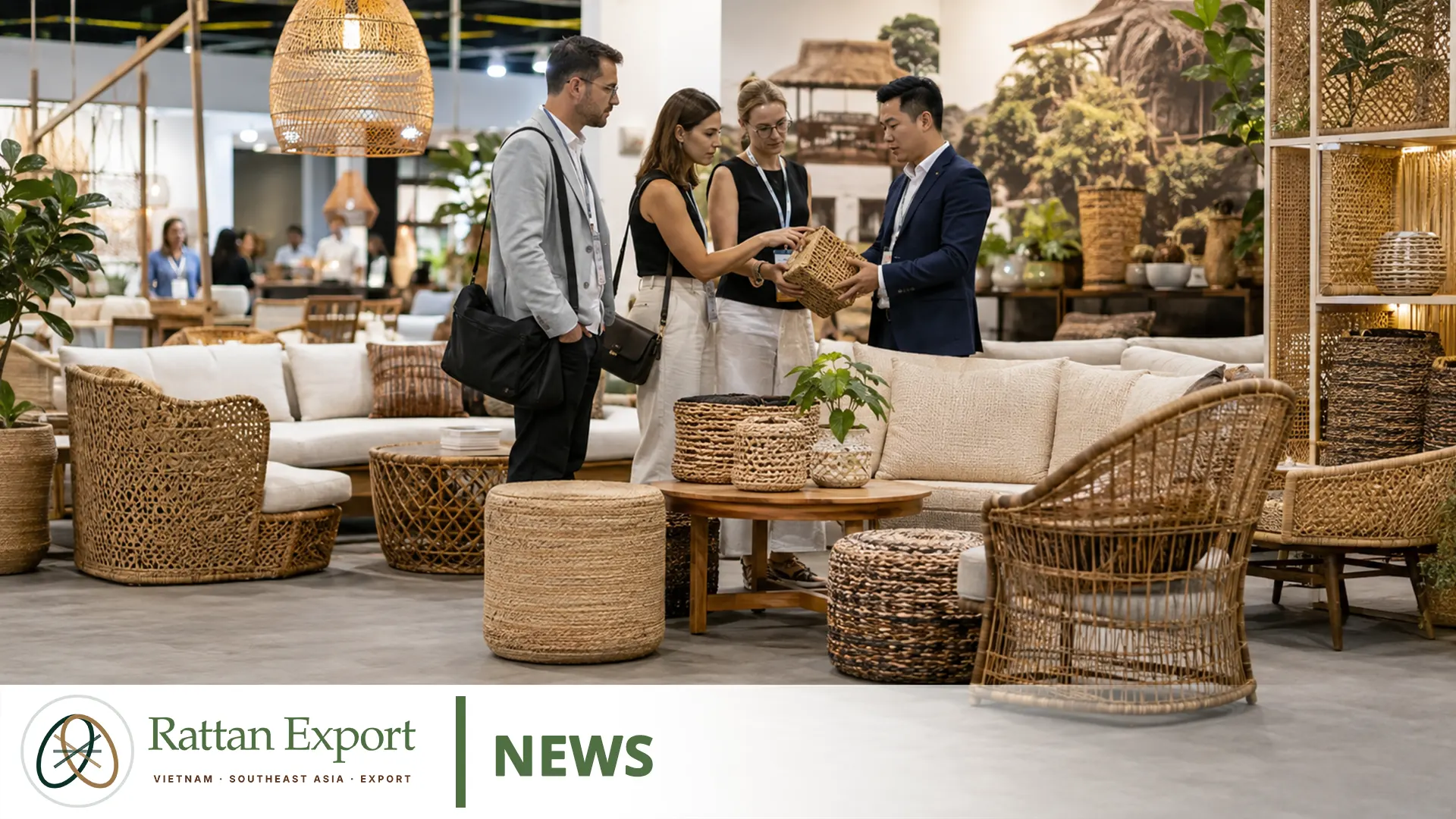
Furniture từ natural fibre đang nhận được nhiều sự chú ý hơn trong năm 2026 khi international buyer tìm kiếm product kết hợp tactile texture, craftsmanship dễ nhận biết và khả năng xây dựng material strategy có environmental impact thấp hơn. Trong furniture và handicraft supply base của Việt Nam, rattan, bamboo, seagrass, water hyacinth và các fibre khác đang xuất hiện trong chair, cabinet, bench, lighting, storage, occasional furniture và mixed-material collection thay vì chỉ nằm trong basket và decorative accessory truyền thống. Xu hướng này được thúc đẩy bởi thay đổi trong interior aesthetics, nhu cầu về material identity và áp lực ngày càng lớn lên buyer trong việc hiểu product được sourced, manufactured, documented và transported như thế nào.
Texture đang trở thành một commercial design requirement
Một tín hiệu rõ ràng đến từ HawaExpo 2026 Furniture Forum. Các thảo luận về contemporary design cho thấy thị trường đang rời khỏi những interior hoàn toàn minimalist và industrial để hướng tới không gian ấm hơn, human hơn và tactile hơn. Natural materials, handcrafted details, softer forms và textured surfaces được xác định là những yếu tố ngày càng nổi bật trong chuyển dịch đó.
Với international sourcing team, texture không chỉ là visual trend. Nó có thể tạo differentiation trong các furniture category nơi basic silhouette dễ bị copy. Một woven rattan back, seagrass panel, bamboo detail hoặc water-hyacinth surface có thể tạo material identity mạnh cho chair, cabinet hoặc storage product mà không cần toàn bộ SKU phải làm từ cùng một fibre.
| Buyer Objective | Natural-Fibre Response | Typical Application |
|---|---|---|
| Tactile interior | Visible weave và natural texture | Chair back, cabinet door, bench, headboard |
| Warm visual language | Plant-based fibre kết hợp wood | Living, dining và hospitality collection |
| Handcrafted differentiation | Manual weaving và artisan detail | Lighting, storage, décor và accent furniture |
| Mixed-material design | Fibre kết hợp metal, timber, ceramic hoặc textile | Retail và project furniture |
| Lower-impact positioning | Renewable hoặc plant-based options | Collection có evidence hỗ trợ environmental claim |
Việt Nam đã có commercial base đáng kể cho xu hướng này
Dữ liệu sơ bộ cả năm của General Department of Customs ghi nhận khoảng 900,06 triệu USD bamboo và rattan product export trong năm 2025. Cùng báo cáo ghi nhận khoảng 17,20 tỷ USD wood và wooden products và 3,83 tỷ USD furniture made from materials other than wood. Các customs category này khác nhau và không nên cộng lại thành một market figure, nhưng chúng thể hiện scale của broader furniture và home-furnishing export ecosystem mà natural fibres đang hoạt động bên trong.
Lợi thế Việt Nam còn nằm ở weaving community, export manufacturer và những company có khả năng kết hợp natural fibre với industrial frame và component. Điều này quan trọng bởi nhiều commercial product thành công thực tế là hybrid construction chứ không phải pure rattan hoặc pure bamboo.
Natural fibre đang đi vào furniture chứ không chỉ home accessories
HawaExpo 2026 supplier profiles cho thấy product mix đang rộng hơn. Viet Source Handicraft liệt kê bamboo furniture cùng storage basket, lamp, rug và home decoration sử dụng bamboo, rattan, seagrass, water hyacinth và palm leaf. Nature Craft kết hợp rattan, seagrass và water hyacinth với lighting, pottery và home décor. Vietnam Housewares hoạt động đồng thời trong wooden furniture, woven handicrafts và ceramic garden décor, tạo structure phù hợp cho mixed-material programme.
Điều này cho phép international buyer sử dụng natural fibre như một design language xuyên collection. Một coordinated range có thể gồm timber dining chair với woven rattan back, cabinet với cane door, water-hyacinth storage basket, seagrass pendant và occasional table kết hợp wood với woven detail.
Mỗi fibre tạo một design và sourcing result khác nhau
| Material | Typical Character | Furniture Role | Buyer Consideration |
|---|---|---|---|
| Rattan | Flexible, từ fine tới substantial weave | Frame, cane panel, chair back và detail | Xác định structural hay decorative |
| Bamboo | Linear, rigid hoặc split thành woven strip | Frame, component, lighting và shelving | Xác nhận species, treatment và construction |
| Water hyacinth | Thicker và visually softer | Woven surface, stool, storage, accent piece | Xác định supporting frame |
| Seagrass | Tighter natural texture | Panel, basket, seating detail, rug | Kiểm soát moisture, color và weave |
Những khác biệt này ảnh hưởng nhiều hơn appearance. Fibre thickness tác động weave density và labor time. Structural frame ảnh hưởng strength và testing. Material flexibility quyết định geometry. Surface ảnh hưởng staining và finishing. Vì vậy specification phải chính xác khi design chuyển từ showroom sample sang container-level production.
Craftsmanship đang trở thành một phần của product value
Trong mass-market sourcing trước đây, craftsmanship đôi khi bị xem như yếu tố khó standardize. Năm 2026, nó ngày càng được sử dụng có chủ đích để tạo differentiation. Visible handwoven surface có thể truyền đạt human input trong category vốn bị dominated bởi machine-produced form.
Điều đó không có nghĩa buyer nên chấp nhận uncontrolled variation. Commercial challenge là giữ dấu hiệu handmade nhưng đồng thời định nghĩa boundary cho dimension, weave density, pattern, color range và finish. Approved master sample vẫn rất quan trọng bởi những mô tả như “natural handmade finish” quá rộng để control mass production.
Lower-impact material cần evidence chứ không phải assumption
Interest đối với natural fibre còn liên quan nhu cầu của buyer về product có thể hỗ trợ lower-impact material strategy. Plant-based fibre có thể mang lại opportunity vì là biological material có khả năng tái tạo và trong một số application có thể giảm dependency vào component khác. Tuy nhiên environmental performance của finished product không thể được xác định chỉ bằng chữ “natural”.
HawaExpo 2026 Green Transition forum cũng nhấn mạnh distinction này. Expert đề xuất enterprise trước hết phải đo environmental impact, sau đó optimize operation, integrate sustainability criteria vào management rồi mới positioning business hoặc product như “green”. Forum còn đề cập lifecycle assessment, carbon data, material traceability và greenwashing risk.
Buyer vì vậy nên xem xét:
- Fibre được sourced từ đâu và như thế nào.
- Harvesting hoặc cultivation có documentation khi relevant hay không.
- Energy cho drying và processing.
- Dye, coating, adhesive và treatment.
- Durability và expected product life.
- Loại và lượng structural frame đi kèm.
- Packaging và container utilization.
- Repair, reuse hoặc end-of-life option.
Một natural-fibre chair thường là mixed-material product
Material nhìn thấy trong photo thường chỉ là một phần SKU. Woven dining chair có thể dùng solid-wood frame, rattan hoặc seagrass surface, metal fastener, adhesive và textile cushion. Cabinet có thể chủ yếu là engineered board nhưng sử dụng rattan-cane door panel.
Vì vậy sourcing database và RFQ nên phân biệt primary material, structural material, secondary material và accessory material. Gọi mọi woven product là “rattan furniture” dễ tạo error trong costing, classification, compliance review và supplier matching.
Quality control thay đổi khi material là tự nhiên
Natural fibre tạo controlled variability. Diameter, color, texture và moisture có thể thay đổi giữa raw-material batch. Handmade weaving tạo minor dimensional difference. Professional sourcing cần tolerance thực tế thay vì kỳ vọng mọi piece hoàn toàn identical.
- Raw-material inspection: xác nhận fibre identity, condition, moisture và grading.
- Frame inspection: kiểm tra timber hoặc metal structure trước weaving.
- First-piece approval: xác nhận dimension, weave pattern, tension và finish.
- In-process check: phát hiện deformation và inconsistent weaving sớm.
- Final appearance standard: định nghĩa acceptable natural variation.
- Packaging inspection: bảo vệ khỏi crushing, abrasion và moisture trong ocean transport.
Container economics có thể quyết định design có commercially viable hay không
Natural-fibre furniture có thể attractive về margin nhưng tạo freight challenge. Lightweight chair hoặc pendant lamp đôi khi chiếm rất nhiều container space. Nesting, stacking, removable leg và knock-down construction vì vậy có thể quan trọng ngang unit price.
| Logistics Question | Commercial Impact |
|---|---|
| Product có nest được không? | Có thể tăng mạnh units/container |
| Có ship knock-down được không? | Giảm CBM của furniture và lighting |
| Carton CBM bao nhiêu? | Cho phép so freight cost/unit |
| 20ft / 40ft / 40HQ chứa bao nhiêu? | Kết nối design với landed cost |
| Moisture được kiểm soát thế nào? | Quan trọng trong long ocean transit |
Buyer so sánh hai natural-fibre chair tương tự vì vậy cần xem cả FOB, packed dimensions, loading quantity, damage risk và assembly requirement. Factory price cao hơn đôi khi vẫn cho landed result tốt hơn nếu product ship hiệu quả.
Trend cũng hỗ trợ ODM và collection development
Natural fibres phù hợp với ODM vì thay đổi weave, material combination, proportion hoặc finish có thể tạo product khác biệt rõ mà không cần redesign toàn bộ structural platform. Manufacturer có thể dùng cùng một timber chair frame với nhiều woven-back option hoặc chuyển storage technique sang furniture và lighting.
Private-label buyer nhờ đó có thể tạo coordinated range với identity riêng. Development programme mạnh nhất kết hợp local material knowledge của supplier với target price, market positioning, dimensions, compliance requirement và merchandising strategy của buyer.
Buyer nên hỏi gì trước khi sourcing natural-fibre furniture?
- Exact fibre là gì và commercial name chính xác?
- Component nào thực sự load-bearing?
- Process nào in-house và process nào subcontract?
- Natural variation nào được coi là acceptable?
- Drying và moisture được kiểm soát như thế nào?
- MOQ theo SKU, color và finish là bao nhiêu?
- Có thể consolidate nhiều SKU trong một container không?
- Carton dimensions và loading quantities là bao nhiêu?
- Evidence nào hỗ trợ environmental hoặc sustainability claim?
- Repeat order có reproduce được cùng material và finish không?
Điều này có ý nghĩa gì với buyer của Rattan Export Vietnam?
Interest ngày càng lớn đối với texture, craftsmanship và potentially lower-impact materials liên quan trực tiếp tới sourcing model mà Rattan Export Vietnam đang phát triển. International buyer cần nhiều hơn một category rộng gọi là “natural furniture”. Họ cần accurate product identity, supplier linkage, material classification và commercial information đủ để hỗ trợ RFQ và container planning.
Product catalogue đang phát triển vì vậy được cấu trúc quanh supplier-linked products và material records rõ hơn cho rattan, bamboo, seagrass, water hyacinth, jute, wood, metal, fabric, lacquer và component khác. Buyer cũng có thể xem cách tiếp cận quality và compliance, tìm hiểu Vietnam sourcing và export hoặc gửi specification, quantity, destination market, packaging requirement và container target thông qua wholesale inquiry.
Natural-fibre furniture đang tăng sức hút vì đáp ứng cùng lúc nhiều buyer need: tactile identity mạnh hơn, visible craftsmanship, material diversity và khả năng xây dựng product với environmental profile được cân nhắc kỹ hơn. Nhưng B2B programme tốt nhất sẽ là những programme đi xa hơn appearance và verify fibre, construction, environmental claim, production capability, quality control và logistics phía sau từng SKU.
Nguồn dữ liệu tham khảo
- General Department of Customs of Vietnam, preliminary full-year 2025 export statistics.
- HawaExpo 2026 Furniture Forum: Anticipating Design Trends and Positioning Asian Design Identity.
- HawaExpo 2026 Green Transition forum reporting.
- HawaExpo 2026 Home Accessories và Handicraft supplier profiles.


