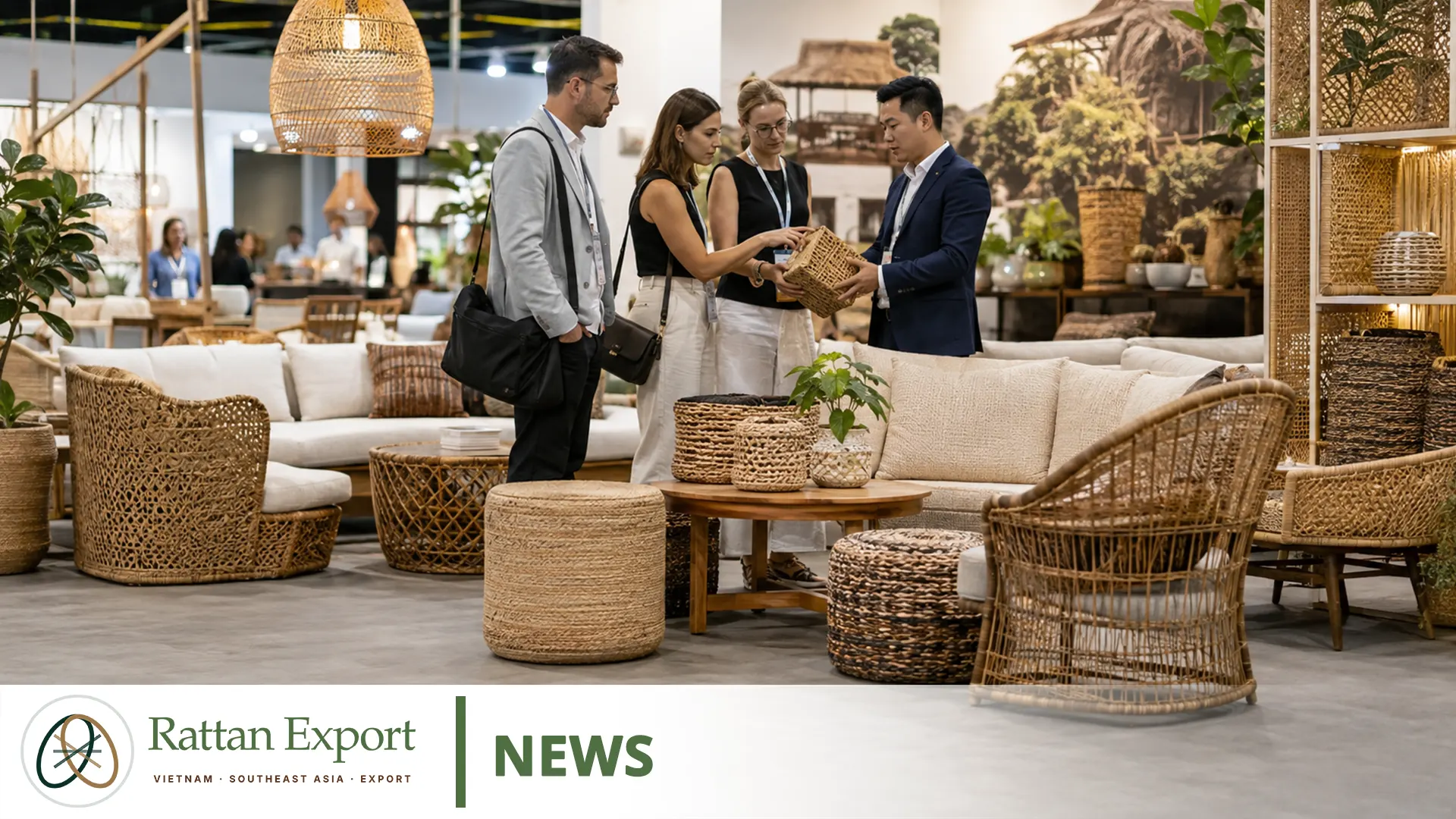
I supplier vietnamiti entrano nella stagione sourcing 2026 con collection più ampie in bamboo, rattan e natural fibres, estese a furniture, storage, lighting, home décor e lifestyle products per buyer internazionali retail, wholesale e project. Non si tratta semplicemente della prosecuzione del traditional basket weaving. Gli export manufacturer integrano sempre più le fibre naturali in coordinated commercial collections con dimensioni definite, mixed-material construction, contemporary styling, packaging specification e strutture d'ordine adatte al B2B. Per importer, wholesaler, retail chain, hospitality buyer e private-label brand, questo amplia il sourcing da bamboo furniture e rattan details a woven storage, water-hyacinth products, seagrass accessories, lighting, rugs e mixed-material home furnishings.
I natural-fibre products entrano nel 2026 come categoria export consolidata
I dati preliminari dell'intero 2025 della dogana vietnamita mostrano circa 900,06 milioni di dollari di export di bamboo e rattan products. Lo stesso report registra circa 17,20 miliardi di dollari di wood e wooden products. Le categorie non devono essere sommate o confrontate direttamente, ma mostrano l'ampiezza del commercial ecosystem vietnamita legato a furniture, handicrafts e home furnishings.
Il natural-fibre market è inoltre più ampio della customs heading “bamboo and rattan products”. I supplier vietnamiti utilizzano seagrass, water hyacinth, palm leaf, rope e altre fibre, spesso combinate con wood, metal, ceramic, fabric o paper. Una singola customs category non dovrebbe quindi essere interpretata come market size di tutti i natural materials.
I supplier profile 2026 mostrano un product mix più ampio
Le informazioni pre-show di HawaExpo 2026 mostrano chiaramente la diversificazione. Viet Source Handicraft elenca bamboo furniture indoor e outdoor, baskets e storage, lamps e lanterns, rugs, carpets e home decorations. Il material range comprende bamboo, rattan, seagrass, palm leaf e water hyacinth. Nature Craft si concentra su woven storage baskets, home décor, table/floor/pendant lighting e handmade pottery utilizzando rattan, seagrass, water hyacinth e palm leaf. Haprosimex Saigon presenta handwoven handicrafts, bamboo furniture, wooden kitchenware e planters & pots.
| Collection Area | Typical Materials | Applicazione Buyer |
|---|---|---|
| Bamboo furniture | Bamboo, rattan, wood, rope | Indoor, outdoor, resort e lifestyle collection |
| Woven storage | Water hyacinth, seagrass, rattan, metal frame | Storage, organization e home décor retail |
| Lighting | Bamboo, rattan, seagrass, fibre, metal | Pendant, floor e table-lighting programme |
| Decorative accessories | Palm leaf, natural fibre, ceramic, wood | Home-accessory range stagionali e permanenti |
| Rugs | Seagrass e woven natural fibres | Interior collection con natural texture |
| Mixed-material products | Natural fibre + wood, metal o ceramic | Retail e hospitality collection differenziate |
Il rattan va oltre il prodotto completamente woven
Rattan rimane uno dei materiali più riconoscibili dell'handicraft vietnamita, ma nelle contemporary collections svolge un ruolo più ampio di una chair o basket interamente intrecciata. Rattan cane può comparire su cabinet fronts, chair backs e decorative panels mentre wood o metal forniscono la struttura principale. Le canne di maggiore diametro possono partecipare al frame, mentre i materiali più sottili creano texture e visual identity.
Questo offre maggiore flexibility ai buyer. Un retailer può sviluppare dining chair, cabinet, bench e lighting con una stessa rattan design language senza utilizzare la stessa construction in ogni SKU. Allo stesso tempo, i material data devono essere precisi: “rattan furniture” non è una descrizione sufficiente se la struttura principale è wood, metal o engineered board.
Il bamboo supporta furniture e smaller homeware
Bamboo offre un'altra forma di flessibilità. A seconda di processing e construction può diventare structural element, strip, decorative component oppure woven material per basket e accessory. I supplier profile per la stagione 2026 mostrano bamboo in furniture, storage e home decoration e non soltanto nei traditional handicrafts.
Per buyer che costruiscono una category completa questo ha valore commerciale. Un bamboo programme può estendersi da furniture più grande a lanterns, baskets, trays e smaller accessories, creando un merchandising più coerente. Il buyer deve comunque capire se il supplier produce realmente tutte queste categorie oppure coordina diversi production partners.
Water hyacinth e seagrass rafforzano le woven collections
Water hyacinth e seagrass rimangono importanti perché hanno caratteristiche visive e fisiche differenti da rattan e bamboo. Il giacinto d'acqua essiccato produce un weave più spesso e morbido, adatto a baskets, storage e decorative surfaces. Seagrass può creare texture più compatte per baskets, rugs, furniture panels e home accessories.
Nature Craft combina nel proprio profilo 2026 water hyacinth, rattan, seagrass e palm leaf in woven storage, home décor e lighting. Viet Source presenta analogamente bamboo, rattan, seagrass, palm leaf e water hyacinth. Una material library così ampia permette ai manufacturer di sviluppare collections secondo color, texture e price positioning invece di utilizzare una singola fibre per ogni SKU.
La commercial collection è sempre più mixed-material
Uno dei principali sourcing theme del 2026 è che un natural-fibre product non deve necessariamente essere single-material. Un woven basket può avere iron frame. Un pendant light può combinare bamboo o seagrass con metal fittings ed electrical components. Un cabinet può unire timber, engineered board, rattan cane e hardware. Un planter programme può combinare woven fibre e ceramic o metal inner container.
| Product | Possible Material Structure | Buyer Verification |
|---|---|---|
| Storage basket | Water hyacinth/seagrass + metal frame | Fibre identity, frame gauge, dimension e coating |
| Rattan cabinet | Wood/MDF + rattan cane + metal hardware | Separare primary e structural materials |
| Bamboo pendant | Bamboo weave + metal fitting + electrical components | Lighting e destination-market requirements |
| Natural-fibre chair | Wood/metal frame + rattan/seagrass weave | Load-bearing construction e weave specification |
| Decorative planter | Natural fibre + inner pot/frame | Moisture exposure e inner construction |
Questo rende più importanti product records precisi. La fibre visibile non dovrebbe essere automaticamente considerata il primary structural material. Costing, testing, labeling, customs treatment, packaging e repeat-order consistency possono dipendere dalla composizione completa.
Gli export supplier offrono scale e MOQ differenti
I profile 2026 dimostrano anche che il natural-material segment non è limitato a piccoli craft workshop. Viet Source dichiara una production facility di 10.000 m², capacità di circa 10 container al mese e MOQ 200. Nature Craft indica 12.000 m², circa 50 container al mese e MOQ 100 items. Haprosimex dichiara 5.000 m² e MOQ di 300 pezzi o sets, servendo Stati Uniti, Europa, Giappone, Australia e Middle East.
Queste sono supplier-reported capacities e devono essere verificate durante il procurement, ma dimostrano che il natural-fibre sourcing vietnamita può essere organizzato anche su container-level export programmes. Per il buyer conta soprattutto la capacità realmente disponibile nel production window richiesto.
Design capability diventa parte dell'offerta
I buyer internazionali richiedono sempre più supplier capaci di andare oltre la semplice riproduzione di un existing basket. Le descrizioni HawaExpo evidenziano in-house design, customization e coordinated collections. Nature Craft descrive un proprio design e production team, mentre Haprosimex sottolinea customizable solutions e creative design capability.
Questo crea valore sia nell'OEM sia nell'ODM. Un buyer con finished drawing necessita precisione e material consistency. Un buyer con soltanto target market, target price e visual direction può invece utilizzare il manufacturer per modificare existing products, proporre fibre combinations, adattare dimensions o sviluppare un coordinated assortment.
Natural texture non elimina il quality control
Handmade e natural products hanno inevitabilmente una certa visual variation, ma questo non elimina la necessità di specifications. Buyer professionali devono definire quale variation sia acceptable e quale differenza costituisca defect. Fibre diameter, moisture, color, weave tension e finishing influenzano appearance e durability della mass production.
- Material identity: specificare esattamente rattan, bamboo, seagrass, water hyacinth o altra fibre.
- Moisture control: verificare drying e storage prima dello ocean shipment.
- Weaving tolerance: definire gap, tension e pattern consistency accettabili.
- Dimensions: usare tolerance realistiche per handmade products.
- Color range: approvare la natural o stained color window.
- Frame quality: verificare strutture wood o metal sotto il weave.
- Packaging: considerare crushing, deformation, mold risk e abrasion.
Container economics può favorire o penalizzare i natural-fibre products
Le natural-fibre collections richiedono careful logistics planning. Molti baskets possono essere nested e utilizzare il container in modo molto efficiente. Knock-down bamboo furniture può ridurre CBM. Large rigid woven lamps, decorative chairs o non-nesting storage possono invece consumare grande volume pur avendo peso ridotto.
Prima del final SKU approval, il buyer dovrebbe quindi conoscere carton dimensions e loading quantities. Un basket leggermente più costoso ma progettato per nesting può avere un landed cost inferiore a un design più economico che utilizza male il container.
Cosa chiedere prima di approvare una collection 2026
- Quale exact fibre utilizza ogni SKU? Evitare “natural fibre” generico.
- Quale material è structural? Separare visible weave e load-bearing frame.
- Chi esegue il weaving? Comprendere factory, workshop e household production stages.
- Qual è il MOQ? Confermare per SKU, color, finish e total programme.
- È possibile consolidare gli SKU? Mixed-container flexibility influenza la wholesale economics.
- Qual è la loading quantity reale? Ottenere carton CBM e stime 20ft/40ft/40HQ.
- Quale sample definisce production? Usare approved master sample e written specification.
- Come vengono controllati i repeat orders? Verificare material, color e weave consistency.
Una collection strategy può valere più di singoli prodotti
La varietà dei Vietnamese natural-material supplier consente di creare coordinated product families invece di isolated SKUs. Un retailer può combinare woven storage, lamps, planters, occasional furniture e decorative accessories intorno a una palette coerente di rattan, bamboo, water hyacinth e seagrass. Hospitality buyer possono riprendere le stesse texture in guest rooms, restaurants e public areas.
Questo può rafforzare merchandising e container utilization, ma aumenta anche l'esigenza di supplier coordination. Dimensions, colors, finishes, packaging e delivery schedules devono rimanere compatibili attraverso prodotti e production lines differenti.
Cosa significa per i buyer di Rattan Export Vietnam
Le natural-fibre collections che entrano nel 2026 sono direttamente rilevanti per il sourcing model sviluppato da Rattan Export Vietnam. I buyer hanno bisogno di più di una generic category “rattan products”. Devono distinguere bamboo, rattan, seagrass, water hyacinth e mixed-material construction e sapere quale supplier è realmente responsabile di ogni SKU.
Il nostro catalogo prodotti viene strutturato intorno a supplier-linked products e classificazioni più chiare tra natural fibres, wood, metal, fabric, lacquer e altri components. International importer, wholesaler, distributor, retailer e hospitality buyer possono inoltre conoscere il nostro approccio a quality e compliance, approfondire Vietnam sourcing ed export oppure inviare product specifications, quantities, destination markets, packaging requirements e container targets tramite la wholesale inquiry.
I supplier vietnamiti entrano nel 2026 con un'offerta natural-fibre più ampia del traditional handicraft. Bamboo furniture, rattan details, water-hyacinth storage, seagrass décor, lighting e mixed-material collections fanno sempre più parte della stessa B2B sourcing conversation. Per il buyer, l'opportunità non consiste soltanto nello scegliere un natural material, ma nel collegare supplier, construction, quality standard e container strategy in una collection commercialmente repeatable.
Fonti e riferimenti
- General Department of Customs of Vietnam, preliminary full-year 2025 export statistics.
- HawaExpo, Vietnam Home Accessories Exhibition at HawaExpo 2026, 30 gennaio 2026.
- HawaExpo 2026 exhibitor profiles di Viet Source Handicraft, Nature Craft e Haprosimex Saigon.
- HawaExpo, Handcrafted in Vietnam Furniture & Gifts, 8 febbraio 2026.