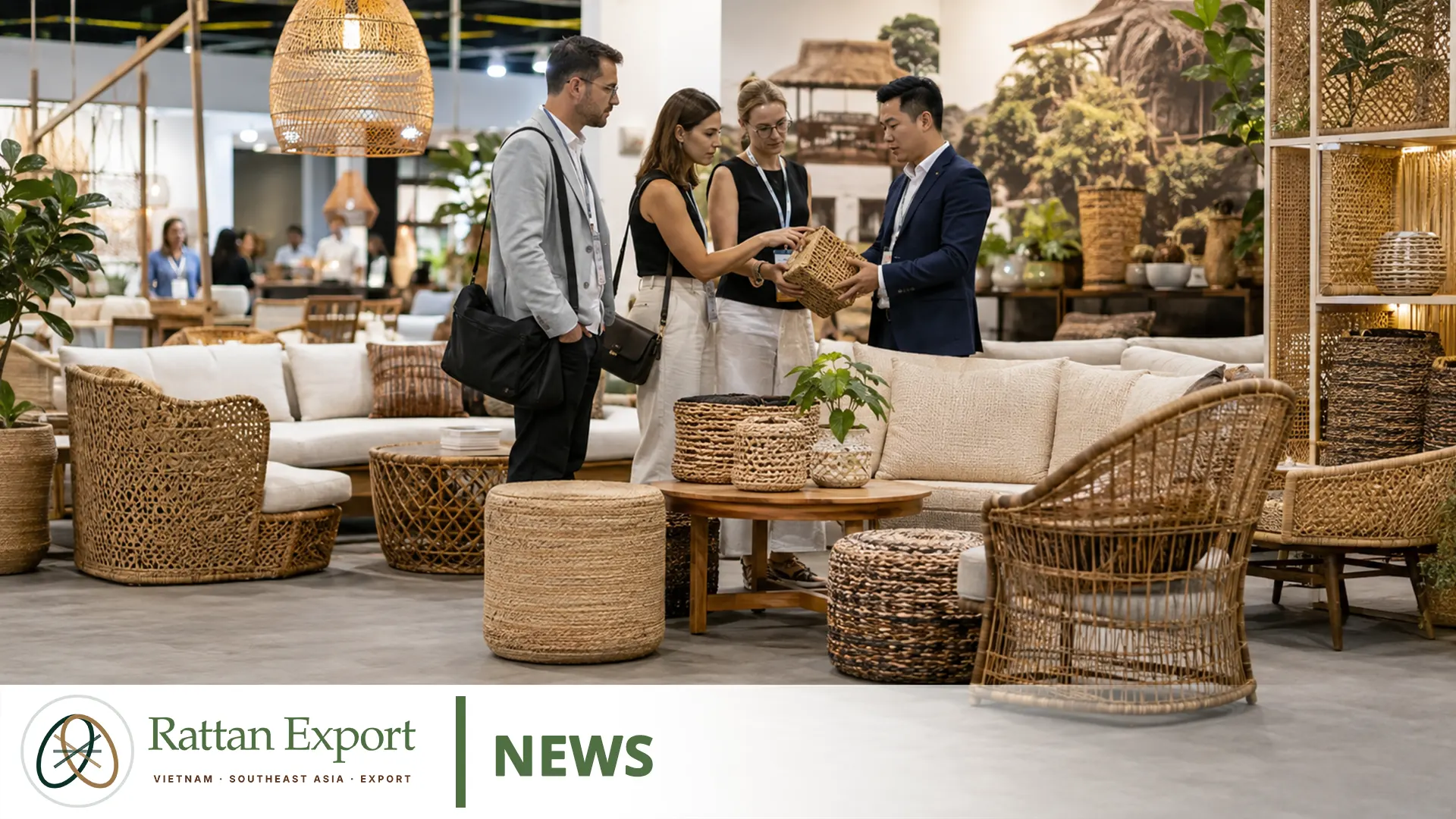
Traditional weaving e natural materials occupano un ruolo centrale a HawaExpo 2026, mostrando ai buyer internazionali di furniture e home furnishing che l'offerta export vietnamita si estende oltre l'industrial wood manufacturing verso un ecosistema radicato di bamboo, rattan, seagrass, water hyacinth e altri handcrafted materials. Mentre la Ho Chi Minh City Export Furniture Fair prosegue al Saigon Exhibition and Convention Center dal 4 al 7 marzo, le fibre naturali compaiono non soltanto in baskets e decorative accessories ma anche in furniture, lighting, storage, mixed-material collections e dimostrazioni pratiche delle tecniche artigianali vietnamite. Per importer, wholesaler, retail chain, hospitality group e private-label brand, la fiera offre una visione concreta di come traditional techniques, contemporary design e commercial export production possano convivere.
Traditional weaving diventa parte della buyer experience
Uno degli esempi più chiari è stato il workshop ufficiale The Art of Vietnamese Handicrafts & Weaving del 5 marzo. HAWA e Vietnam Housewares hanno organizzato l'attività dalle 09:00 alle 16:00 nella Workshop Area – Tent C1 del SECC. Buyer, designer, architect e visitor hanno potuto sedersi accanto agli artisan vietnamiti e sperimentare direttamente il processo di weaving.
I partecipanti potevano realizzare basket, tray o mat con cỏ năng tượng e water hyacinth provenienti dal Mekong Delta. L'attività rendeva visibili texture, flexibility e manual skill che trasformano la raw material in finished product. Vietnam Housewares veniva inoltre presentata dall'organizzatore come exporter di questi e altri natural materials verso mercati comprendenti United States, Australia e Japan.
Perché un weaving workshop interessa un professional buyer
Per un B2B buyer, vedere il processo produttivo permette di capire aspetti che una fotografia non mostra: thickness e flexibility della fibra, tension del weave, costruzione di edges e corners e rapporto tra woven surface e structural frame.
Il workshop evidenzia inoltre che traditional craftsmanship e commercial manufacturing non sono opposti. Una export-ready production può conservare manual weaving introducendo controlled specifications, approved samples, quality inspection, packaging standards e container planning.
| Craft Element | Cosa osserva il Buyer | Commercial Question |
|---|---|---|
| Raw fibre | Variation naturale di thickness, color e texture | Come vengono selezionate, essiccate e classificate le fibre? |
| Hand weaving | Manual tension e pattern construction | Quali tolerances sono accettabili? |
| Frame | Struttura sotto o intorno al weave | È rattan, timber, bamboo o metal? |
| Finishing | Natural, stained o coated surface | Come viene gestita la color consistency? |
| Finished piece | Handcrafted visual character | Il design può essere ripetuto in commercial quantities? |
I natural materials sono visibili in tutta la exhibition
La sezione Home Accessories e Handicraft di HawaExpo comprende ceramics, bamboo, rattan, lacquerware e woven products. I supplier profile ufficiali mostrano materiali naturali in diverse product categories e non in un unico segmento artigianale.
Haprosimex Saigon presenta woven homeware, laundry baskets e storage in rattan, seagrass, bamboo, rope, wood e metal. Vietnam Housewares dispone di produzione separata per wooden furniture, woven handicrafts e ceramic garden décor e utilizza una vasta material library con rattan, seagrass e bamboo. Viet Source Handicraft lavora con natural fibres in bamboo furniture, baskets, lighting e rugs utilizzando bamboo, rattan, seagrass, palm leaf e water hyacinth.
Nature Craft descrive woven storage baskets, home décor e table, floor e pendant lighting in water hyacinth, rattan, seagrass e palm leaf. Duy Thanh Art Export presenta handwoven baskets, lanterns, mirrors, trays, tableware e home décor in seagrass, water hyacinth, bamboo, rattan e palm leaf. Questi esempi mostrano l'ampiezza commerciale dell'handicraft vietnamita.
Natural fibre non significa soltanto basket
Il sourcing internazionale associa spesso le natural fibres soprattutto ai baskets. HawaExpo mostra applicazioni più ampie. Rattan cane può diventare cabinet panel o chair back. Bamboo può creare furniture structures o pendant lighting. Water hyacinth può essere intrecciato intorno a storage frames. Seagrass può essere utilizzato per baskets, décor, rugs e furniture components. Natural fibres possono inoltre essere combinate con ceramic, timber e metal.
| Material | Applicazioni | Potenziale B2B Category |
|---|---|---|
| Rattan | Furniture, chair backs, cabinet panels, baskets, lighting | Furniture, décor, hospitality e retail |
| Bamboo | Furniture, baskets, lighting, accessories | Homeware, furniture e lifestyle |
| Water hyacinth | Storage, baskets, décor e woven surfaces | Organization e natural-texture collections |
| Seagrass | Baskets, décor, rugs e furniture components | Home accessories e mixed material |
| Palm leaf | Decorative e woven accessories | Gift, décor e lifestyle |
Traditional technique incontra contemporary design
La presenza del traditional weaving in una furniture export fair non è semplice nostalgia. I supplier vietnamiti stanno adattando inherited techniques a forme compatibili con contemporary retail e interior design. Pattern tradizionali possono diventare cabinet fronts, lighting o modern storage. Le natural fibres possono ammorbidire visivamente metal furniture o creare tactile contrast su wood products.
Questo apre opportunità per coastal, tropical, organic-modern, Scandinavian-influenced, resort e handcrafted collections. La tecnica può mantenere un'identità vietnamita riconoscibile mentre dimensioni, color palette e mixed-material construction vengono adattate ai mercati internazionali.
Handcrafted non significa necessariamente small scale
HawaExpo dimostra inoltre che i natural-material handicrafts possono essere integrati in organized export manufacturing. I profile degli exhibitor riportano production facilities, container-level capacity, MOQ strutturati e established export markets.
Nature Craft dichiara 12.000 m², 100 employees, circa 50 container al mese e MOQ 100 items. Duy Thanh Art Export indica 2.000 m², capacità fino a 50 container 40HQ mensili e MOQ 300 pezzi. Viet Source riporta 10.000 m², circa 10 container al mese e MOQ 200. Sono supplier-reported figures da verificare nel procurement effettivo, ma mostrano che le handwoven categories possono funzionare all'interno di commercial export operations.
La exhibition collega craft e industrial manufacturing
La rilevanza più ampia di HawaExpo deriva dal collocare handicraft suppliers nello stesso sourcing environment di grandi furniture manufacturers, material companies, designer e production specialists. L'official opening ha definito la fiera una trade-promotion platform per mostrare manufacturing capabilities, innovative products e technologies e sviluppare rapporti con partner locali e internazionali.
Il 6 marzo l'organizzatore ha indicato più di 2.500 booths durante l'annuncio dei Top Best Booth Awards. Poiché la fiera prosegue fino al 7 marzo, final attendance e post-show results non devono ancora essere trattati come dati conclusivi.
Material identification rimane essenziale
Le tecniche di weaving possono rendere fibre diverse simili nelle fotografie. Un product apparentemente in rattan può essere in realtà seagrass o water hyacinth. “Wicker” indica normalmente una woven construction e non una specifica botanical material. Synthetic wicker può avere un aspetto simile ma una supply chain completamente diversa.
I professional product data dovrebbero distinguere:
- Primary material: materiale che definisce principalmente il product.
- Structural material: frame o load-bearing component.
- Secondary materials: altri materiali significativi.
- Accessory materials: handles, hardware, liners e fittings.
- Natural o synthetic identity: particolarmente importante per “rattan” e “wicker”.
Quality control deve gestire la natural variation
Natural-material products non sono identici a prodotti completamente industriali. Fibre color, thickness e texture presentano natural variation e manual weaving può generare piccole differenze dimensionali. Il buyer non deve eliminare ogni variation ma definire il commercial acceptable range.
- Approvare exact material e construction attraverso un master sample.
- Definire permissible natural color variation.
- Stabilire dimension tolerances realistiche.
- Verificare drying, moisture e storage procedures.
- Definire weave pattern, density e tension.
- Controllare hidden frame e visible woven surface.
- Documentare finishing, dyes e coatings.
- Verificare packaging contro deformation e moisture risk.
Container planning conta anche con prodotti leggeri
I natural-fibre products possono essere lightweight ma molto voluminosi. Nestable baskets possono sfruttare il container molto bene, mentre grandi woven lamps e rigid decorative items possono occupare molto CBM.
Buyer di furniture e homeware dovrebbero quindi richiedere carton dimensions e loading quantities già nel product development. Nesting, folding o knock-down construction possono ridurre landed cost più di una piccola riduzione del factory unit price.
| Logistics Field | Buyer Requirement |
|---|---|
| Carton dimensions | Necessarie per CBM calculation |
| Units per carton | Misurano packaging efficiency |
| Nesting ratio | Importante per baskets e storage |
| Knock-down structure | Può ridurre furniture e lighting volume |
| 20ft / 40ft / 40HQ quantity | Permette un confronto realistico del landed cost |
| Moisture protection | Importante per natural fibres durante ocean transit |
Traditional craft può supportare OEM e ODM
Per OEM buyer, Vietnamese weaving expertise può seguire drawing, dimensions e material specification definiti. In ODM, la conoscenza del supplier su local fibres e production techniques può contribuire al product development. Una factory può proporre un weave diverso, cambiare fibre per raggiungere target texture o cost oppure trasformare basket-making techniques in Furniture e Lighting.
Il development process migliore combina creative flexibility e documentation. Material, dimensions, weave, finish, packaging e acceptable variation devono essere concordati prima della mass production.
Cosa significa HawaExpo 2026 per Rattan Export Vietnam
La visibilità di weaving e natural materials a HawaExpo 2026 riflette direttamente il sourcing model sviluppato da Rattan Export Vietnam. Natural-material sourcing richiede molto più di migliaia di belle product photos. Il buyer deve sapere di cosa è realmente composto il product, quale manufacturer è collegato allo SKU e se la commercial production structure corrisponde all'ordine previsto.
Il nostro catalogo prodotti viene quindi strutturato intorno a supplier-linked products e material classification più chiara per rattan, bamboo, seagrass, water hyacinth, jute, wood, metal, fabric, lacquer e altri components. International buyers possono inoltre approfondire quality e compliance, conoscere Vietnam sourcing ed export oppure inviare specifications, quantities, destination markets, packaging e container requirements attraverso la wholesale inquiry.
HawaExpo 2026 mostra che il traditional weaving heritage vietnamita non è separato dalla modern export industry. Le stesse skill che trasformano fibre del Mekong Delta in handmade baskets possono sostenere Furniture, Lighting, Storage e Mixed-Material Collections per il commercio internazionale. L'opportunità consiste nel preservare authenticity del craft aggiungendo material control, specifications, quality systems e logistics planning necessari alla commercial repeatability.
Fonti e riferimenti
- HawaExpo, The Art of Vietnamese Handicrafts & Weaving Workshop, 5 marzo 2026.
- HawaExpo, Official Opening of the Ho Chi Minh City Export Furniture Fair 2026.
- HawaExpo, Vietnam Home Accessories Exhibition 2026.
- HawaExpo 2026 exhibitor profiles di Nature Craft, Viet Source Handicraft, Vietnam Housewares, Haprosimex Saigon e Duy Thanh Art Export.
- HawaExpo, Top Best Booth Awards, 6 marzo 2026.