Rattan Export buyer guide: What Is Cane Webbing? Applications, Grades And Wholesale Sourcing.
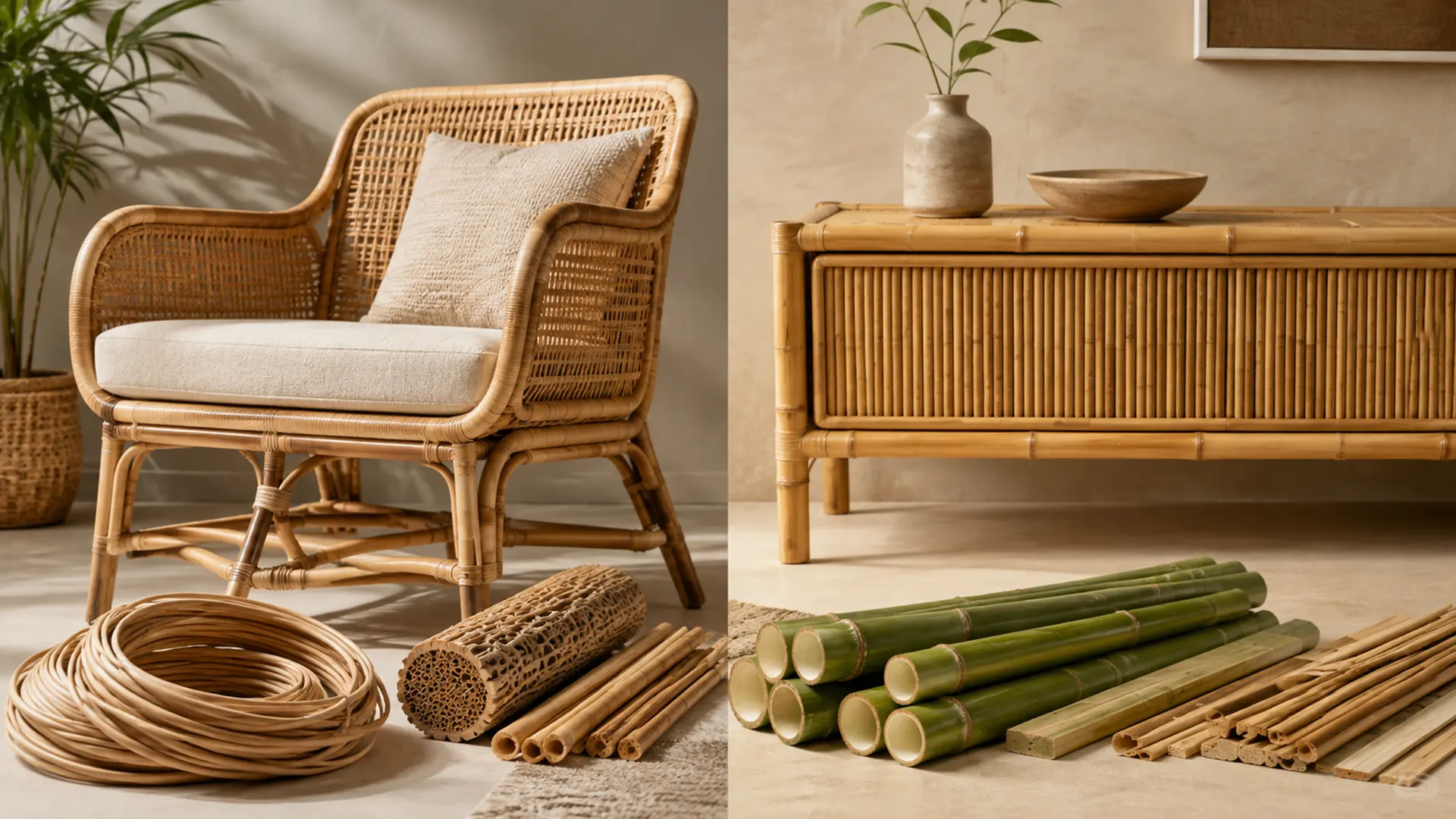
Cane webbing is a pre-woven natural material commonly produced from thin strips of rattan peel and supplied as sheets or rolls for furniture, cabinetry, lighting and decorative products. Instead of weaving every panel directly onto the final product, manufacturers can cut a prepared webbing pattern to size and attach it to a frame, groove, panel or structural opening. This makes cane webbing especially useful for repeatable wholesale production where buyers need a consistent woven appearance across multiple SKUs.
For importers, furniture brands, cabinet manufacturers, hospitality buyers, interior contractors and private-label programs, cane webbing should be treated as a technical component rather than simply as “rattan mesh.” Pattern, strand width, opening size, colour, roll width, material quality, moisture condition, defect limits and installation method can all affect the final appearance, durability, FOB price and production efficiency.
Within the Vietnam rattan, bamboo and natural-fibre production ecosystem, cane webbing may be sourced from specialist weaving producers, furniture factories, material traders or integrated manufacturers. Buyers should therefore define the exact webbing specification in the RFQ rather than assuming every supplier uses the same material, grade or pattern.
What Exactly Is Cane Webbing?
Cane webbing is a woven sheet material, traditionally made from processed rattan peel or cane strips. The outer skin of suitable rattan is split, sized and woven into repeating patterns. The finished webbing may then be supplied in rolls or cut sheets.
Common applications include:
- Chair backs
- Chair seats
- Cabinet doors
- Wardrobe panels
- Sideboard fronts
- Headboards
- Room dividers
- Lighting shades
- Decorative wall panels
- Drawer fronts
The webbing may be used as a decorative surface, a semi-functional breathable panel or, in certain chair applications, as part of the seating or back-support system. The intended use should therefore be stated clearly.
Cane Webbing Is Not The Same As Rattan Core
One of the first sourcing distinctions is between rattan peel and rattan core.
Rattan peel comes from the outer surface of the rattan stem and is commonly used for cane webbing and decorative weaving because it provides a relatively smooth, strong surface.
Rattan core comes from the inner portion and may be processed into round, oval or flat forms for different weaving and binding applications.
Buyers asking for traditional cane webbing should confirm whether the supplier is using natural rattan peel, another natural fibre or a synthetic substitute.
Natural Cane Webbing Vs Synthetic Webbing
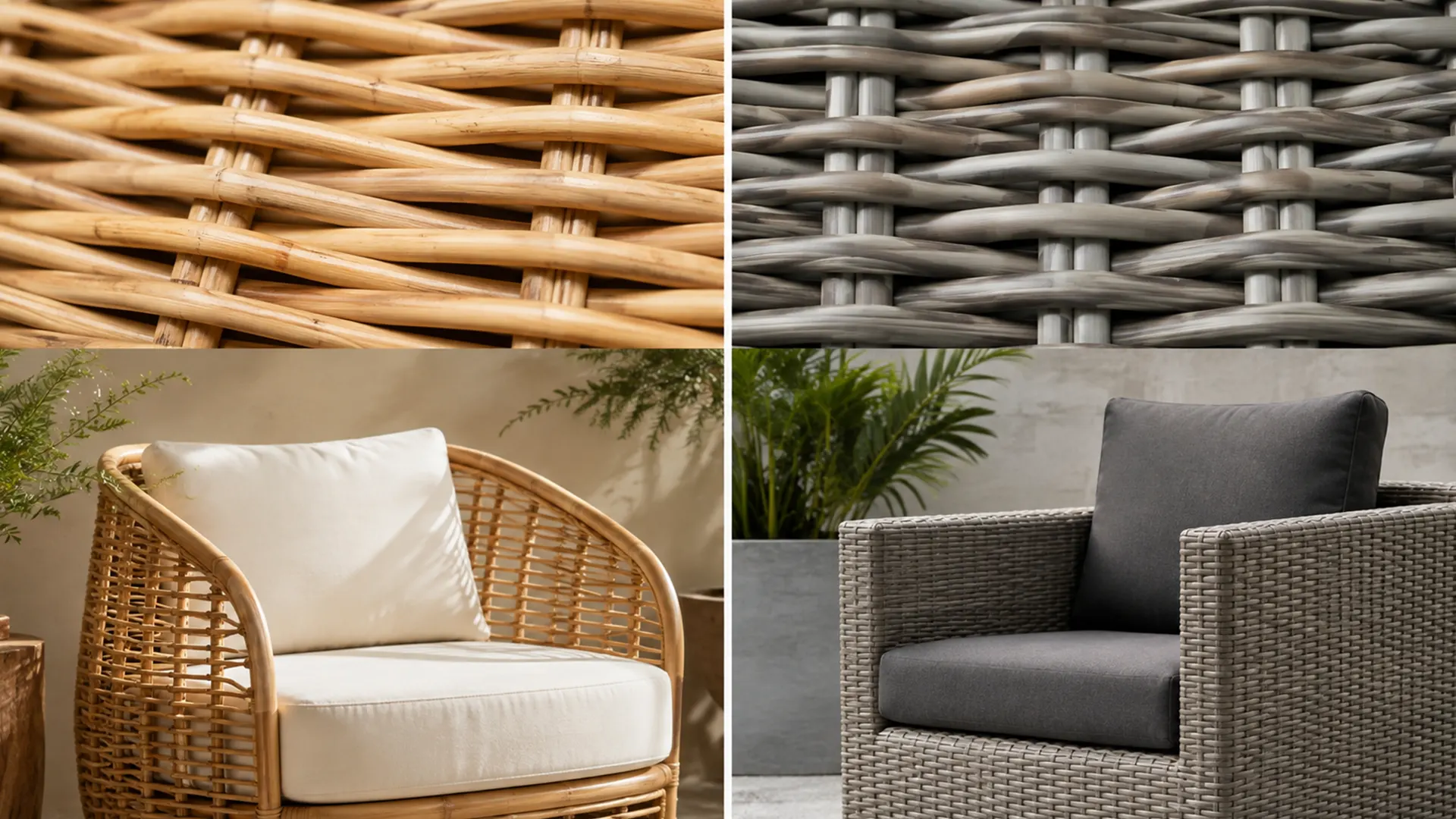
Natural cane webbing and synthetic imitation webbing may look similar in photographs, but they are different material systems.
Natural cane webbing typically offers:
- Natural colour variation
- Organic surface character
- Traditional furniture appearance
- Real rattan material story
Synthetic alternatives may offer:
- More uniform colour
- Different environmental resistance
- Different cleaning behaviour
- Different consistency between batches
The product specification, marketing description and quotation should identify which material is actually being supplied.
1. Open-Weave Cane Webbing
Open-weave cane webbing contains visible spaces between the woven strands. One of the most recognized forms is the traditional multi-directional pattern often seen on chair backs and cabinet doors.
Open patterns can provide:
- Visual lightness
- Airflow
- Traditional handcrafted appearance
- Lower visual mass in cabinet fronts
Opening size, strand width and pattern geometry should be specified because small changes can noticeably alter the appearance.
2. Close-Weave Cane Webbing
Close-weave patterns use tighter strand spacing and create a denser surface.
These patterns can be appropriate for:
- Furniture panels requiring less transparency
- Decorative inserts
- Some chair seats
- Storage furniture
- Lighting applications
Dense patterns can use more material and labour than open patterns, which may affect price.
3. Pattern Is A Technical Specification
A buyer should never request only “natural cane webbing” if the pattern matters to the product design.
The RFQ should include:
- Pattern image or drawing
- Opening dimensions
- Strand width
- Strand direction
- Repeat pattern
- Desired colour
Two materials described with the same general name may look very different once installed.
4. Strand Width Matters
Strand width changes both appearance and performance. Finer strands create a more delicate visual texture, while wider strands create a stronger graphic effect.
The buyer should confirm whether strand width is:
- Nominal
- Measured after processing
- Subject to agreed tolerance
Natural material will not behave like perfectly uniform extruded plastic, but commercial production still requires a controlled range.
5. Opening Size Matters
In open cane patterns, the size of the visible openings affects:
- Transparency
- Visual scale
- Material consumption
- Suitability for the intended panel size
A large opening may look attractive on a cabinet door but inappropriate on a small drawer front. Product proportions should guide the webbing specification.
6. Roll Width Is Critical For Wholesale Production
Cane webbing is commonly supplied in standard or supplier-specific roll widths. Buyers should confirm actual usable width rather than relying on a general catalogue description.
Roll width affects:
- Cutting yield
- Panel orientation
- Waste rate
- Number of seams
- Production cost
If the finished panel is close to the maximum roll width, the buyer should confirm whether edge trimming reduces the usable dimension.
7. Roll Length Should Be Confirmed
Suppliers may quote cane webbing by roll, metre, square metre or another unit. The commercial quotation should therefore state:
- Quoted unit
- Roll width
- Roll length
- Usable area
- Minimum order quantity
This makes supplier quotations easier to compare.
8. “Grade” Is Not Always A Universal Standard
Terms such as Grade A, Premium, Export Grade or First Quality may be used by suppliers, but there is not necessarily one universal grading system applied identically across all cane-webbing producers.
Professional buyers should therefore define grade through measurable or visually approved criteria rather than relying only on a grade name.
9. What Should A Cane Webbing Grade Actually Control?
A practical quality definition can include:
- Strand-width consistency
- Colour range
- Pattern accuracy
- Broken strands
- Split strands
- Dark marks
- Surface contamination
- Loose weaving
- Edge damage
- Splices or repairs
An approved sample should establish the acceptable commercial appearance.
10. Colour Grade Should Be Defined Visually
Natural rattan peel can vary from lighter cream tones to warmer or darker natural shades depending on raw material and processing.
Buyers should decide whether they want:
- Light and relatively uniform material
- Natural controlled variation
- Warmer natural tone
- Material intended for later staining
Colour should preferably be approved physically rather than only through photographs.
11. Natural Colour Variation Is Not Automatically A Defect
Because cane webbing is made from natural material, limited colour variation can be normal.
However, buyers may reasonably reject:
- Severe uncontrolled colour differences
- Large dark stains outside the approved range
- Mold marks
- Contamination
- Burnt or damaged material
The distinction between acceptable natural variation and defect should be documented before production.
12. Pattern Accuracy Matters Across Large Furniture Runs
Small pattern differences may become very visible when dozens or hundreds of cabinet doors are displayed together.
Buyers should check:
- Pattern repeat
- Alignment
- Opening consistency
- Strand direction
- Diagonal symmetry where relevant
For retail programs, repeatability can be commercially important even when the material is handcrafted.
13. Broken Strands Need Defined Limits
Natural webbing can develop occasional damaged strands during weaving, rolling, transport or cutting.
The buyer should define whether broken strands are:
- Not accepted in visible areas
- Allowed only outside the usable cutting zone
- Repairable under an approved method
Without a clear standard, supplier and buyer may judge the same roll very differently.
14. Splices And Repairs Should Be Controlled
Some webbing may contain joined or repaired strands. Whether this is acceptable depends on the intended product and visibility.
For premium cabinet fronts or chair backs, buyers may require stricter limits than for hidden decorative inserts.
15. Surface Cleanliness Matters
Buyers should inspect for:
- Dust
- Oil marks
- Processing residue
- Foreign fibres
- Mold
- Discolouration
Material cleanliness is particularly important when the webbing will receive a transparent finish that leaves the natural surface visible.
16. Moisture Condition Is Important
Cane webbing is a natural material and can react to changes in moisture. Material that is packed, stored or installed under unsuitable conditions may change tension or shape.
Moisture-related controls should be part of the quality-control and pre-shipment process.
17. Webbing Tension Can Change During Installation
Installation method can significantly affect the finished appearance.
Depending on the furniture system, manufacturers may:
- Stretch and staple the webbing
- Install it into a groove
- Use spline systems
- Clamp it between frames
- Bond it to a supporting panel
The supplier should understand the final installation method before cutting material.
18. Traditional Chair Caning And Pre-Woven Webbing Are Different Processes
Hand-caning directly through holes in a chair frame is different from installing a pre-woven cane sheet.
Pre-woven webbing can improve production speed and repeatability for suitable products, but it requires a frame designed for sheet installation.
19. Chair Seats Need More Care Than Decorative Panels
If cane webbing is intended for a load-bearing seat, the buyer should evaluate:
- Pattern suitability
- Strand condition
- Installed tension
- Frame support
- Attachment system
- Intended load
A decorative cabinet-door webbing specification should not automatically be used for a functional seat.
20. Chair Backs Often Use Cane Webbing Efficiently
Chair backs are one of the most common applications because the material provides:
- Visual lightness
- Natural texture
- Ventilation
- Traditional design language
The frame geometry must still provide correct support and secure attachment.
21. Cabinet Doors Are A Major Wholesale Application
Cane webbing is widely used for:
- Sideboards
- Wardrobes
- Media cabinets
- Nightstands
- Kitchen or pantry furniture
- Display cabinets
For cabinet programs, buyers should confirm panel size, weave direction, colour matching and whether the material is installed under tension.
22. Headboards Can Use Large Cane Panels
Large headboards can create attractive visual impact, but wider panels increase the importance of:
- Roll-width planning
- Pattern alignment
- Tension
- Flatness
- Colour consistency
23. Lighting Applications Need Their Own Review
Cane webbing is also used in lampshades and decorative lighting structures.
Buyers should evaluate:
- Pattern scale
- Light transmission
- Heat-related design considerations
- Frame attachment
- Product-specific compliance requirements
Electrical and lighting compliance should be assessed separately from the natural webbing itself.
24. Wall Panels And Room Dividers Can Use Cane Webbing
Large decorative applications can take advantage of the material's texture and transparency.
However, wider areas can reveal:
- Pattern distortion
- Uneven tension
- Colour variation
- Seams
The panel design should therefore be coordinated with available roll dimensions.
25. The Supporting Frame Matters As Much As The Webbing
Cane webbing may be installed into:
- Timber
- Rattan
- Metal
- Engineered wood components
Frame accuracy, groove dimensions, edge finishing and tensioning method can determine whether the final surface looks professional.
26. Webbing Can Be Supplied Natural Or Finished
Depending on supplier capability and buyer requirements, cane webbing may be supplied:
- Natural and unfinished
- Pre-stained
- Pre-coated
- Installed and finished together with the furniture
The buyer should clarify who is responsible for colour matching and final finish.
27. Staining Cane Webbing Requires Sample Approval
Natural strands can absorb colour differently, especially when surface characteristics vary.
Before mass production, approve:
- Target colour
- Application method
- Gloss level
- Acceptable strand-to-strand variation
28. Paint Can Change The Character Of The Webbing
Opaque paint can create a very different commercial appearance from natural cane. It may also emphasize or conceal certain surface details.
Painted cane webbing should therefore be sampled as a finished assembly rather than approved from a raw roll alone.
29. Buyers Should Confirm Whether The Webbing Is Bleached Or Chemically Treated
If a buyer requires a particular colour-processing method or restricts certain chemical treatments, this should be stated in the material specification.
Do not assume two light-coloured webbings were processed in the same way.
30. Sustainability Claims Need Evidence
Cane webbing is a natural-material product, but claims such as certified, responsibly sourced, traceable or sustainable should be supported by appropriate documentation when required by the buyer or destination market.
Natural material alone is not sufficient proof of a specific environmental claim.
31. Wholesale Buyers Should Request A Material Data Sheet
The supplier's commercial data sheet can include:
- Material description
- Pattern code
- Strand width
- Opening size
- Roll width
- Roll length
- Colour grade
- Finish
- MOQ
- Packing method
This creates a stronger basis for repeat orders.
32. Use A Pattern Code
Each approved pattern should have a unique code.
For example:
- CW-01 Open Hex
- CW-02 Close Weave
- CW-03 Diagonal Pattern
The names are only illustrative. The buyer's actual coding system should correspond to the approved material.
33. Record The Approved Roll Width
For repeat orders, the same pattern in a different roll width can affect cutting yield and cost.
Width should therefore be part of the controlled specification rather than treated as a purchasing detail.
34. Cutting Yield Matters For Furniture Factories
A roll may appear economical per square metre but produce high waste if panel dimensions do not fit efficiently within the usable width.
Factories should calculate:
- Panels per roll width
- Required cutting direction
- Edge waste
- Defect allowance
The lowest roll price does not always create the lowest installed cost.
35. Pattern Direction Can Increase Waste
If the pattern has a clear visual direction, panels may not be rotated freely during cutting.
This can reduce material yield and should be considered when comparing quotations.
36. Installed Cost Is More Important Than Raw Webbing Price
The buyer should consider:
- Raw webbing cost
- Cutting waste
- Installation labour
- Finishing
- Reject rate
- Panel rework
A higher-quality webbing with better consistency may reduce factory rework and improve final-product yield.
37. MOQ Can Apply By Pattern, Width Or Colour
Suppliers may have minimum quantities based on:
- Pattern
- Roll width
- Colour
- Finish
- Production batch
Buyers should confirm the MOQ basis rather than asking only for one general minimum order.
38. Custom Patterns May Require Development
A buyer requesting a non-standard weave should expect discussion around:
- Technical feasibility
- Tooling or setup
- Sample development
- MOQ
- Lead time
- Pattern repeatability
No custom pattern should move directly into mass production without an approved sample.
39. Colour Matching Across Repeat Orders Needs A Reference
Natural webbing may vary between batches. Buyers planning long-running collections should maintain:
- Approved physical sample
- Pattern code
- Colour range
- Supplier reference
- Revision date
This improves consistency from one production cycle to the next.
40. Pre-Shipment Inspection Should Include Installed Webbing
Inspectors should not evaluate only unused rolls. Finished furniture should also be checked for:
- Correct pattern
- Correct direction
- Proper tension
- Broken strands
- Loose edges
- Colour consistency
- Glue or finish marks
- Alignment inside the frame
41. Raw Roll Inspection Can Be Useful Before Cutting
For large programs, material can be checked before being cut and installed. Early detection of colour, pattern or strand defects can reduce rework later.
42. Packaging Should Protect Rolls From Crushing And Moisture
Raw cane-webbing rolls should be packed to reduce:
- Crushing
- Severe creasing
- Edge damage
- Contamination
- Moisture exposure
The appropriate packaging depends on roll size, shipping method and destination conditions.
43. Finished Furniture Needs Different Protection
Once webbing is installed, the main risks may include:
- Puncture
- Compression
- Snagging
- Abrasion
- Pressure from stacked products
Packaging should prevent adjacent components from pressing directly into the woven panel.
44. Cane Webbing Can Affect Container Efficiency Indirectly
The webbing itself may not be the main driver of container utilization, but the furniture design built around it can influence product geometry and packaging.
For container-based wholesale orders, final carton dimensions, nesting, stacking and KD design should feed into the container-loading and export-planning process.
45. Compare Suppliers Using The Same Cane Specification
When sourcing from multiple suppliers, compare:
- Same pattern
- Same strand width
- Same roll width
- Same colour range
- Same defect tolerance
- Same finish
- Same packing method
Otherwise, two prices may represent significantly different material quality.
46. Ask For A Representative Sample Roll Or Cut Piece
A small approved sample can help verify colour and pattern. For major programs, a larger piece may be useful for checking pattern repeat, cutting behaviour and installation.
The sample should be representative of the intended production material.
47. Test The Webbing In The Real Frame
Do not approve cane webbing only as loose material if the finished product requires tensioned installation.
The buyer should review how it looks and behaves after:
- Cutting
- Stretching
- Attaching
- Finishing
- Drying
48. Product Development And Material Approval Should Be Connected
A furniture sample should identify:
- Webbing code
- Installation method
- Panel dimensions
- Finish
- Approved colour
- Frame specification
This prevents a factory from switching to a visually similar but technically different webbing during mass production.
49. Cane Webbing Quality Checklist
| Item | Buyer Check |
|---|---|
| Material | Confirm natural rattan peel or specified alternative |
| Pattern | Match approved design and repeat |
| Strand width | Within approved commercial tolerance |
| Opening size | Consistent with approved sample |
| Colour | Within approved natural range |
| Broken strands | Within agreed defect limit |
| Repairs | Controlled according to visibility requirement |
| Surface | Clean and free from unacceptable contamination |
| Moisture condition | Suitable for storage, processing and packing |
| Roll width | Matches purchasing specification |
| Installation | Correct tension, direction and attachment |
| Packaging | Protected from crushing, damage and moisture |
50. Wholesale RFQ Checklist
A cane-webbing RFQ should ideally state:
- Natural or synthetic material
- Pattern reference
- Strand width
- Opening size
- Roll width
- Required quantity
- Colour requirement
- Finish requirement
- Application
- Destination market
- Required quality level
- Packaging
If the webbing will be installed into finished furniture, also include product drawings or panel dimensions.
Common Cane Webbing Sourcing Mistakes
- Requesting only “cane webbing” without pattern specification
- Assuming every Grade A means the same quality
- Not confirming natural versus synthetic material
- Ignoring strand width
- Ignoring opening size
- Ignoring usable roll width
- Comparing price without checking roll length
- Approving colour only from photographs
- Not defining acceptable broken strands
- Ignoring pattern direction during cutting
- Not testing installation tension
- Using decorative-grade material for a load-bearing seat without evaluation
- Ignoring moisture condition
- Failing to inspect installed webbing before shipment
Frequently Asked Questions
Is cane webbing made from bamboo?
Traditional natural cane webbing is generally associated with processed rattan peel rather than bamboo. Buyers should still confirm the actual material because commercial terminology can vary.
Is cane webbing the same as wicker?
No. “Wicker” describes a weaving style or woven-product category rather than one specific raw material. Cane webbing is a particular woven sheet material commonly made from rattan peel.
What is the best grade of cane webbing?
There is no universal grade name that guarantees the same quality across all suppliers. The best approach is to define strand consistency, colour, pattern accuracy, defect limits and approved samples.
Can cane webbing be used for chair seats?
Yes, in suitable constructions. The pattern, material quality, installed tension, support frame and intended load should be evaluated before mass production.
Can cane webbing be stained?
Yes, depending on the material and finish system. Buyers should approve the final colour and application method on a representative sample.
How should cane webbing be purchased wholesale?
Specify material, pattern, strand width, opening size, roll width, roll length, colour range, quality criteria, quantity and packaging. Compare suppliers using the same specification.
Should I buy rolls or finished installed panels?
It depends on your production model. Furniture factories may purchase rolls and install them internally, while other buyers may source complete finished components or furniture from a supplier.
What should be approved before a container order?
Approve the actual webbing pattern, colour range, strand dimensions, installation method, finished furniture sample, quality limits and final packaging before mass production is completed.
Cane Webbing Should Be Sourced As A Controlled Material Specification
Cane webbing can add natural texture, visual lightness and a recognizable handcrafted character to furniture and interiors, but successful wholesale sourcing depends on more than selecting an attractive pattern. Material identity, strand width, opening size, roll dimensions, colour range, defect limits, moisture condition and installation method all influence the finished product.
For professional buyers, “grade” should therefore be defined by measurable and approved quality criteria rather than a supplier's marketing label alone. A representative sample, controlled material code and clear RFQ make repeat orders far easier to manage.
If you are developing chairs, cabinets, headboards, lighting or other wholesale products using natural cane webbing in Vietnam, send your product drawings, webbing reference, panel dimensions, target quantities and container requirements so material options, installation methods and sourcing specifications can be reviewed before quotation and sampling.