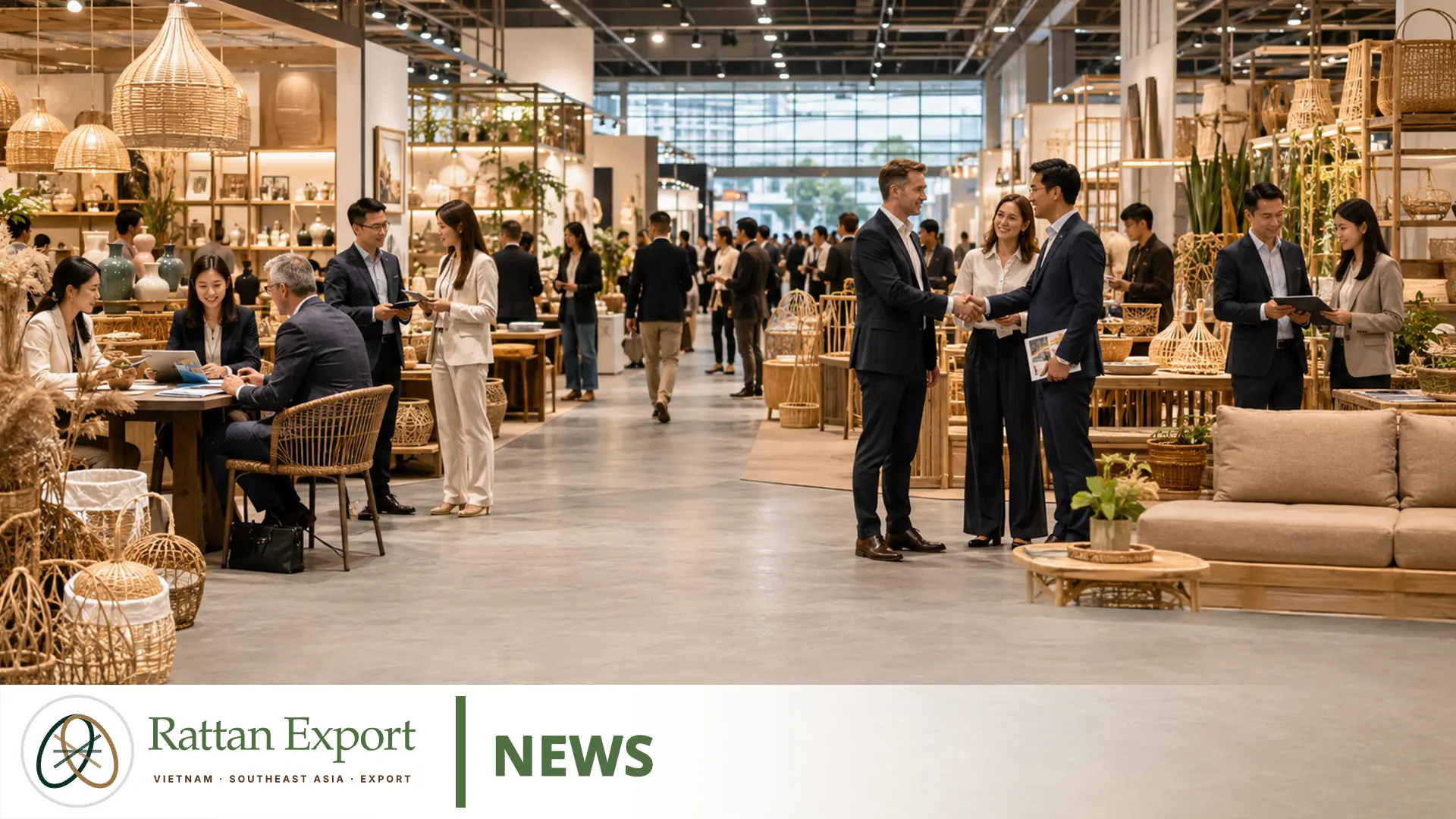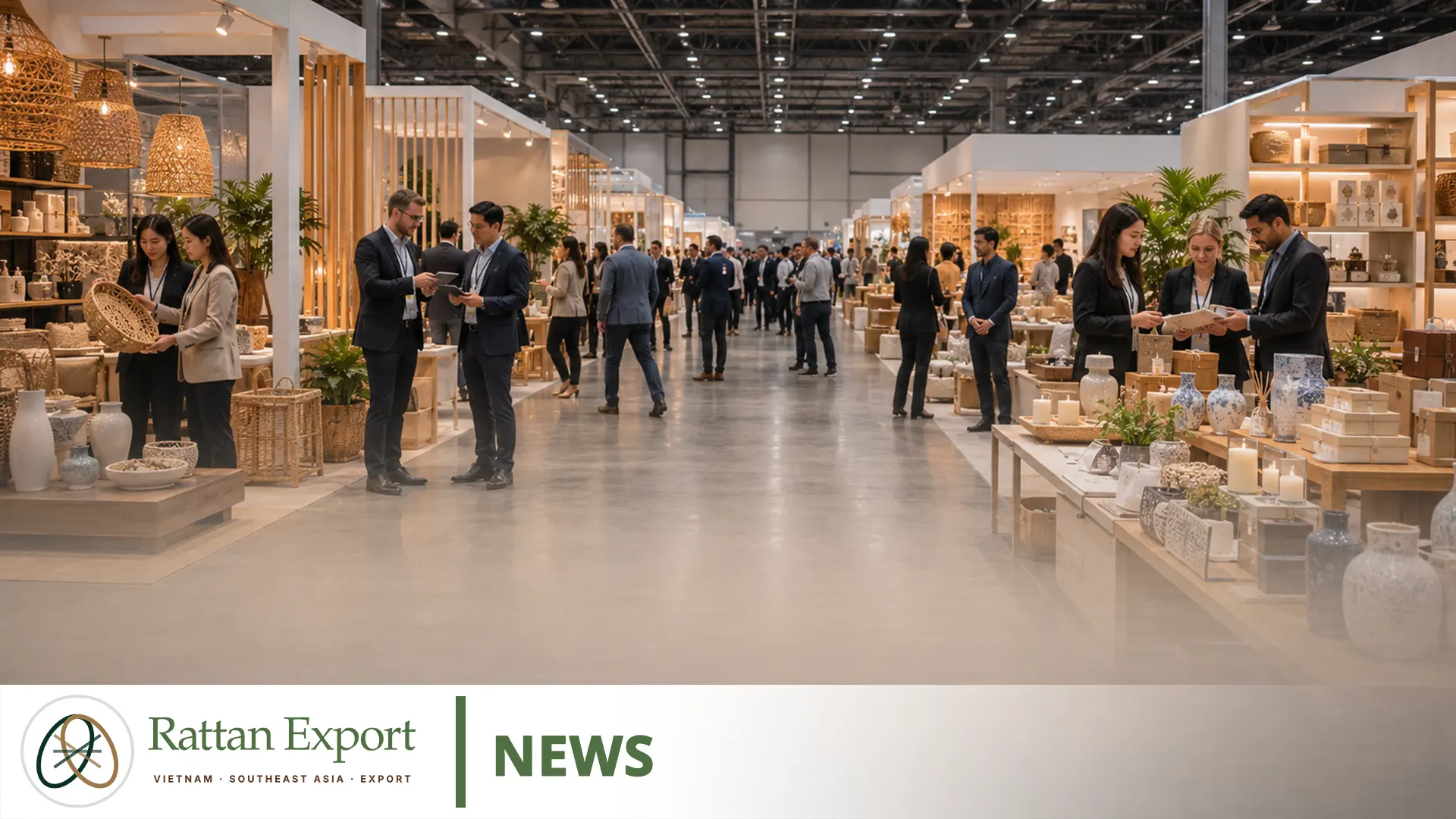
Global Sourcing Fair Vietnam 2026 expanded international buyer access to Vietnam and Asia’s home, décor, furniture, handicraft and gift suppliers, reinforcing Ho Chi Minh City’s growing role as a practical sourcing destination for importers, wholesalers, retailers and private-label brands. Held from April 22–24, 2026 at the Saigon Exhibition and Convention Center (SECC), the event brought factory-direct product discovery, supplier meetings, business matching and digital sourcing tools together in one B2B environment. Post-show information from organizer Global Sources recorded 518 booths, more than 40,000 export-ready products and 11,337 professional trade visitors from more than 130 countries and regions. For buyers searching beyond traditional Asian sourcing hubs, those figures illustrate how quickly Vietnam is becoming integrated into international procurement networks.
Global Sourcing Fair Vietnam 2026 by the Numbers
The 2026 edition was designed as a multi-category sourcing event covering Fashion & Accessories, Home & Gifts, Electronics & Home Appliances, and Printing & Packaging. Within that mix, Home & Gifts was particularly relevant to buyers of furniture, home products, décor, handicrafts, housewares, seasonal products, gifts and lifestyle merchandise. Global Sources reported more than 40,000 export-ready products across the fair, giving buyers an unusually broad range of commercial products to evaluate during a three-day sourcing trip.
| Global Sourcing Fair Vietnam 2026 | Reported Result | Buyer Relevance |
|---|---|---|
| Event dates | 22–24 April 2026 | Three concentrated days of factory and product sourcing |
| Venue | SECC, Ho Chi Minh City | Access to one of Vietnam’s key commercial and manufacturing regions |
| Booths | 518 | Broad supplier comparison within one venue |
| Export-ready products | 40,000+ | Large product-discovery pool across multiple consumer categories |
| Trade visitors | 11,337 | Strong professional sourcing participation |
| Countries & regions represented | 130+ | Demonstrates international buyer demand for Vietnam and Asian supply |
Why Home & Gifts Matters in Vietnam’s Sourcing Landscape
The Home & Gifts segment sits close to several of Vietnam’s established manufacturing strengths. Buyers can encounter furniture and furnishings, woven décor, handicrafts, household products, decorative accessories, textile-based items, seasonal products and customizable gifts. Many of these categories can draw on Vietnam’s manufacturing capabilities in wood, bamboo, rattan, seagrass, water hyacinth, textiles, ceramics, metal, lacquer and mixed materials.
That creates an important advantage for buyers developing collections rather than purchasing a single commodity. A retailer may require woven baskets, trays, lamps, stools, decorative accessories and storage products within one seasonal program. A hospitality buyer may need furniture, décor and customized accessories for a hotel or resort project. A private-label brand may require an OEM or ODM manufacturer capable of adjusting dimensions, colors, materials, packaging and branding. A sourcing event that brings these capabilities into one location can reduce the time required to identify potential production partners.
From Product Discovery to Factory-Direct Sourcing
Global Sources positioned the fair around direct access to export-ready manufacturers. Before the event, the organizer said the 2026 edition would include more than 500 verified exhibitors and that more than 70% of participating exhibitors operated factories in Vietnam or Southeast Asia. The supplier mix also extended beyond Vietnam to manufacturing bases including Mainland China, Hong Kong SAR, Taiwan, India, South Korea and other ASEAN markets.
For buyers, however, “factory direct” should remain the beginning of due diligence rather than the end. A supplier’s presence at a professional exhibition is useful evidence of export activity, but procurement teams should still establish the exact production entity, factory location, production processes, capacity, subcontracting structure and responsibility for quality control before placing commercial orders.
| Initial Fair Discovery | Professional Buyer Follow-Up |
|---|---|
| Interesting product sample | Confirm specification, dimensions, materials and tolerances |
| Supplier claims factory capability | Verify manufacturing location and production responsibility |
| Indicative wholesale price | Request formal quotation with MOQ, Incoterm and packaging |
| Custom design capability | Clarify OEM/ODM process, tooling and sample costs |
| Export experience | Review target-market experience and documentation |
| Attractive packaging | Check carton dimensions, protection and container efficiency |
OEM, ODM and Flexible MOQ Options Expand Buyer Access
One reason sourcing fairs remain relevant is that buyers have very different purchasing models. A large retail chain may require high-volume factory programs, while a growing private-label brand may need lower opening quantities before scaling. Global Sourcing Fair Vietnam promoted access to OEM, ODM and OBM suppliers and highlighted flexible MOQ solutions as part of its buyer proposition.
For Home & Gifts buyers, this flexibility can be especially valuable because collections often contain many SKUs. A buyer may not want a full container of one basket or one decorative object. Instead, commercial viability may depend on whether a supplier accepts mixed models, colors or sizes, or whether several compatible product families can be consolidated into one shipment. MOQ therefore needs to be evaluated at three levels: MOQ per SKU, MOQ per material or color, and total order or container requirement.
- OEM: production according to buyer specifications, drawings or existing designs.
- ODM: supplier-supported product development or modification of existing designs.
- OBM: supplier-owned branded products that may be suitable for distribution or retail partnerships.
- Flexible MOQ: potentially useful for trial orders, new collections and market testing, although commercial terms must still be verified supplier by supplier.
Natural-Material Home Products Require Better Material Verification
The Home & Gifts category is particularly relevant to natural-material sourcing, but product descriptions can easily oversimplify composition. A basket described as rattan may actually contain a bamboo frame and seagrass weaving. A stool may combine wood, rattan cane and metal fittings. A storage basket may use water hyacinth over an iron frame with a fabric liner. These differences matter commercially.
Primary and secondary materials can affect unit cost, durability, product weight, labeling, customs classification, compliance documentation and consistency between production batches. Professional buyers should therefore record material composition during supplier qualification rather than relying only on the marketing name of the product.
| Product Example | Possible Material Questions |
|---|---|
| Woven basket | Rattan, seagrass, water hyacinth, bamboo, paper cord or mixed fibre? |
| Accent chair | Structural frame material versus visible woven material? |
| Decorative lamp | Shade material, frame material and electrical components? |
| Storage product | Natural fibre, metal support, textile liner and handle material? |
| Giftware | Surface coating, paint, lacquer, adhesive and packaging composition? |
Business Matching Makes Large Trade Shows More Efficient
A large supplier exhibition creates opportunity, but it can also create information overload. Global Sourcing Fair Vietnam addressed this through a Business Matching Program that arranged one-to-one meetings based on specific sourcing requirements. The organizer listed participating or registered buyers including international retail, distribution, technology and sourcing organizations, demonstrating that the program was designed around commercial purchasing rather than general consumer attendance.
For a buyer, structured matching can save significant time when the requirement is clearly defined. Instead of walking hundreds of booths without qualification criteria, a procurement team can communicate target categories, materials, order volumes, destination markets, price positioning, required certifications and customization requirements before meetings are scheduled.
A useful sourcing brief for a Home & Gifts supplier should normally include:
- Product category and reference images or technical drawings.
- Preferred primary and secondary materials.
- Target dimensions, colors and finish requirements.
- Estimated annual quantity and opening-order quantity.
- Required MOQ per SKU or color.
- Packaging, barcode, labeling and private-label requirements.
- Destination country and relevant compliance requirements.
- Preferred Incoterm and Vietnamese shipment port.
- Required delivery window or production lead time.
- Whether the order will be single-SKU, mixed-SKU or container based.
The ASEAN Pavilion Broadened the Supplier Comparison
Another significant feature of the 2026 edition was the ASEAN Pavilion, which introduced manufacturers from Thailand, Indonesia, Singapore and the Philippines alongside the broader Vietnam and Asian supplier base. This reflects a wider change in global procurement. Many buyers are no longer looking for a single replacement sourcing country; they are constructing multi-country supply networks in which different markets serve different products, materials, price points and production capabilities.
For a home-furnishing buyer, Vietnam may be attractive for a particular furniture or handicraft category while Indonesia may provide another material capability and another ASEAN country may offer a complementary product. Comparing these options in one sourcing environment can help buyers understand where Vietnam is particularly competitive and where a regional sourcing strategy makes more sense.
Digital and Virtual Sourcing Extend Access Beyond Ho Chi Minh City
Buyer access was not limited to the physical exhibition floor. Global Sources supported virtual show content and its wider online supplier ecosystem, allowing international companies to continue reviewing products and suppliers after the event. This is increasingly important because trade-fair sourcing rarely ends when the visitor leaves the venue.
The typical post-show process includes collecting quotations, comparing specifications, requesting samples, checking factory capabilities, discussing modifications, confirming packaging, estimating container quantities and resolving compliance questions. Digital supplier records and product data allow these steps to continue after initial face-to-face contact.
Container Economics Remain Critical for Home & Gift Products
For importers buying from Vietnam, a visually attractive product and a competitive EXW or FOB price do not automatically create a commercially strong order. Home décor and natural-material products can occupy substantial cubic volume relative to their unit value. Furniture may require knock-down construction; baskets may need nesting; lamps and fragile décor require protective packaging. Packaging design can therefore materially affect container loading and landed cost.
Buyers should calculate more than MOQ. They should ask how many units fit into export cartons, the carton CBM, whether products nest or stack, expected loading quantities for 20ft, 40ft and 40HQ containers, and whether mixed-product consolidation is possible. These questions can change supplier selection even when two suppliers offer similar unit prices.
What Buyers Should Verify After Meeting a Supplier
- Supplier identity: legal company, factory location and relationship between exporter and manufacturer.
- Material composition: primary, secondary and accessory materials for every relevant SKU.
- Production capability: machinery, artisan capacity, subcontracting and monthly output.
- Quality control: incoming materials, in-process inspection and final inspection procedures.
- MOQ structure: minimum by SKU, finish, material, color and total order.
- Packaging: carton specification, protective materials, labeling and container loading.
- Compliance: available certificates, tests and documents relevant to the destination market.
- Commercial terms: price basis, payment terms, sample policy and tooling costs.
- Lead time: sampling, production and peak-season capacity.
What the Fair Means for Rattan Export Vietnam Buyers
Global Sourcing Fair Vietnam 2026 demonstrates that international access to Vietnamese home and gift suppliers is expanding rapidly. The harder problem is no longer simply finding supplier names. Buyers need to transform thousands of available products into a qualified sourcing shortlist containing reliable product identities, verified supplier relationships, accurate material information, realistic quantities and logistics assumptions.
This is also the sourcing problem Rattan Export Vietnam is being built to address. Our focus is not consumer retail but B2B sourcing for importers, wholesalers, distributors, retail groups, hospitality buyers, project procurement teams and private-label brands purchasing Vietnamese furniture, rattan, bamboo and natural-material products at commercial scale.
Buyers can explore our developing product catalogue, learn more about Vietnam sourcing and export, review our approach to quality and compliance, or submit product, quantity and destination requirements through the wholesale inquiry. Trade fairs expand access to suppliers; structured product data, supplier qualification and disciplined procurement are what convert that access into reliable international business.
Sources and Data References
- Global Sources, Global Sourcing Fair Vietnam official event information and 2026 post-show reporting.
- Global Sources, April 2026 event announcement and buyer program information.
- AusCham Vietnam, Global Sourcing Fair Vietnam 2026 sourcing and exhibitor overview.
- Global Sources Virtual Show and online sourcing information.