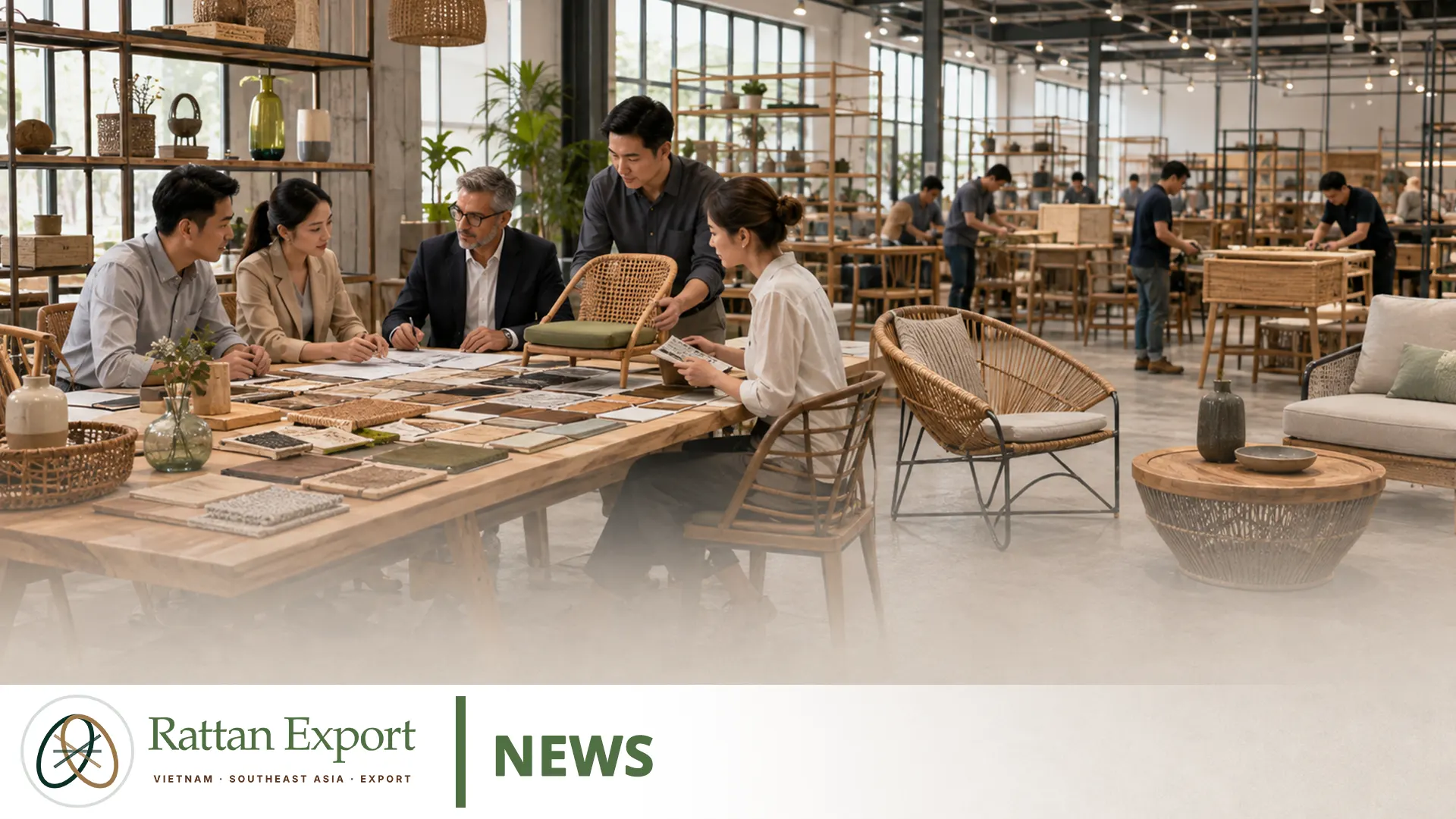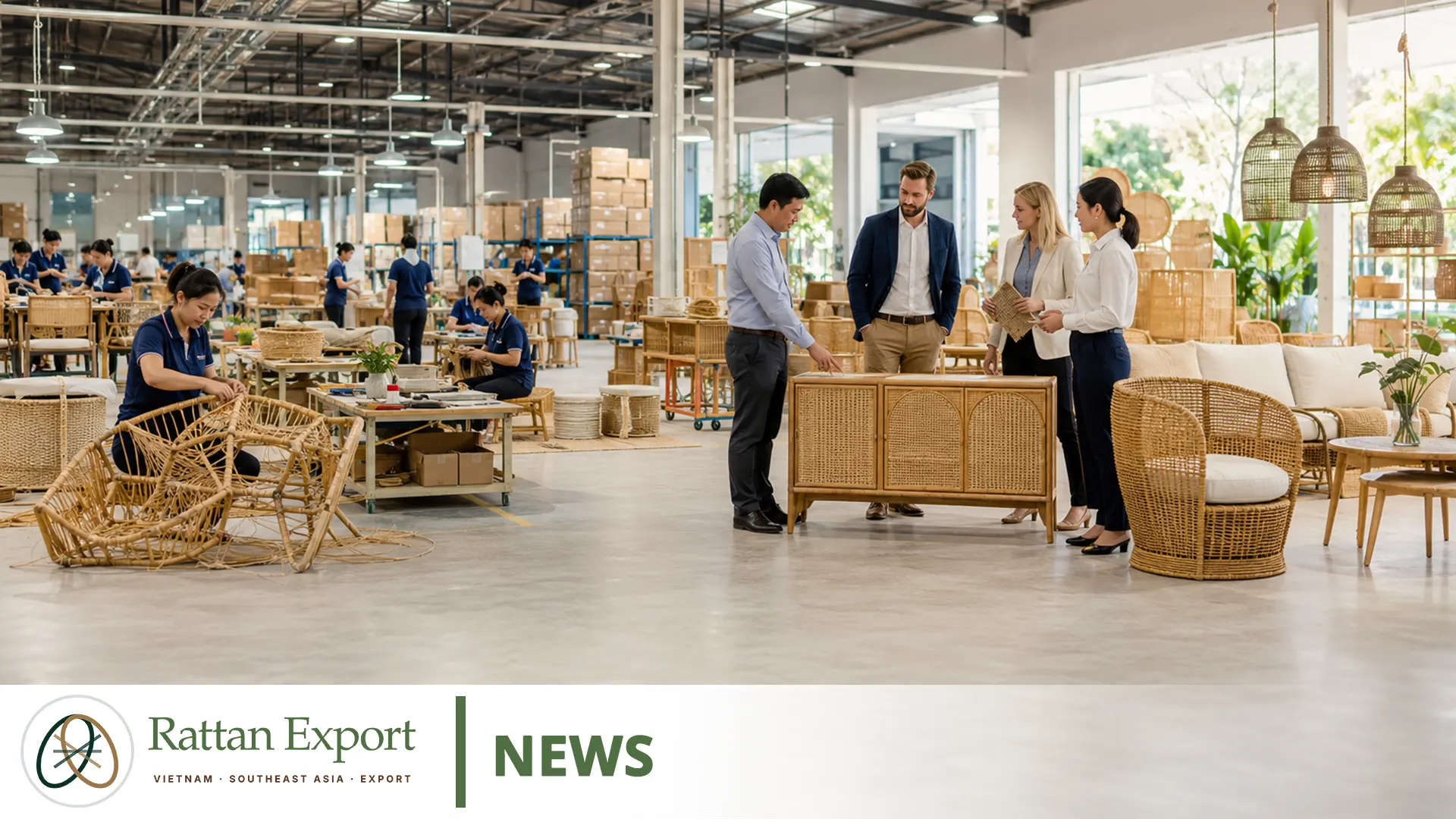
Vietnam's manufacturing base is attracting greater attention from international buyers in 2026 as procurement strategies shift away from dependence on a single Asian sourcing location toward more diversified regional supply networks. The change should not be interpreted as a simple movement of production from China to Vietnam. Instead, importers, retailers, wholesalers and global brands are increasingly evaluating how Vietnam can operate alongside China and other Asian manufacturing economies within a more resilient sourcing portfolio. Strong industrial growth, continued foreign investment, expanding export capacity and a broad base of manufacturers are strengthening Vietnam's position, while buyers are simultaneously becoming more demanding about traceability, quality, origin, logistics and supplier reliability.
Vietnam Enters the Diversification Conversation With Strong 2026 Momentum
Vietnam entered the second half of 2026 with substantial economic and trade momentum. Government data show that GDP expanded by 8.18% in the first six months of 2026. Total merchandise trade reached approximately US$549.69 billion, increasing 27.1% year-on-year. Exports rose 21%, while imports increased 33.4%. Earlier National Statistics Office data also showed manufacturing and processing industrial production growing strongly during the year.
| Vietnam Indicator | 2026 Data | Why It Matters to Buyers |
|---|---|---|
| GDP growth | +8.18% in H1 | Signals continued economic and industrial momentum |
| Total trade | US$549.69 billion in H1 | Shows the scale of Vietnam's integration with global commerce |
| Exports | +21% year-on-year | Reflects strong international demand and export capability |
| Imports | +33.4% year-on-year | Highlights growing production inputs and upstream supply-chain links |
| FDI inflows | US$18.24 billion in Jan-Apr | Shows continued foreign-investor commitment |
| Manufacturing share of FDI | US$8.12 billion; 66.8% | Confirms manufacturing remains a central investment destination |
Foreign Investment Continues to Build Manufacturing Capacity
Foreign direct investment provides another indication of how international companies view Vietnam's industrial position. During January-April 2026, Vietnam attracted approximately US$18.24 billion in FDI, while disbursed foreign investment reached about US$7.4 billion. Processing and manufacturing attracted approximately US$8.12 billion, representing 66.8% of total FDI inflows. Singapore was the largest investor during the period, followed by South Korea and China.
For sourcing organizations, foreign investment matters for more than headline capital figures. Investment can expand industrial parks, production capacity, machinery, supporting industries, logistics, technical skills and supplier networks. Foreign-invested factories can also introduce manufacturing standards and commercial practices developed through global customer relationships. At the same time, international buyers still need to distinguish between foreign-invested manufacturers, Vietnamese-owned factories, trading companies and subcontracting networks when evaluating an individual supplier.
Diversification Is Not the Same as Replacing China
One of the most important sourcing lessons in 2026 is that supply-chain diversification should not be confused with complete decoupling. China remained Vietnam's largest source of imported goods, supplying approximately US$69 billion during the first four months of 2026. Imports from South Korea and ASEAN also increased strongly. These numbers illustrate how Vietnamese manufacturing itself operates within an interconnected Asian production system.
A product assembled in Vietnam may use machinery, components, chemicals, fabrics, hardware or other inputs sourced elsewhere in Asia. For furniture and homeware, the upstream structure varies by product. A wooden cabinet may use Vietnamese timber, imported hardware and locally produced packaging. A mixed-material chair may combine domestic wood with imported metal fittings or fabric. A woven product may rely much more heavily on locally available natural fibres.
For buyers, the practical strategy is therefore often not “China or Vietnam” but China plus Vietnam, Vietnam plus ASEAN, or a wider multi-country sourcing model. Different countries can be used for different categories, materials, lead times, quantities and risk profiles.
Why Buyers Are Looking More Closely at Vietnam
Ho Chi Minh City's Investment and Trade Promotion Centre has noted that global buyers are diversifying sourcing locations to reduce geopolitical and compliance risk. Supplier evaluation increasingly includes resilience, traceability, responsiveness, stable lead times and transparent documentation in addition to price. These requirements align closely with the areas where export-oriented Vietnamese manufacturers are investing in new systems and capabilities.
- Established export manufacturing: Vietnam already serves major North American, European, Asian and Australian markets.
- Broad manufacturing categories: electronics, machinery, textiles, footwear, furniture, household goods and consumer products all contribute to the industrial ecosystem.
- Regional supply-chain access: Vietnam remains closely connected to China, South Korea, Japan and ASEAN input networks.
- Expanding foreign investment: manufacturing remains the largest destination for major FDI flows.
- Trade connectivity: Vietnam participates in a broad network of international trade agreements.
- Growing supplier sophistication: quality systems, digital production management, traceability and ODM capabilities are becoming more visible.
Furniture Shows How Diverse Vietnam's Manufacturing Base Has Become
The furniture industry provides a useful example because its manufacturing structure ranges from large industrial plants to specialist workshops and mixed-material producers. HawaExpo 2026 in Ho Chi Minh City brought together 450 exhibitors and more than 2,500 booths and showcases across approximately 40,000 square metres. The event recorded 16,449 buyers and visitors, including 3,284 international buyers from 83 countries and territories.
The exhibitor base covered indoor and outdoor furniture, materials, accessories and broader supply-chain solutions. For international procurement teams, that diversity matters because “Vietnam furniture sourcing” can mean very different things: high-volume wooden furniture, upholstered seating, metal and wood combinations, hospitality furniture, outdoor collections, rattan and bamboo products, woven natural-fibre décor or customized ODM programmes.
| Sourcing Requirement | Potential Vietnam Supplier Profile |
|---|---|
| Large retail furniture programme | High-capacity export factory with standardized QC |
| Private-label collection | OEM/ODM manufacturer with design and sampling capability |
| Hospitality project | Project manufacturer supporting custom dimensions and finishes |
| Natural-material collection | Rattan, bamboo, seagrass or water-hyacinth specialist |
| Mixed-material furniture | Factory coordinating wood, metal, stone, rope or textiles |
| Mixed-container wholesale order | Supplier or sourcing structure able to manage multiple SKUs efficiently |
Supply-Chain Diversification Changes the Definition of a Good Supplier
When sourcing was driven primarily by unit price, the lowest quotation could dominate supplier selection. A diversified supply-chain strategy requires a wider assessment. If the objective is resilience, adding another factory without verifying its upstream dependencies may simply move the same risk to a different location.
A Vietnamese factory should therefore be evaluated not only on what it can produce but also on how reliably it can support the buyer's complete purchasing programme. Procurement teams increasingly need to understand:
- Who is the actual manufacturer?
- Which processes are performed inside the factory and which are subcontracted?
- Where do the principal materials and components originate?
- What is the realistic monthly capacity available to the buyer?
- What MOQ applies by SKU, color, material and total order?
- How are incoming materials and production quality controlled?
- Which certifications and test reports apply to the actual product?
- Can the factory provide consistent specifications for repeat orders?
- How quickly can production recover from a supplier, material or logistics disruption?
Price Still Matters, but Landed Cost Matters More
Diversification can fail when companies compare only FOB quotations. Moving production into a new country can introduce sampling costs, new tooling, quality inspections, supplier-management time, different freight costs, higher MOQ or less efficient container loading. The correct comparison is therefore closer to total landed sourcing cost than factory price alone.
This is particularly important in furniture and natural-material products because products can be bulky relative to their value. Packaging design, nesting and knock-down construction can have a major effect on how many units fit into a 20ft, 40ft or 40HQ container.
| Cost Element | Why It Should Be Compared |
|---|---|
| FOB price | Provides the starting factory cost |
| MOQ | Affects inventory investment and assortment flexibility |
| Carton CBM | Directly influences container utilization |
| Loading quantity | Changes freight cost per unit |
| Quality inspection | Reduces claims and defective shipments |
| Compliance documentation | Can determine whether the product can enter the destination market |
| Lead-time reliability | Affects inventory planning and replenishment risk |
Traceability and Origin Are Becoming Central to Diversification
As companies spread sourcing across more countries, product origin becomes more important rather than less. Buyers need to know whether a product has genuinely undergone the manufacturing required to establish Vietnamese origin and whether important material inputs can be documented. This is particularly relevant in an environment of trade remedies, origin investigations and tighter environmental requirements.
Vietnamese authorities themselves have emphasized the need to reduce dependence, diversify markets and sources of supply, improve traceability, meet green standards and prevent origin fraud. For buyers, that reinforces a simple sourcing principle: a second country should create real supply-chain resilience, not merely a different shipping address.
Vietnam's Opportunity Is Strongest When Buyers Match Products to Capabilities
Vietnam will not be the optimal production location for every product. No country is. Some highly compressed, ultra-fast, extremely small-batch supply chains may remain more efficient elsewhere. Certain components may continue to depend heavily on specialized regional ecosystems. But Vietnam's manufacturing base offers substantial advantages where buyers require scalable export production, established factory systems, competitive engineering, furniture and homeware expertise, natural materials, OEM/ODM development and access to broader Asian supply networks.
This makes supplier selection more important than country selection alone. Two Vietnamese factories can differ dramatically in capacity, MOQ, materials, quality management, export experience and responsiveness. The objective should be to find a supplier whose operating model matches the buyer's actual purchasing programme.
What This Means for Rattan Export Vietnam Buyers
The move toward diversified Asian supply chains is directly relevant to Rattan Export Vietnam. International buyers searching Vietnam do not need another anonymous directory containing thousands of product photographs. They need a clearer path from product discovery to supplier qualification and commercial sourcing.
Our developing product catalogue connects products with supplier relationships and structured material information across rattan, bamboo, seagrass, water hyacinth, wood, metal, fabric, lacquer and other materials. This supports buyers comparing existing products, mixed-material collections and potential OEM or ODM programmes with more sourcing context.
Importers, wholesalers, distributors, retail chains, hospitality groups and private-label brands can also review our approach to quality and compliance, learn more about Vietnam sourcing and export, or submit product specifications, quantities, destination markets, packaging and container requirements through the wholesale inquiry.
Vietnam's growing role in diversified Asian supply chains is not based on replacing every existing manufacturing country. Its opportunity is to become a stronger second, third or category-specific sourcing base inside a more resilient procurement network. For global buyers, the real advantage comes when diversification is supported by verified suppliers, accurate product data, realistic container economics and a sourcing process designed around commercial reliability rather than country labels alone.
Sources and Data References
- Viet Nam Government News and National Statistics Office, first-half 2026 economic, trade and industrial data.
- Viet Nam Government News, January-April 2026 foreign direct investment data.
- Ho Chi Minh City Investment and Trade Promotion Centre, reporting on Vietnam's wood industry and global sourcing diversification.
- HawaExpo 2026 Official Post Show Report.
- Vietnam Ministry of Industry and Trade, 2026 international sourcing and global supply-chain development programmes.