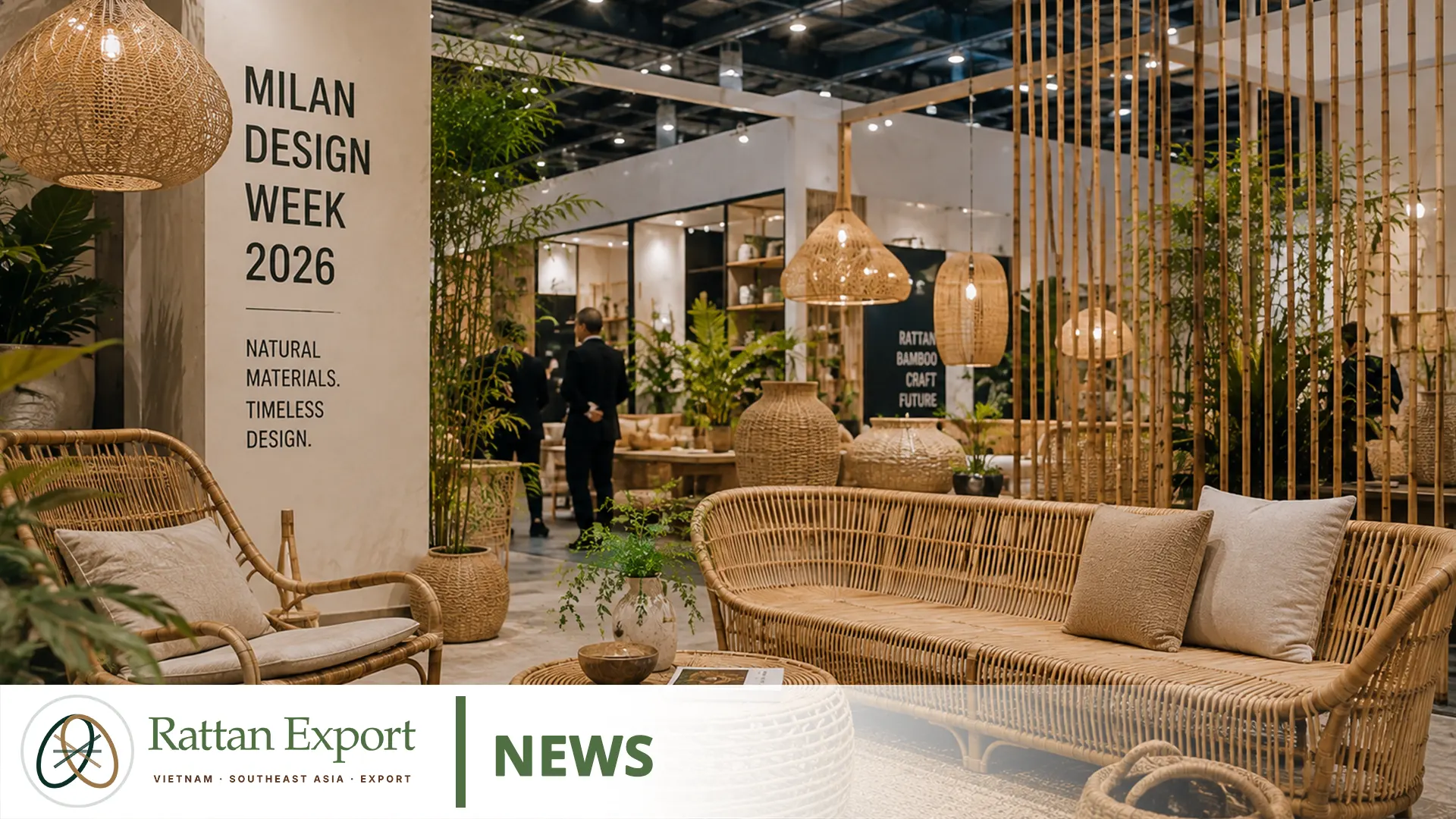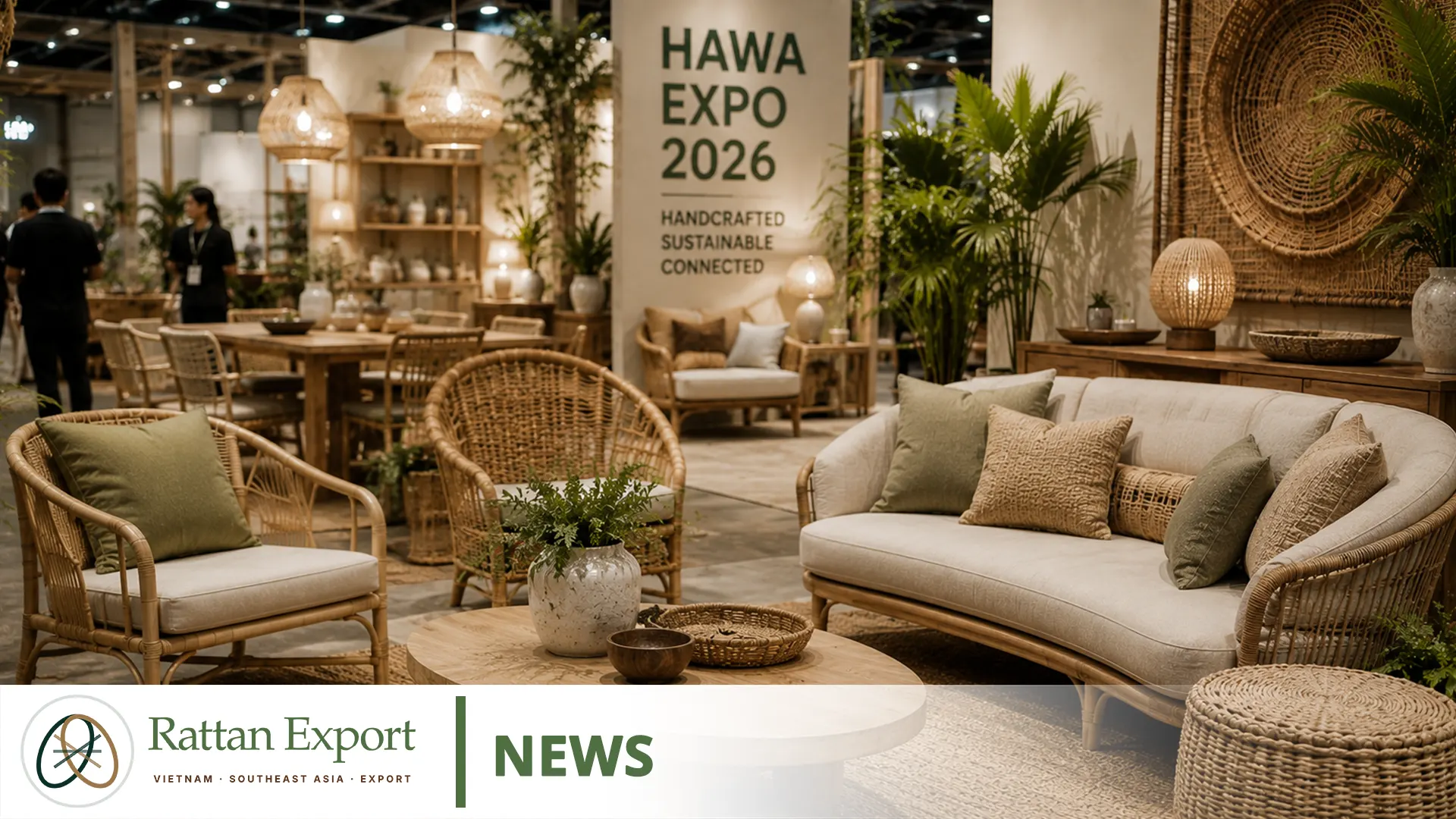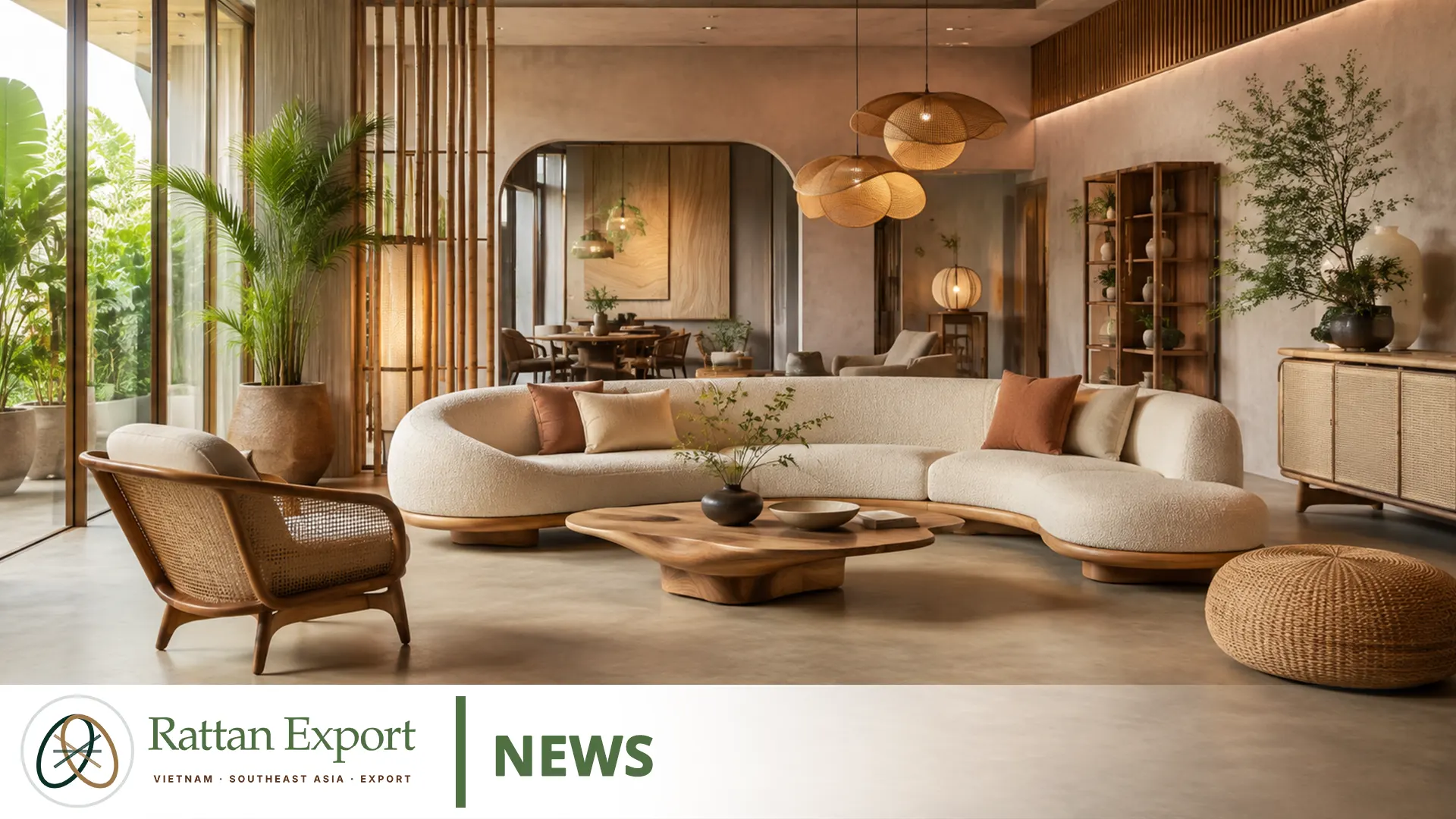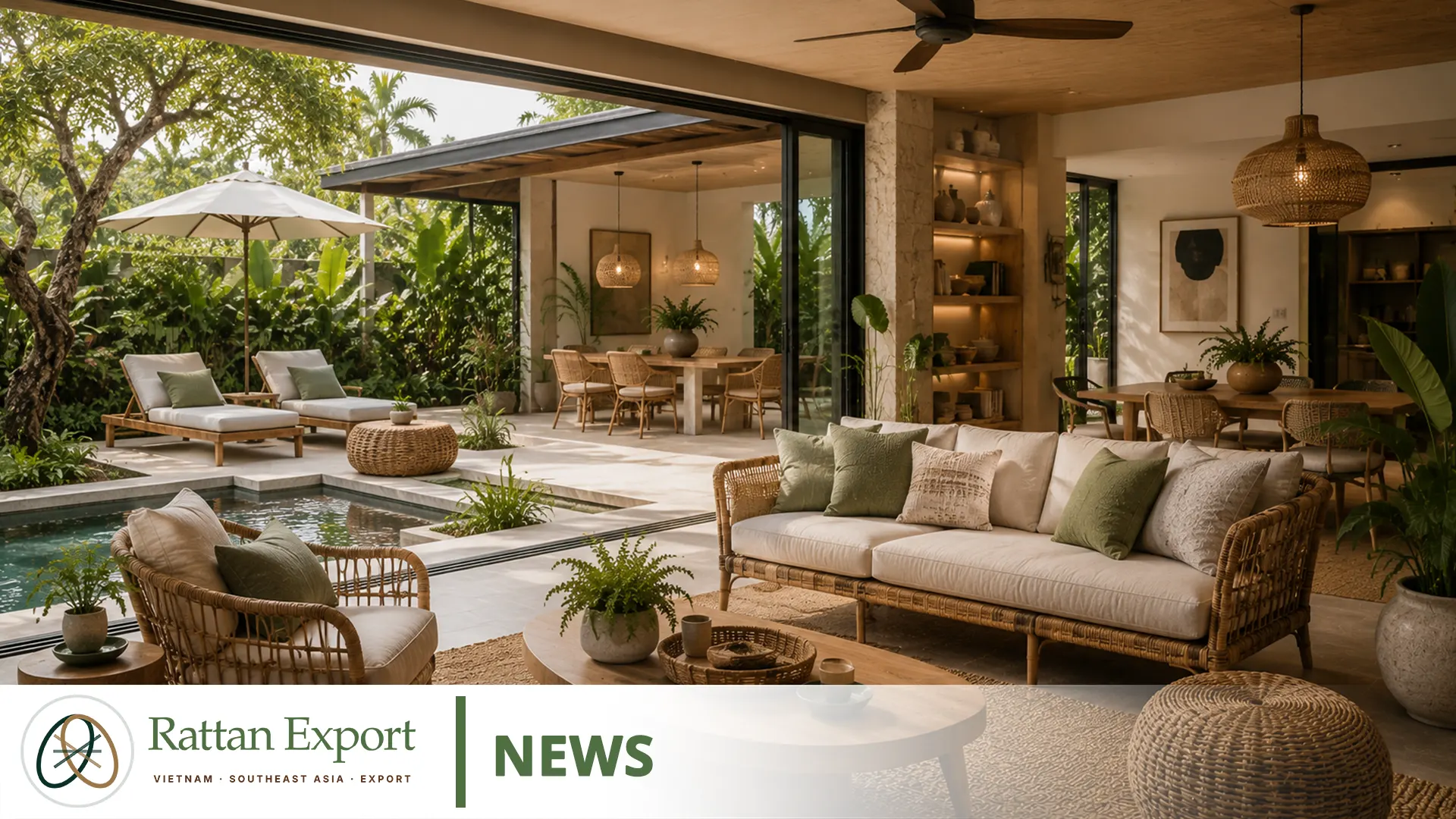
Indoor-outdoor living is driving a new generation of rattan and natural-fibre product concepts in 2026 as designers, manufacturers and international buyers increasingly treat terraces, balconies, gardens and hospitality outdoor areas as extensions of the interior rather than separate furnishing zones. The shift is visible across major design events and supplier programmes. At Salone del Mobile.Milano 2026, the official outdoor-furniture review described the distinction between indoor and outdoor as continuing to blur, with gardens, patios, poolsides and terraces functioning as natural extensions of the living room. Natural materials, organic forms, generous lounge proportions, weaving and craftsmanship were among the recurring directions. For Vietnam, where manufacturers already work across rattan, bamboo, seagrass, water hyacinth, wood, metal, ceramics and woven products, this creates opportunities for new collections that combine residential comfort, tactile natural character and the technical performance required for different environments.
Indoor-Outdoor Living Is Becoming a Product-Development Brief
The idea of indoor-outdoor living is no longer only an architectural concept involving large doors and connected terraces. It increasingly affects the furniture specification itself. Buyers want outdoor seating that feels as comfortable as living-room furniture, indoor products that carry the relaxed visual language of resort spaces and collections that can create continuity between a lounge, veranda, restaurant terrace or hotel garden.
At Salone del Mobile 2026, outdoor collections repeatedly used deep seating, soft and enveloping forms, natural-looking surfaces and sophisticated weaving. The objective was not simply to make exterior furniture look decorative. Manufacturers were trying to deliver the visual refinement traditionally associated with interiors while maintaining the construction logic needed outside.
This changes the sourcing question from “Is this an indoor or outdoor chair?” to a more useful set of questions: where will it actually be used, how much environmental exposure will it receive, which components need weather resistance and which materials are creating the desired aesthetic?
Rattan Aesthetics Can Cross the Boundary Even When the Material Does Not
Rattan is central to the indoor-outdoor visual language because weaving naturally creates lightness, permeability and a relaxed sense of comfort. But professional buyers need to distinguish the aesthetic of rattan from the technical use of natural rattan itself.
Natural rattan can be highly effective for indoor furniture, covered terraces, verandas and appropriate semi-outdoor environments. Permanent exposure to rain, strong ultraviolet radiation and large humidity swings can require a different material solution. Fully exposed outdoor products may instead use synthetic outdoor fibre, rope or another weather-resistant material over aluminium, steel or other suitable frames while preserving a rattan-inspired appearance.
This distinction makes accurate product descriptions important. A collection can share the same woven design language while using different materials according to exposure level.
| Use Environment | Possible Material Direction | Key Buyer Check |
|---|---|---|
| Indoor living | Natural rattan, cane, bamboo, seagrass, timber | Finish, moisture, workmanship and intended load |
| Covered terrace | Selected natural fibres or mixed-material construction | Humidity, indirect weather exposure and maintenance |
| Semi-outdoor hospitality | Natural or engineered fibre depending on conditions | Cleaning frequency and replacement strategy |
| Fully exposed outdoor | Weather-rated synthetic weave, rope, aluminium or treated materials | UV, water, corrosion and drainage performance |
Vietnamese Manufacturers Already Work Across Both Sides of the Boundary
Vietnam's supplier base is particularly relevant to this direction because indoor, outdoor and handicraft capabilities frequently overlap. HawaExpo 2026 exhibitor information for Viet Source Handicraft identifies bamboo furniture for both indoor and outdoor use alongside baskets, lighting, rugs and home decoration made from bamboo, rattan, seagrass, palm leaf and water hyacinth.
Vietnam Housewares Corporation is presented through the same HawaExpo ecosystem with wooden furniture, rattan and bamboo crafts and handmade ceramics serving home-decoration and outdoor-living applications. Its production structure spans wooden furniture, woven handicrafts and ceramic garden décor.
These examples are organiser-reported supplier profiles rather than independent factory audits, but they illustrate why Vietnam can be useful to buyers developing coordinated indoor-outdoor programmes: the required materials do not necessarily sit inside a single traditional furniture category.
Natural Fibres Are Moving Beyond the Conventional Chair
The new opportunity is not simply to manufacture another woven dining chair. Indoor-outdoor living is broadening the product vocabulary for natural fibres.
Rattan and cane can appear in cabinet doors, headboards, screens and lounge-chair backs. Bamboo can move into lighting, shelving, occasional furniture and decorative structures. Seagrass and water hyacinth can become baskets, planters, trays, lamp shades and woven panels that visually connect interior and exterior areas. Rope and weather-resistant woven fibre can extend the same design language into more exposed outdoor applications.
This gives buyers a way to build a collection around a material story rather than repeating the same construction across every SKU.
One Collection Can Use Several Versions of the Same Design Language
A coordinated hospitality or retail programme might use natural rattan dining chairs inside a restaurant, visually similar weather-resistant woven chairs on its uncovered terrace, bamboo or fibre pendant lighting in a sheltered transition zone and seagrass baskets or planters inside the lobby.
The pieces do not need identical materials. They need a coherent relationship in colour, weave scale, proportions and overall design character. That distinction can improve durability because each product is engineered for its actual environment rather than forcing one material to perform everywhere.
Mixed Materials Are Critical to the New Indoor-Outdoor Product Concept
Salone del Mobile's 2026 outdoor review showed weaving being combined with aluminium frames, glass, stone-like forms and other industrial materials. The broader direction is toward products where each material performs the function for which it is best suited.
Vietnamese manufacturers can respond with combinations such as plantation wood and cane, aluminium and outdoor rope, metal and synthetic weave, timber and ceramic, bamboo and fabric, or natural fibre used as a decorative component within a more weather-resistant structure.
| Component | Possible Material | Function |
|---|---|---|
| Primary frame | Wood, aluminium or steel | Structural strength |
| Woven surface | Rattan, cane, bamboo strip, rope or synthetic fibre | Texture, comfort and visual identity |
| Cushion | Indoor or outdoor-rated textile | Softness and replaceable comfort |
| Tabletop | Timber, ceramic, stone-like material or glass | Working surface and visual contrast |
| Decorative element | Seagrass, water hyacinth, lacquer or ceramic | Collection character |
Outdoor Furniture Is Borrowing More Comfort From the Living Room
One of the strongest consequences of the indoor-outdoor shift is a higher comfort expectation. Outdoor sofas increasingly use deeper seats, larger cushions, softer silhouettes and modular arrangements that resemble interior lounge systems.
That creates new opportunities but also new technical responsibilities. Large cushions need appropriate fabrics, filling, drying and drainage. Upholstered components may need removable covers. A frame hidden under generous cushioning still needs to tolerate the actual environment. The product cannot simply look like an indoor sofa photographed beside a swimming pool.
For hospitality projects, replaceable covers and cushions can be particularly valuable because textile components may wear faster than the structural frame.
Weaving Is Becoming More Technically Sophisticated
The 2026 Salone outdoor review highlighted both traditional and highly technical reinterpretations of weaving. Dedon's Tricot collection, for example, used hand weaving around a specially developed fibre and combined craft with advanced industrial production. Emu's Antigua collection used a new-generation synthetic rope weave over an aluminium frame while retaining soft, enveloping forms.
The significance for Vietnamese sourcing is not that local factories should copy these products. It is that weaving increasingly needs to be treated as engineering as well as craft. Fibre diameter, spacing, pattern, tension, fastening and frame interaction affect durability and appearance.
A woven seat that carries body weight needs a different specification from a decorative cabinet panel. Buyer drawings and factory QC should make that difference explicit.
Natural Texture Is Also Entering Products That Stay Indoors
Indoor-outdoor living works in both directions. Exterior furniture is becoming more residential, while interiors are absorbing materials and forms historically associated with terraces and tropical environments.
Rattan, cane and woven fibre can soften clean contemporary interiors. Bamboo lighting can create a visual connection with landscape and natural light. Planters, woven storage and ceramic garden forms can migrate indoors. The result is not necessarily tropical or rustic; restrained shapes and neutral finishes can make the same materials suitable for contemporary urban apartments, hotels and retail environments.
HawaExpo's March design discussions supported this wider movement by highlighting growing interest in natural materials, tactile surfaces, handcrafted details and softer forms.
The Transition Zone Is Becoming Its Own Product Category
Some of the most interesting sourcing opportunities sit between clearly indoor and clearly outdoor use. Covered balconies, winter gardens, resort lobbies opening onto gardens, restaurant verandas, pool pavilions and sheltered hotel terraces can support materials that would be unsuitable for permanent exposure but provide more authentic natural character than fully synthetic outdoor products.
Suppliers and buyers should define these environments carefully. “Outdoor” is too broad a specification. A chair under a roof in a dry climate has a very different risk profile from a chair beside a coastal swimming pool exposed to rain and salt-laden air.
Creating categories such as indoor, covered outdoor, semi-exposed and full outdoor can therefore improve product selection and reduce misunderstandings.
Natural-Fibre Lighting and Accessories Can Connect Spaces at Lower CBM
Indoor-outdoor programmes do not have to rely entirely on bulky furniture. Woven lighting, baskets, trays, planters, wall décor and small accessories can carry the same material identity with significantly lower freight volume per retail unit.
This is particularly relevant for buyers building coordinated collections. A rattan chair can establish the key material language, while bamboo lighting, seagrass baskets and water-hyacinth storage expand the story across the home without requiring every SKU to use the same furniture frame.
HawaExpo's 2026 handicraft coverage specifically highlighted compact handcrafted goods as more logistics-efficient than bulky furniture, reinforcing the importance of accessories within broader sourcing programmes.
Moisture Management Becomes More Important as Products Move Between Environments
Natural fibres are hygroscopic materials and respond to changes in humidity. Rattan, bamboo, seagrass and water hyacinth can therefore behave differently depending on storage, climate and exposure.
Professional sourcing should consider drying, material moisture, finishing, warehouse conditions, carton moisture, desiccant use and container conditions. This matters even for products sold as indoor furniture because international ocean shipments can expose them to high humidity before they ever reach the buyer's warehouse.
For semi-outdoor applications, suppliers should also be clear about cleaning and maintenance expectations rather than allowing a natural-material appearance to imply performance that has not been tested.
Indoor-Outdoor Design Changes Packaging and Container Planning
The move toward relaxed lounge proportions creates a direct logistics challenge. Wide armchairs, curved backs, modular sofas and large cushions can consume substantial CBM. Natural woven surfaces can also be vulnerable to pressure during nesting.
For full-container sourcing, these factors should be addressed during development rather than after the product is approved.
| Product Concept | Commercial Benefit | Container Challenge | Development Response |
|---|---|---|---|
| Deep lounge chair | Indoor-style comfort | High CBM | Evaluate nesting or removable legs |
| Modular outdoor sofa | Flexible layouts | Multiple carton sizes | Standardise module dimensions |
| Woven shell chair | Strong material identity | Pressure can deform weaving | Design protected nesting |
| Bamboo pendant | High visual value at low weight | Bulky and crush-sensitive | Engineer internal carton protection |
| Large cushion set | Higher comfort | Consumes volume | Optimise packing without damaging filling |
Hospitality Is a Major Test Case for Indoor-Outdoor Living
Hotels, resorts, restaurants and serviced residences are among the clearest environments where the indoor-outdoor concept becomes commercial. Guests may move continuously between lobby, lounge, restaurant, terrace, garden and poolside areas, making visual continuity valuable.
For these projects, a designer may want related furniture families with different technical specifications. An indoor lounge chair may use natural rattan and residential-feel upholstery, while the poolside interpretation uses aluminium, outdoor fibre and quick-drying cushioning. The silhouettes and colour palette can remain related while the construction changes.
This approach allows a project to maintain design identity without forcing one product specification into unsuitable conditions.
Repairability Matters More When Materials Age at Different Rates
Mixed-material indoor-outdoor products do not always age uniformly. A metal or timber frame may remain usable long after cushions, glides, woven panels or protective covers need replacement.
Buyers should therefore evaluate whether high-wear components can be replaced independently. Removable cushions, replaceable woven panels, standard hardware and stable component codes can extend commercial product life and simplify hospitality maintenance.
This is particularly important for repeat projects where a hotel or restaurant may need replacement pieces several years after the original installation.
What International Buyers Should Ask Suppliers
- Is the exact product intended for indoor, covered outdoor, semi-exposed or full outdoor use?
- Is the woven material natural rattan, cane, bamboo, seagrass, water hyacinth, rope or synthetic fibre?
- Which component carries the structural load?
- What exposure conditions has the material specification been selected for?
- How are natural fibres dried and moisture controlled before packing?
- What finish, treatment or coating is applied?
- Are cushions and covers removable and replaceable?
- How does water drain from the seating structure?
- Can woven panels or other high-wear components be replaced?
- What natural colour and texture variation is acceptable?
- What are the final carton dimensions and CBM?
- How many units fit in 20ft, 40ft and 40HQ containers?
- Can the supplier develop visually related indoor and outdoor versions of the same concept?
- Can material and finish specifications be repeated for hospitality or retail reorders?
What This Means for Rattan Export Vietnam Buyers
The indoor-outdoor direction is particularly relevant to the sourcing structure being developed by Rattan Export Vietnam because it rewards the ability to connect several material and supplier categories rather than treating rattan, bamboo, furniture and handicrafts as isolated sectors.
Our developing product catalogue is structured around supplier-linked products and clearer classification across rattan, bamboo, seagrass, water hyacinth, jute, wood, metal, fabric, lacquer and mixed-material construction. Buyers can also review our approach to quality and compliance, learn more about Vietnam sourcing and export, or submit product references, material preferences, quantities, destination markets and 20ft, 40ft or 40HQ requirements through the wholesale inquiry.
The strongest opportunity in 2026 is not to label every natural-fibre product “indoor-outdoor”. It is to create coordinated product families in which the aesthetic language travels between spaces while the material specification changes intelligently according to actual exposure. Vietnam's combination of furniture manufacturing, natural-fibre weaving and mixed-material capabilities makes it well placed for this type of development. Buyers that define use conditions early can gain the visual continuity they want without compromising durability, maintenance or container economics.
Sources and Data References
- Salone del Mobile.Milano, “Marine inspiration and new craftsmanship. The latest in outdoor furnishing straight from the Salone del Mobile 2026”, 26 April 2026.
- Salone del Mobile.Milano, EuroCucina 2026 programme on hybridisation of contexts and the growing desire for outdoor living.
- HawaExpo, “Furniture Forum: Anticipating Design Trends and Positioning Asian Design Identity”, 11 March 2026.
- HawaExpo 2026 exhibitor profile, Viet Source Handicraft Co., Ltd.
- HawaExpo 2026 exhibitor profile, Vietnam Housewares Corporation.
- HawaExpo, “Handcrafted in Vietnam Furniture & Gift”, 8 February 2026.