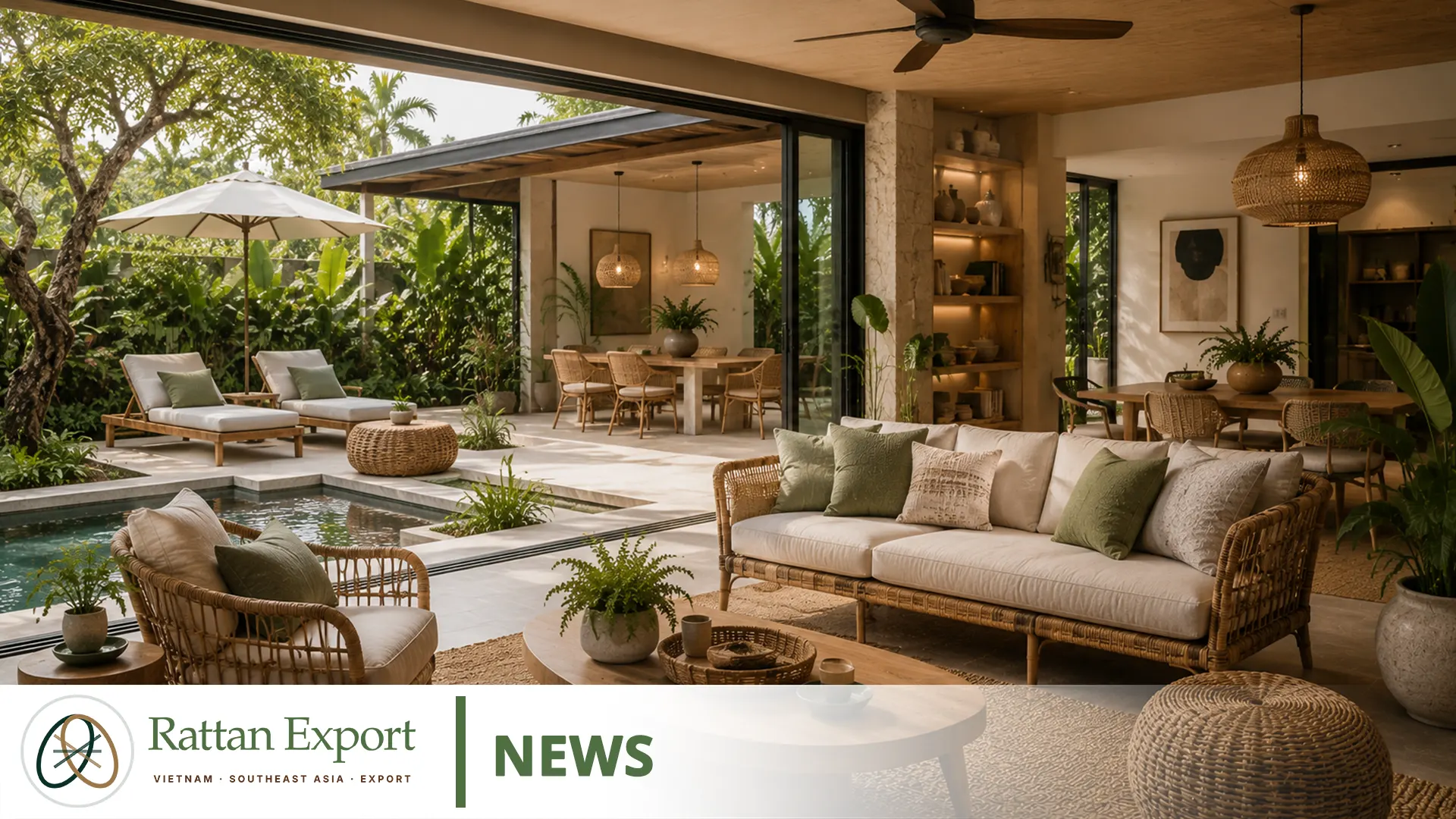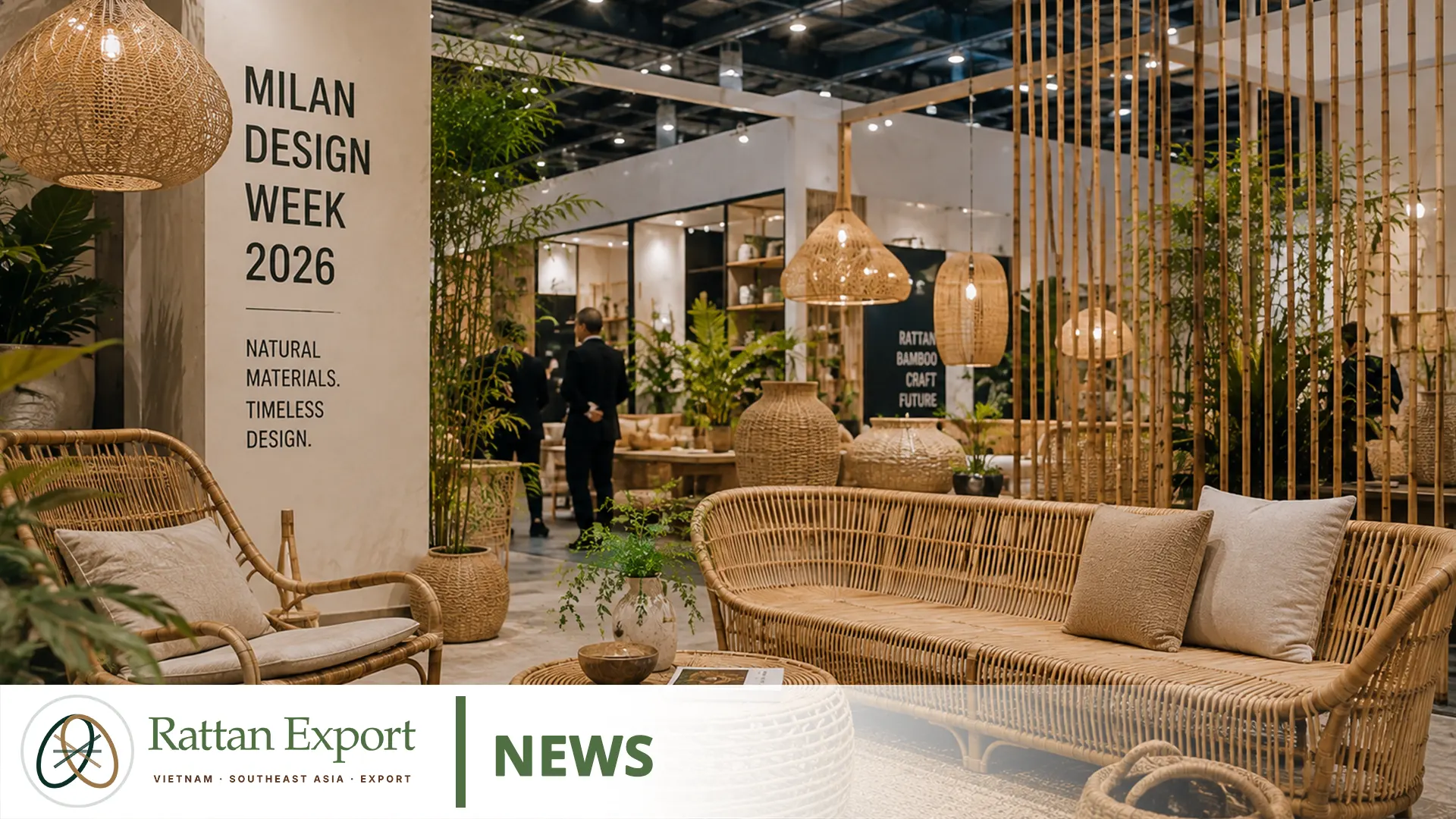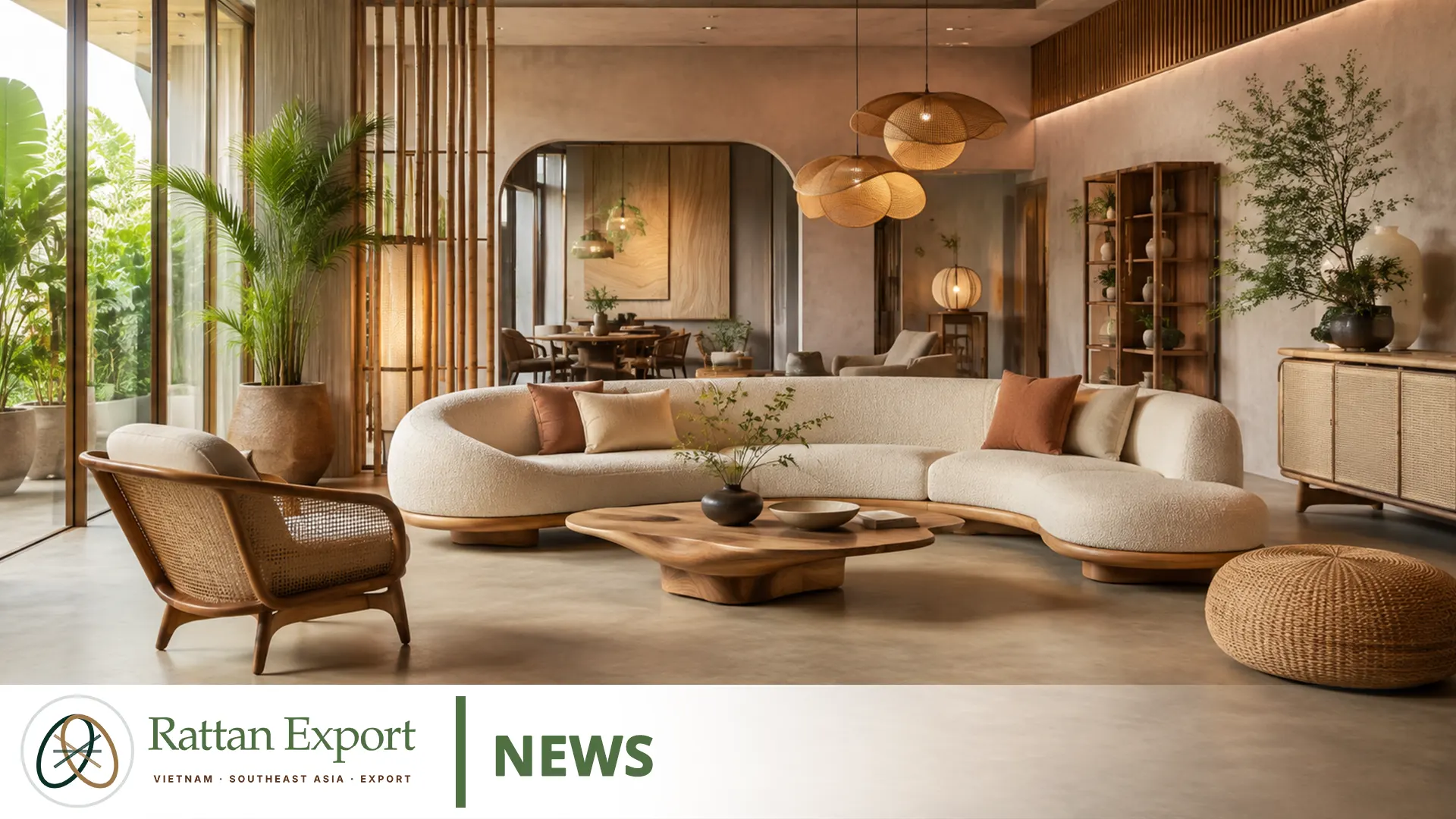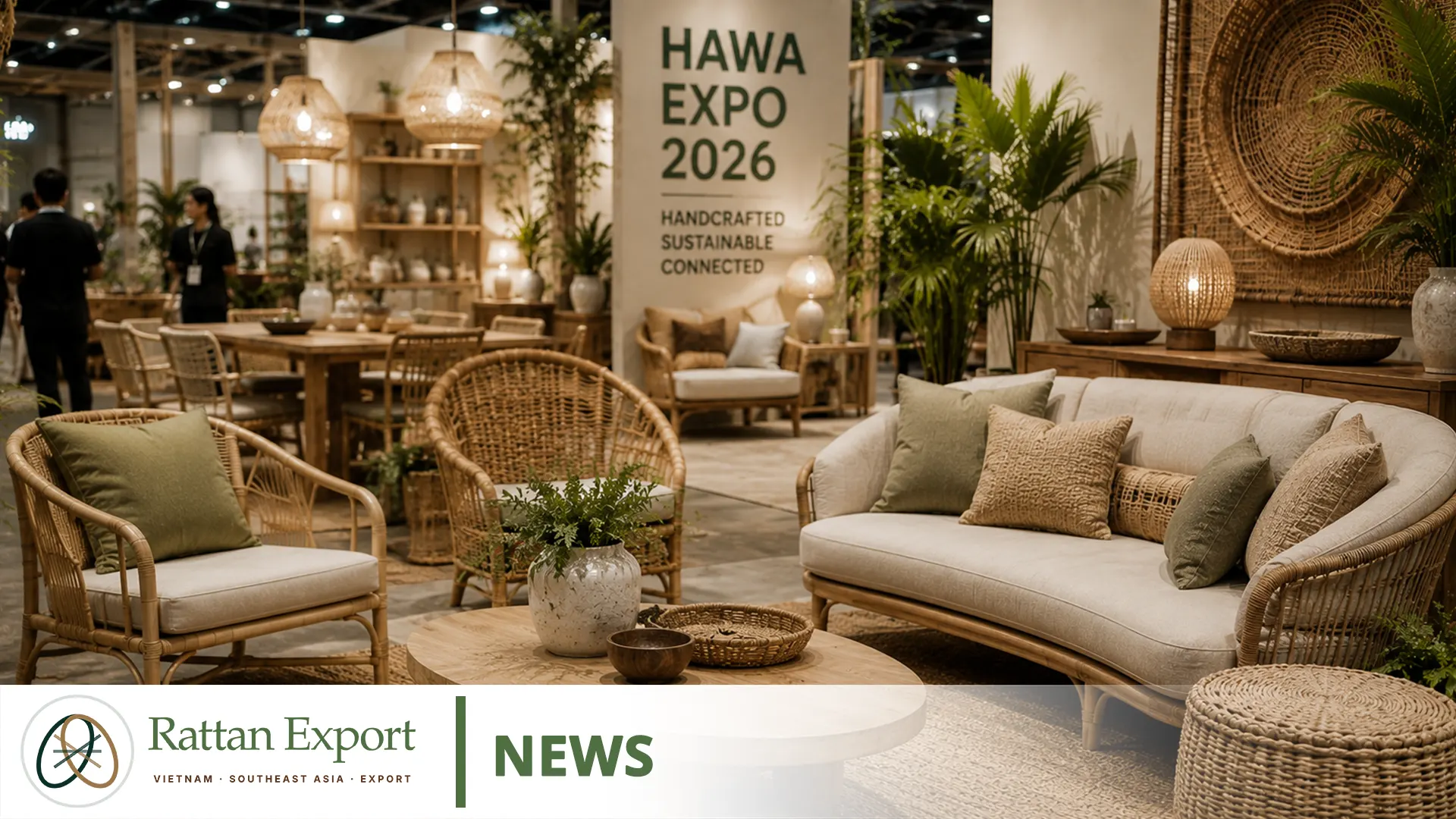
HawaExpo 2026 is signalling a stronger international appetite for furniture and home products that people can not only see but also feel, as natural materials, tactile surfaces and handcrafted details move deeper into contemporary product development. At the HawaExpo Furniture Forum “Asia Rising – Design Leading”, held during the exhibition’s Design & Trends programme, speakers identified a shift away from interiors dominated by cold minimalism and highly uniform industrial surfaces toward spaces that feel warmer, softer and more human. Natural materials, tactile finishes, handcrafted details, rounded forms and elements of nostalgia were highlighted as increasingly important parts of this direction. For Vietnam, where wood manufacturing exists alongside long-established traditions in rattan, bamboo, natural-fibre weaving, lacquer, ceramics and hand finishing, the trend creates an opportunity to compete through material character and design identity rather than production cost alone.
HawaExpo’s Signal Is About Design Direction, Not a Published Sales Index
The phrase “rising demand” needs to be interpreted carefully. HawaExpo did not publish a quantified global sales index showing that every tactile or handcrafted product category grew by a specific percentage. The stronger evidence comes from the design forum itself, the products and materials being presented to buyers and the event programme devoted to craft and material innovation.
Designer Jarrod Lim described a market in which many companies remain cautious about committing to completely new products. Rather than abandoning product development, brands are applying what he called “safe innovation”: taking proven designs and updating them through new materials, structural improvements or stronger sustainability attributes. That environment can favour tactile material changes because a manufacturer can substantially refresh the perception of a familiar product without rebuilding the entire collection architecture.
| Design Signal | Product Development Response | Buyer Implication |
|---|---|---|
| Warmer interiors | More wood, fibre and textured upholstery | Material character becomes part of product value |
| Tactile surfaces | Grain, weave, boucle, rope, matte finishes | Samples need physical evaluation, not only photography |
| Handcrafted details | Weaving, hand finishing, lacquer and joinery accents | Consistency and workmanship require clearer QC standards |
| Safe innovation | Refresh proven forms with new material combinations | Lower design risk while creating visual differentiation |
| Softer forms | Rounded corners and more organic silhouettes | Engineering, packaging and CBM may change |
Tactility Is Becoming Part of the Product Experience
For years, international furniture sourcing placed enormous emphasis on colour, silhouette and price. Those factors remain important, but tactile perception is gaining a larger role in how a product communicates quality. Visible timber grain, the irregular rhythm of hand weaving, a linen-like textile, a matte lacquer finish or a textured ceramic surface can influence the perceived value of a product before a buyer examines its technical specification.
This is particularly relevant in physical retail, hospitality and project interiors, where customers interact directly with surfaces. A smooth machine-made panel and a handwoven rattan panel may occupy the same area of a cabinet door, yet communicate very different levels of warmth, craft and visual depth.
Tactility does not necessarily mean roughness or rustic design. Contemporary products can remain highly controlled and minimal while using natural grain, woven details or subtle hand finishing to avoid appearing visually flat.
Wood Is Returning as a Material of Warmth and Permanence
The HawaExpo forum placed particular emphasis on wood. Jarrod Lim linked its renewed appeal to warmth, natural texture and durability over time. For Southeast Asia, with its established wood-processing and furniture-manufacturing base, this design shift can support greater regional differentiation.
For Vietnamese suppliers, the opportunity is broader than producing more all-wood furniture. Wood can serve as a visual anchor within mixed-material products: a timber frame combined with cane, a wooden cabinet with woven doors, a metal chair with timber armrests, or a ceramic and timber occasional table. This allows manufacturers to add natural character while retaining structural or cost advantages from other materials.
Handcrafted Detail Is Moving Into Contemporary Collections
HawaExpo’s programme reinforced this point beyond the forum itself. On 5 March, the exhibition scheduled a full-day workshop titled “The Art of Vietnamese Handicrafts and Weaving”. The prominence given to the workshop shows that craft was not being treated as a separate souvenir category but as part of the broader furniture and interior-design conversation.
Vietnamese craftsmanship can include rattan and bamboo weaving, seagrass and water-hyacinth work, lacquer finishing, wood turning, carving, joinery, ceramic glazing and numerous other specialist processes. The commercial opportunity is to use those skills selectively within products designed for contemporary global markets.
A modern dining chair does not need to look traditionally Vietnamese to contain Vietnamese craftsmanship. A clean timber frame can carry a handwoven backrest. A simple cabinet can gain depth through woven cane doors. A minimalist side table can receive a hand-finished lacquer surface. The craft becomes an ingredient of the product rather than the entire stylistic identity.
Vietnam Already Has Suppliers Combining Craft With Industrial Scale
HawaExpo’s pre-show supplier coverage illustrates how handicraft and industrial manufacturing are increasingly intersecting. Nature Craft was presented as combining water hyacinth and seagrass with lighting and ceramic elements, while Vietnam Housewares Corporation was described as operating separate factories for wooden furniture, woven handicrafts and ceramic garden decor. These are organiser-reported supplier profiles rather than independent performance audits, but they demonstrate the type of multi-material manufacturing structure being presented to international buyers.
This matters because global retail programmes need more than craftsmanship. A buyer may need hundreds or thousands of visually coordinated pieces with controlled dimensions, repeatable colours, packaging standards, export documentation and reliable lead times. The commercial challenge is therefore not simply preserving handwork. It is scaling handwork without eliminating the characteristics that make it valuable.
Craftsmanship Must Be Controlled Without Becoming Mechanically Uniform
Handmade production naturally produces variation. Two rattan panels may not have exactly identical fibre tones. Hand-applied lacquer may show slight differences in depth. Ceramic glaze can vary subtly from one firing to another. Timber grain will never repeat exactly.
Professional sourcing should not attempt to eliminate every natural difference. Instead, buyer and supplier need to distinguish acceptable material variation from workmanship defects.
| Characteristic | Potentially Acceptable Variation | Potential QC Defect |
|---|---|---|
| Rattan / fibre colour | Natural tonal variation within approved range | Strong uncontrolled colour mismatch |
| Weave | Minor hand-produced spacing differences | Loose tension, broken fibres or distorted pattern |
| Wood grain | Natural figure and tone variation | Unapproved filling, cracks or structural defects |
| Lacquer | Subtle depth variation where intended | Runs, contamination, adhesion failure or inconsistent gloss |
| Ceramic glaze | Controlled artisanal variation | Cracking or defects outside the approved reference |
Reference samples, colour ranges, workmanship photographs and agreed acceptance standards therefore become essential when handmade character is scaled into B2B production.
Material Authenticity Matters More as Texture Becomes a Selling Point
The stronger the design depends on material character, the more important accurate material descriptions become. Buyers should be able to distinguish natural rattan from synthetic rattan-style fibre, bamboo from timber, solid wood from veneer, linen from linen-look polyester and genuine ceramic from composite stone-effect materials.
This is not simply a technical documentation issue. It affects pricing, durability expectations, care instructions, sustainability claims, customs classification and product positioning.
A visually convincing imitation can be completely appropriate when the performance requirement supports it. Outdoor synthetic weaving, for example, may be more suitable than natural rattan in fully exposed environments. The important point is that the buyer knows what is actually being purchased.
Handcrafted Details Can Support “Safe Innovation”
The cautious market environment described at the HawaExpo forum creates an interesting role for material development. A retailer does not always need to commission a completely new frame or product platform to refresh a collection. Existing silhouettes can be updated through a cane door, woven panel, new timber finish, textured upholstery, ceramic accent or revised combination of natural and industrial materials.
This can reduce engineering risk while still producing a recognisably new collection. For ODM suppliers, it also creates opportunities to present material libraries and alternative finishes rather than waiting for buyers to provide complete new drawings.
A proven chair platform, for example, could generate several commercially distinct versions through changes to the back panel, upholstery, timber finish or woven detail while maintaining much of the original engineering and packaging structure.
Asian Design Identity Is Becoming Part of the Value Proposition
A separate HawaExpo 2026 discussion on Southeast Asian design identity reinforced the role of local materials and traditional craftsmanship. Speakers described different ways cultural elements can enter contemporary design, from direct use to adaptation and entirely new interpretations inspired by traditional values.
The most commercially interesting approach for export furniture is often adaptation rather than literal reproduction. International buyers may want the tactile richness and cultural depth associated with Southeast Asian materials without purchasing products that look like museum pieces or tourist souvenirs.
Vietnam therefore has an opportunity to convert weaving knowledge, lacquer techniques, material familiarity and craft communities into contemporary products with global proportions and functionality.
Human Craft Gains New Meaning in a More Digital Design Environment
The 2026 Hoa Mai Design Award was launched under the theme “Design in the Age of AI”, and HawaExpo’s design-identity discussion framed the challenge around the distinction between generating form and creating cultural meaning. That message is especially relevant to tactile and handcrafted furniture.
Digital tools can rapidly produce images, variations and visual concepts. Physical materials still have grain, weight, tension, smell, softness and manufacturing limitations. A woven panel must actually hold tension. A timber joint must survive loading. A hand-applied surface must remain reproducible at production scale.
As digital concept generation becomes easier, the ability to translate those concepts into credible physical objects may become an even more valuable differentiator for manufacturers.
Tactile Design Creates New Responsibilities for Quality Control
Products whose value depends on texture often need more detailed inspection than flat, uniform products. Conventional dimensions and structural testing remain necessary, but buyers may also need to define weave tension, fibre preparation, sanding quality, grain matching, upholstery feel, seam alignment, surface sheen and acceptable handcrafted variation.
Photographic inspection alone can be insufficient because some defects are easier to feel than see. A rough timber edge, loose fibre, uneven sanding or poor upholstery tension may not be obvious in standard factory photographs.
For higher-value programmes, physical golden samples and approved material swatches therefore remain important even as sourcing becomes more digital.
Handcrafted Products Need Packaging Designed Around the Surface
Tactile surfaces can also be vulnerable surfaces. Rattan fibres can snag, woven panels can deform under pressure, matte finishes can polish or scratch during rubbing, ceramic components can chip and natural fibres can react badly to excessive moisture.
Packaging therefore needs to reflect the exact construction. Protective sheets should not imprint textured surfaces. Pressure points should not deform weaving. Desiccant strategy and carton ventilation should suit the material and voyage conditions. Fragile ceramic or lacquer components may need separation from heavier structural pieces.
These considerations matter particularly for full-container B2B shipments, where a product may spend weeks packed under load before the buyer sees it.
Texture and Craft Affect Container Economics Too
Handcrafted detail can add value without necessarily increasing volume, but certain tactile constructions create logistics trade-offs. Thick woven shells can reduce nesting. Sculptural fibre shapes can consume more CBM. Ceramic or stone accents increase weight. Large cushions add volume even when the furniture frame itself packs efficiently.
Design-led sourcing should therefore evaluate aesthetics and logistics together. A collection that photographs beautifully but loads inefficiently may become difficult to price competitively after ocean freight is added.
Hospitality Is a Natural Market for Tactile Furniture
HawaExpo’s Furniture Forum also highlighted the growing importance of hospitality design in Vietnam. Hotels, resorts and restaurants are environments where material experience matters because guests physically interact with furniture and interior surfaces.
Wood grain, woven backs, textured upholstery, lacquered accents and ceramic elements can help create more memorable spaces. But hospitality applications also introduce heavier use, repeated cleaning and replacement requirements. The ideal product therefore combines craft character with contract-level engineering.
Buyer questions should include whether woven components can be repaired, whether cushion covers can be replaced, whether finishes can withstand cleaning routines and whether identical materials can be supplied again for future room renovations.
What International Buyers Should Ask
- Which elements are genuinely handcrafted and which are machine produced?
- What exact natural or engineered materials are being used?
- What degree of colour, grain or weave variation is considered acceptable?
- Is there an approved golden sample for mass production?
- How is weave tension or hand finishing controlled between production batches?
- Can damaged woven panels, hardware or upholstery components be replaced?
- Are the handcrafted elements structural or decorative?
- How are moisture and surface damage controlled during packing and shipping?
- Can the supplier reproduce the same material character for repeat orders?
- What are the MOQ and lead-time implications of handmade processes?
- Can the same base product be developed with alternative tactile materials for different markets?
- How do handcrafted features affect packed dimensions, CBM and container loading?
What This Means for Rattan Export Vietnam Buyers
The tactile and handcrafted direction highlighted at HawaExpo 2026 fits closely with the sourcing structure being developed by Rattan Export Vietnam. Products made with rattan, bamboo, seagrass, water hyacinth, wood, lacquer, fabric, metal and other materials are most useful to professional buyers when the exact material roles, supplier identity and production characteristics are clearly understood.
Our developing product catalogue is structured around supplier-linked products and clearer classification of primary and secondary materials. Buyers can also review our approach to quality and compliance, learn more about Vietnam sourcing and export, or submit references, material preferences, quantities, destination markets and 20ft, 40ft or 40HQ requirements through the wholesale inquiry.
The strongest message from HawaExpo is not that handcrafted furniture is replacing industrial manufacturing. It is that the boundary between the two is becoming more productive. International buyers increasingly want the consistency and scale of modern manufacturing together with the warmth, texture and identity that handwork can provide. Vietnam is well positioned for that combination, but commercial success will depend on turning craft into controlled, repeatable and export-ready product development rather than treating handmade character as an excuse for inconsistent quality.
Sources and Data References
- HawaExpo, “HawaExpo 2026 Furniture Forum: Anticipating Design Trends and Positioning Asian Design Identity”, published 11 March 2026.
- HawaExpo 2026 official event schedule, including “Furniture Forum 2026: Asia Rising – Design Leading” and “The Art of Vietnamese Handicrafts and Weaving”.
- HawaExpo, “Discussing the Future of Southeast Asian Design Identity at HawaExpo 2026”, published 11 March 2026.
- HawaExpo, “Handcrafted in Vietnam Furniture & Gift”, published 8 February 2026.
- HawaExpo, “Vietnam Home Accessories Exhibition”, published 30 January 2026.