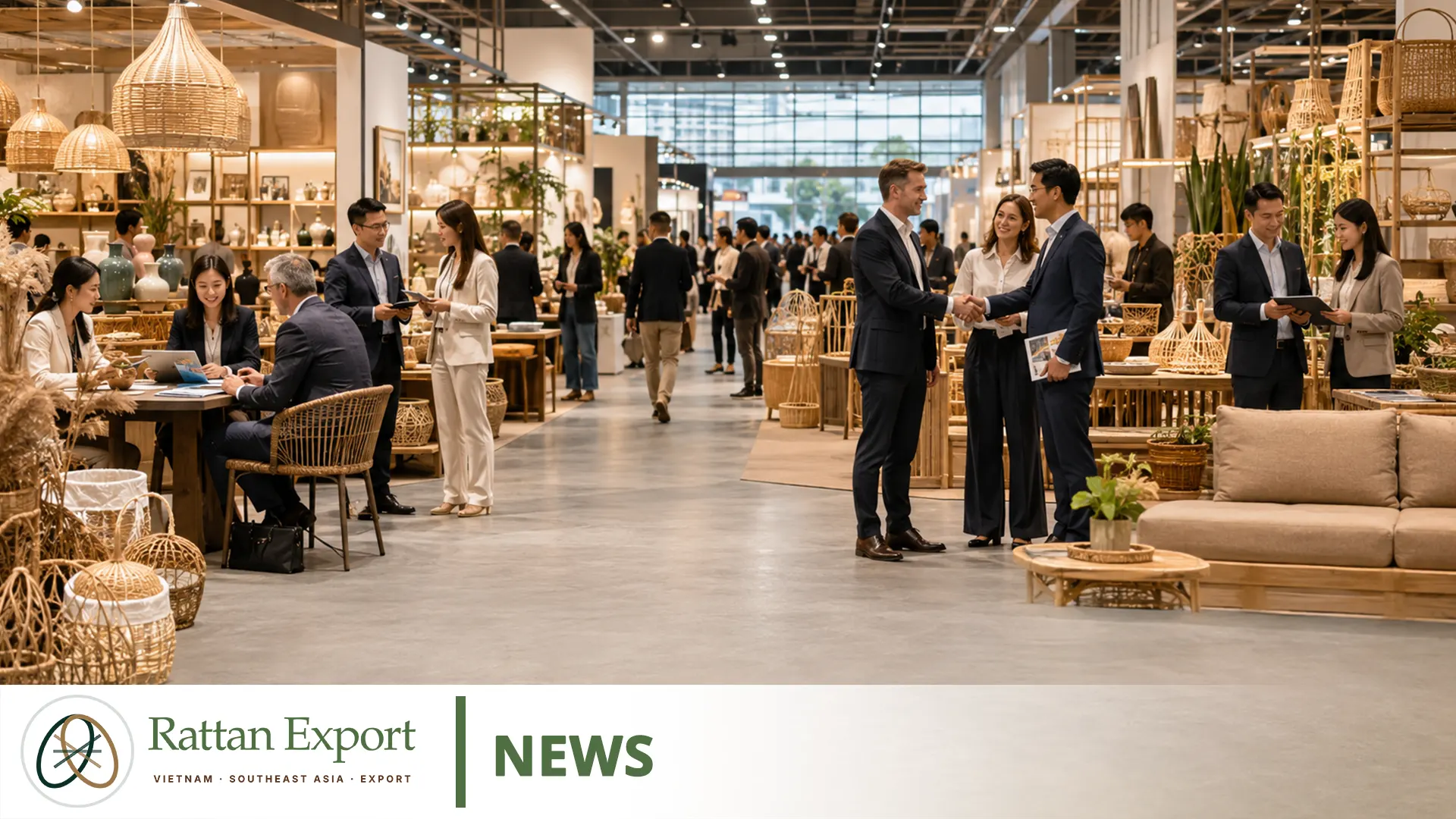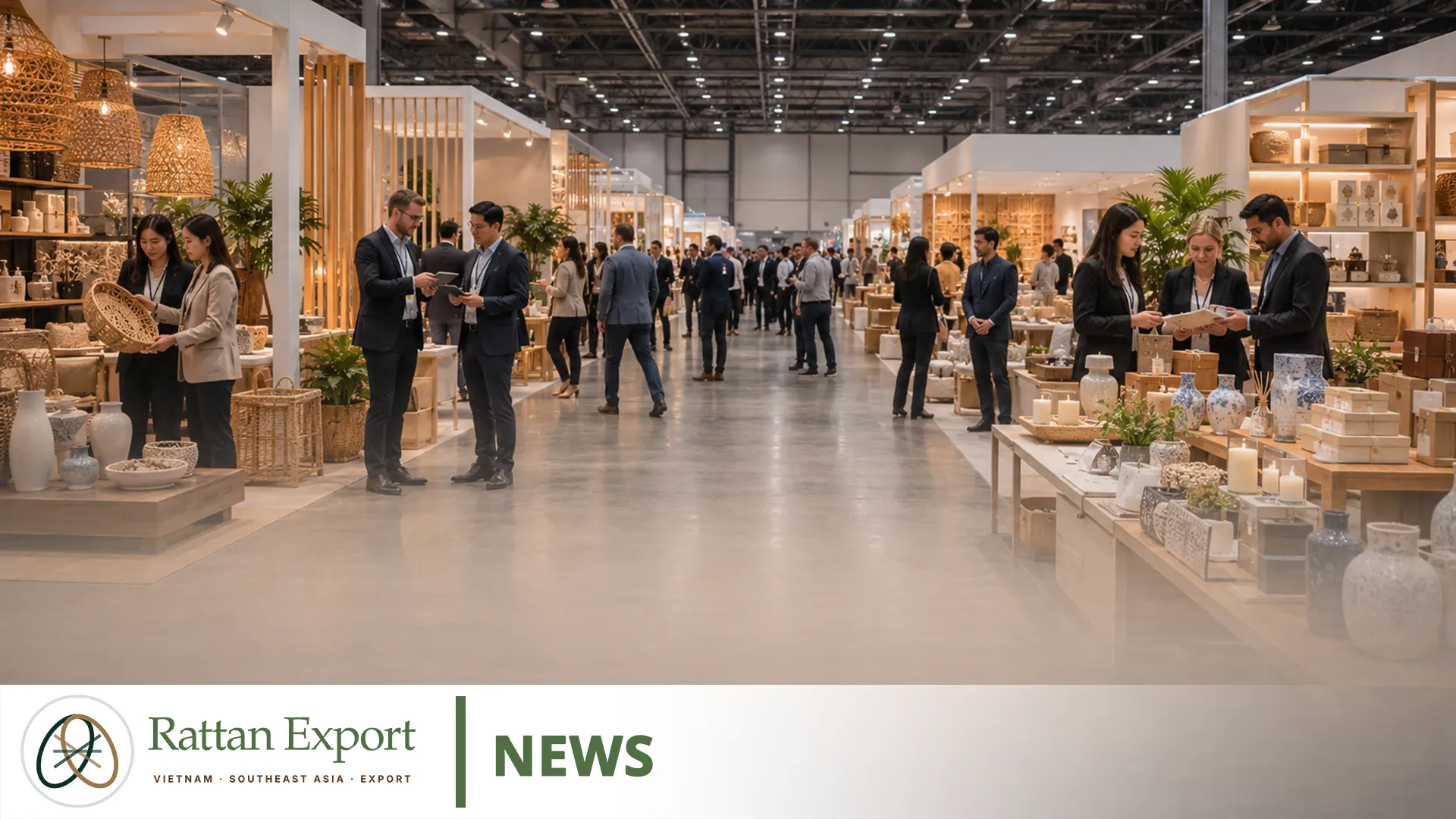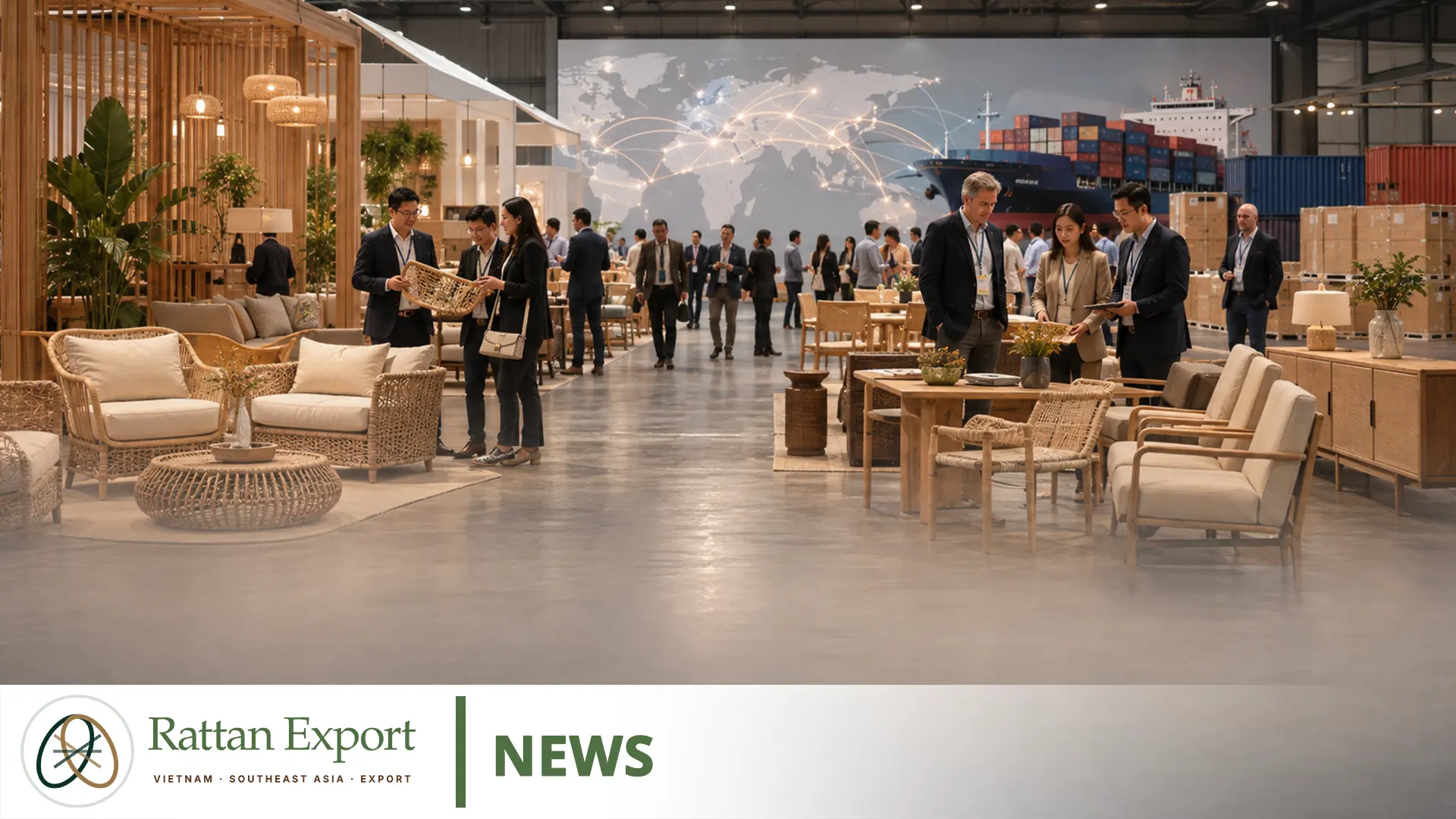
HawaExpo 2026 offered a concentrated view of how Vietnam is strengthening its position in global furniture supply chains, combining large-scale manufacturing, export capability, design development, sustainability initiatives and direct B2B sourcing in one industry platform. Held from March 4–7, 2026 at the Saigon Exhibition and Convention Center (SECC) in Ho Chi Minh City, the export-oriented furniture fair brought manufacturers, international buyers, industry associations, designers, technology providers and trade-promotion organizations together at a time when global sourcing strategies are becoming more diversified and demanding. For international importers, wholesalers, retail groups, hospitality buyers and sourcing teams, the significance of HawaExpo goes beyond the exhibition itself: it provides a practical snapshot of the suppliers, capabilities and commercial infrastructure available in Vietnam.
HawaExpo 2026 by the Numbers
The official HawaExpo 2026 Post Show Report recorded 450 exhibitors, more than 2,500 booths and showcases across approximately 40,000 square metres. During the four-day event, HawaExpo registered 16,449 buyers and visitors, including 3,284 international buyers from 83 countries and territories. Those figures make the event relevant not only as a domestic furniture show but as an international sourcing meeting point connecting Vietnamese production with overseas demand.
| HawaExpo 2026 Indicator | Reported Result | Why It Matters for Buyers |
|---|---|---|
| Exhibitors | 450 | Provides access to a concentrated supplier and manufacturing base |
| Booths & showcases | 2,500+ | Allows comparison across products, materials and manufacturing capabilities |
| Exhibition area | Approx. 40,000 m² | Reflects the scale of Vietnam's export furniture ecosystem |
| Buyers & visitors | 16,449 | Demonstrates strong professional interest in the sector |
| International buyers | 3,284 | Shows substantial cross-border sourcing activity |
| Countries & territories represented | 83 | Highlights the global reach of Vietnam's furniture supply base |
Four Days Built Around Four Strategic Priorities
A notable feature of HawaExpo 2026 was the decision to structure the event around four strategic pillars rather than treating the fair as a conventional product exhibition. The themes were Trade, Design, Green Transformation and Technical Innovation. Together, they reflect the direction in which Vietnam's furniture industry is attempting to move: from contract manufacturing based primarily on capacity and cost toward a more sophisticated export ecosystem combining design ownership, sustainability, digital technology, standards and direct access to global customers.
- Trade: market strategy, export diversification, cross-border e-commerce and direct buyer connections.
- Design: greater emphasis on original products, Asian design identity and higher value creation.
- Green Transformation: sustainable manufacturing, circular-economy practices, ESG requirements and international compliance pressures.
- Technical Innovation: standardization, digital tools, production management and technologies capable of improving productivity and consistency.
This shift matters to buyers. A sourcing country that competes only on labour cost can be vulnerable to wage increases, changing tariffs and competition from other manufacturing markets. A sourcing country that develops stronger design, engineering, compliance, logistics and supplier-management capabilities can become a longer-term strategic production partner.
Vietnam's Furniture Industry Is Operating at Export Scale
Vietnam's broader wood-processing industry provides the commercial background to the fair. According to figures presented in connection with HawaExpo 2026, Vietnam exported approximately US$17.2 billion of wood and wood products in 2025. Government reporting said the wood and furniture sector is targeting approximately US$18–19 billion in export turnover in 2026. Those numbers place furniture sourcing inside a mature export system rather than an emerging cottage-industry market.
Ho Chi Minh City and the surrounding manufacturing region are particularly important. Government reporting noted that HAWA now represents more than 1,000 member enterprises following industry consolidation, while the wider economic geography links Ho Chi Minh City's commercial and innovation functions with the manufacturing strength of the former Binh Duong industrial area and the logistics gateway around Ba Ria–Vung Tau. For international buyers, this regional concentration can shorten the distance between product development, manufacturing, export services and ports.
From “Made in Vietnam” Toward “Made by Vietnam”
One of the strongest themes emerging from HawaExpo 2026 was the ambition to move from “Made in Vietnam” toward “Made by Vietnam.” The distinction is important. “Made in Vietnam” can describe a product manufactured locally according to someone else's specification. “Made by Vietnam” implies greater Vietnamese participation in product development, design, engineering, branding, technology and intellectual value.
For sourcing teams, this does not mean OEM manufacturing is disappearing. Vietnam remains highly relevant for OEM and ODM programs. Instead, it suggests that buyers will increasingly encounter suppliers capable of contributing to design optimization, material selection, packaging engineering and collection development rather than simply producing drawings supplied by the customer.
What HawaExpo Shows About Direct Factory Sourcing
The fair's exhibitor mix covered a broad furniture and furnishing supply chain, including indoor and outdoor furniture, upholstery, contract and hospitality products, accessories, materials, handicrafts and home décor. This matters because commercial sourcing rarely involves finding a single attractive product. Buyers need to determine whether a supplier can manufacture at the required scale, meet quality targets, maintain consistent materials, package efficiently and support future repeat orders.
| What Buyers See at a Trade Fair | What Must Be Verified Before an Order |
|---|---|
| Finished furniture or décor | Actual factory, production process and monthly capacity |
| Material description | Primary, secondary and accessory materials |
| Sample quality | Repeatability across commercial production |
| Indicative price | MOQ, packaging, Incoterm and container economics |
| Certificates displayed | Scope, validity and relevance to the target product and market |
| Attractive new collection | Lead time, tooling, customization and replenishment capability |
This distinction is especially important for natural-material furniture and home accessories. Products may combine rattan, bamboo, seagrass, water hyacinth, jute, wood, metal, fabric, leather, paper cord or lacquer. A product presented visually as a rattan item may use another material as its structural frame or primary woven surface. Accurate material classification affects costing, specifications, durability, customs review, compliance and repeat-order consistency.
B2B Matching Demonstrated the Value of Organized Sourcing
HawaExpo 2026 also emphasized structured buyer-supplier matching rather than relying entirely on visitors walking through booths. According to the official post-show report, a B2B session involving the furniture committee of the Federation of Indian Chambers of Commerce and Industry created direct meetings between more than 30 exhibitors and more than 10 buyers. HAWA and FICCI also signed a strategic cooperation agreement intended to strengthen commercial links. A separate Singapore Furniture Association buyer session connected more than 50 exhibitors with 10 international buyers.
Vietnam's Ministry of Industry and Trade separately confirmed the participation of an Indian furniture business delegation at HawaExpo, where discussions covered furniture manufacturing, accessory supply, interior design, logistics and regional value-chain development. These programs show an important sourcing principle: the value of a trade fair increases substantially when product discovery is connected to qualified buyer requirements and direct commercial conversations.
Design and Sustainability Are Becoming Commercial Requirements
The fair's design and green-transformation programs also reflect changes in international buying criteria. Furniture buyers increasingly need suppliers to think about environmental performance, material traceability, resource efficiency, product safety, chemical restrictions and documentation. Sustainability is therefore moving from a marketing message toward a procurement requirement in many markets.
HawaExpo's Green Transformation program brought sustainability specialists, certification organizations and industry representatives into discussions covering circular-economy practices, sustainable manufacturing and green-building requirements. The technical program addressed standardization of design, production and management, including digital technologies intended to improve design productivity and operating efficiency.
For buyers, the lesson is practical: a low factory price alone is no longer enough to define supplier competitiveness. The ability to document materials, maintain production standards, adapt packaging, provide test information and respond to destination-market requirements can determine whether a product is commercially viable.
Digital Tools Extended the Sourcing Process Beyond the Booth
HawaExpo also invested in digital sourcing infrastructure. The official post-show report recorded 2,412 downloads and active users of the HawaExpo application during the event. The app supported searches for companies, booths, products and event schedules. The exhibition venue was also captured through 3D scanning, with individual booth scans providing virtual access after the physical fair.
This hybrid approach is increasingly relevant to international procurement. A trade-show visit may last only several days, while supplier evaluation can continue for weeks or months. Digital product records, photographs, technical files, supplier profiles and structured sourcing data allow procurement teams to return from an exhibition with information that can be compared, verified and converted into RFQs.
What International Furniture Buyers Should Take From HawaExpo 2026
- Vietnam offers significant manufacturing depth. The market includes large export factories, specialized manufacturers, contract producers, handicraft companies and supporting-material suppliers.
- Factory identity still needs verification. A booth, trading company or online product listing should not automatically be treated as proof of manufacturing capability.
- Material accuracy matters. Natural-material products frequently use combinations of fibres, frames and accessories that need to be classified correctly.
- Container economics should be evaluated early. Unit price is only one element of landed cost; packaging dimensions, loading quantity and mixed-SKU possibilities can materially change the commercial result.
- Compliance should be discussed before quotation approval. Requirements differ by destination market and product category.
- Design capability is becoming more valuable. Suppliers able to support OEM, ODM, customization and collection development can create stronger long-term partnerships.
- Sourcing should continue after the fair. Samples, factory audits, specification confirmation, quotations and commercial due diligence remain essential before purchase orders are placed.
Why HawaExpo Matters to the Rattan Export Vietnam Sourcing Model
For Rattan Export Vietnam, HawaExpo 2026 reinforces the need for a sourcing model built around structured supplier and product intelligence rather than anonymous catalog listings. Vietnam clearly has substantial furniture manufacturing capability. The challenge for a global buyer is turning thousands of available products and manufacturers into a manageable shortlist of suitable sourcing partners.
That requires linking products to the actual supplier, identifying materials correctly, organizing specifications, understanding commercial quantities and preparing the information required for quotations and container planning. These are the areas in which digital sourcing platforms can complement physical exhibitions.
Importers, wholesalers, retail groups, hospitality buyers, project procurement teams and brands looking for Vietnamese furniture, rattan, bamboo and natural-material products can explore the developing Rattan Export Vietnam product catalogue, learn more about Vietnam sourcing and export capabilities, review our approach to quality and compliance, or submit product requirements through the wholesale inquiry channel. HawaExpo demonstrates the size of Vietnam's opportunity; disciplined supplier qualification and structured sourcing are what turn that opportunity into reliable international business.
Sources and Data References
- HawaExpo 2026 Official Post Show Report.
- Ho Chi Minh City Government News, coverage of the opening and strategic direction of HawaExpo 2026.
- Vietnam Ministry of Industry and Trade, 2026 trade-promotion reporting and Indian buyer delegation at HawaExpo.
- HawaExpo official event information and 2026 program materials.