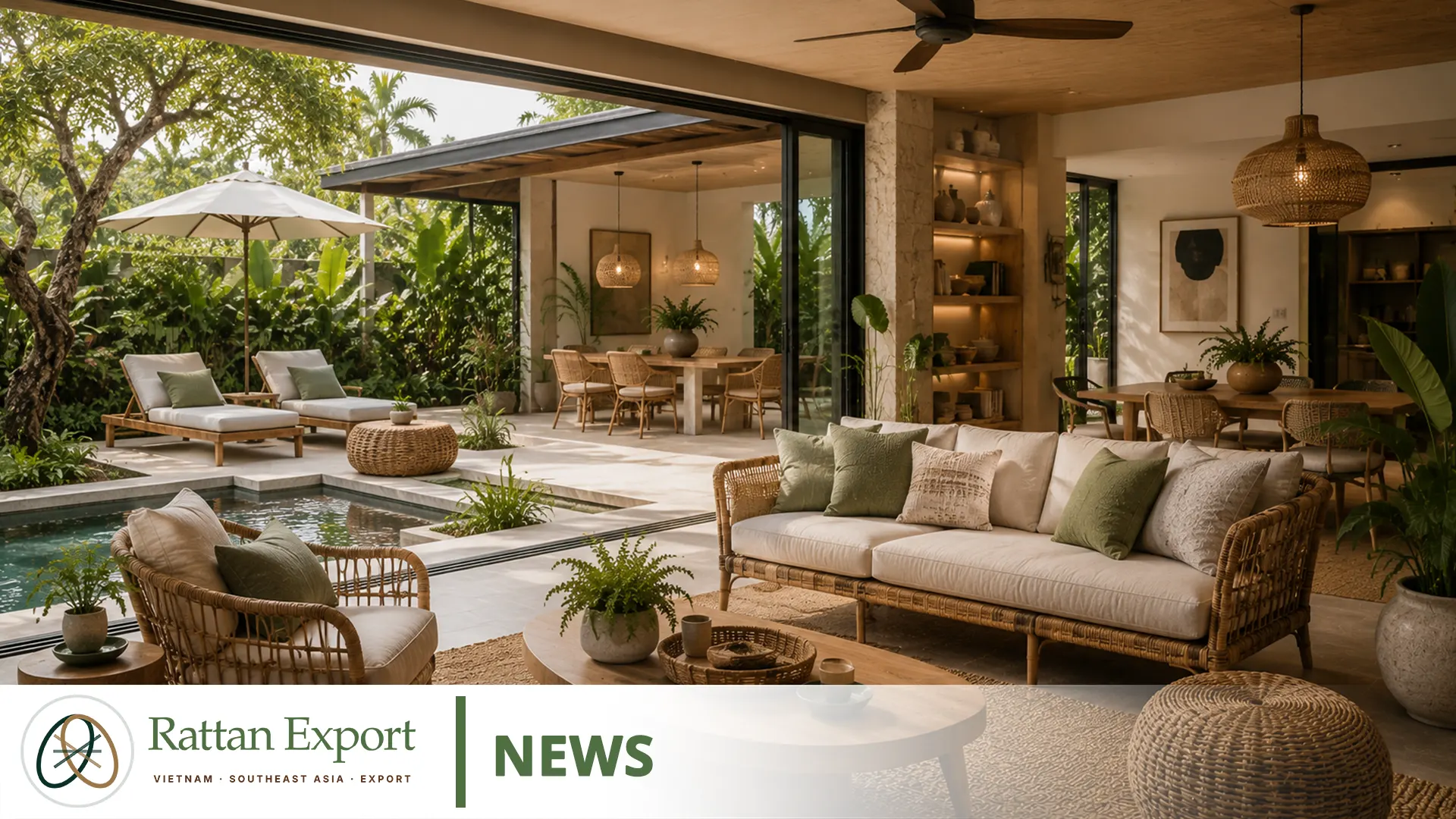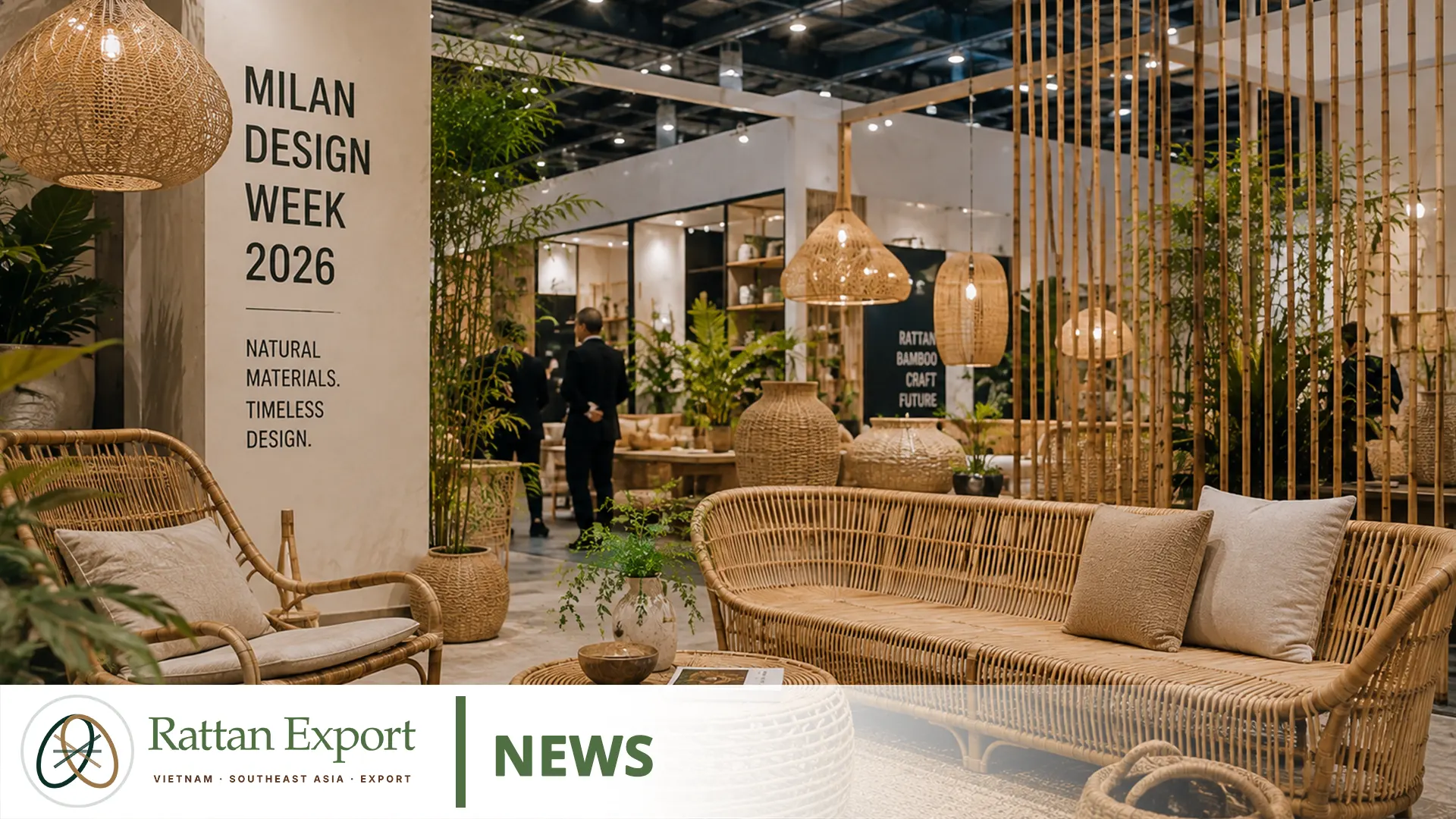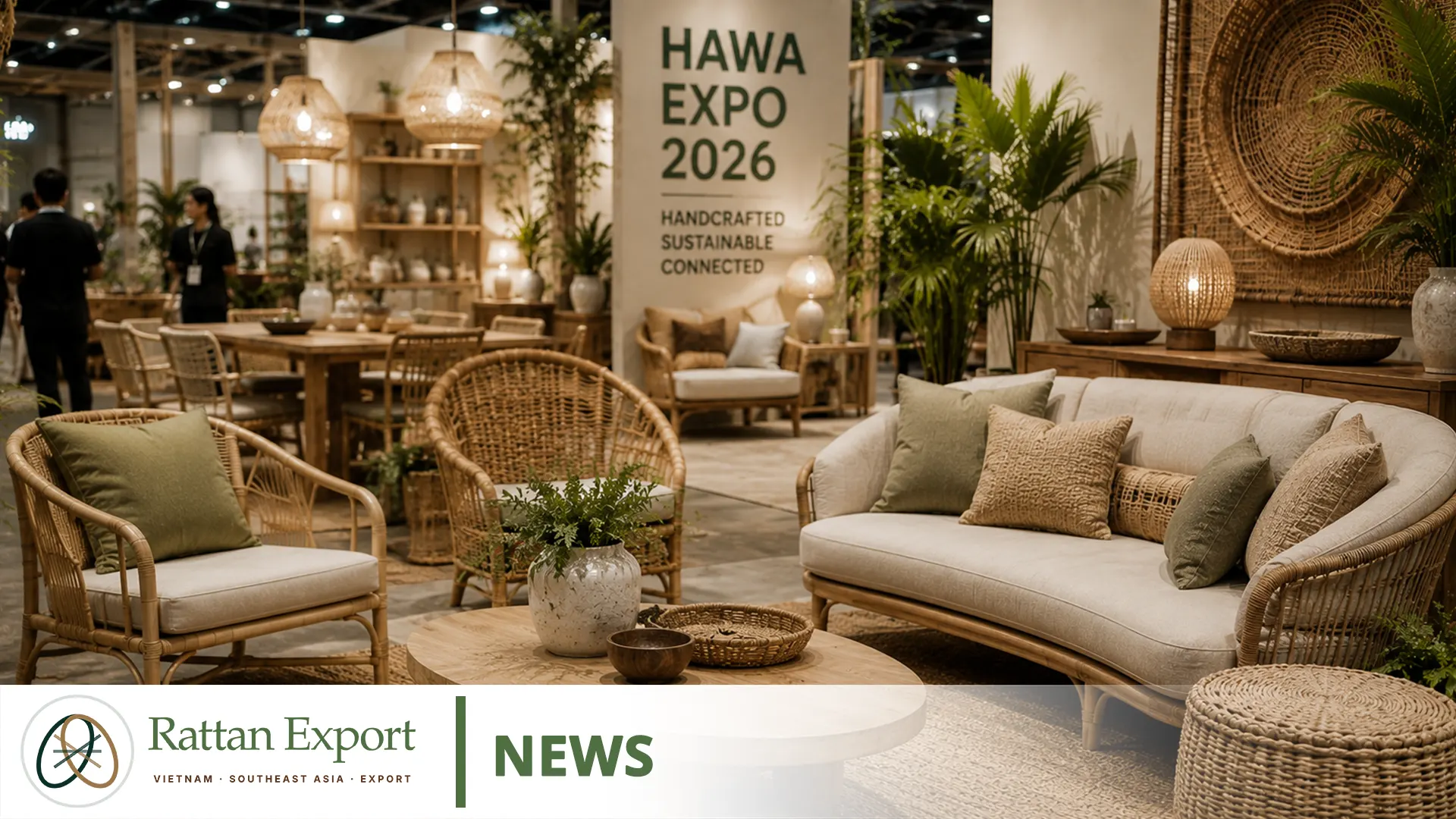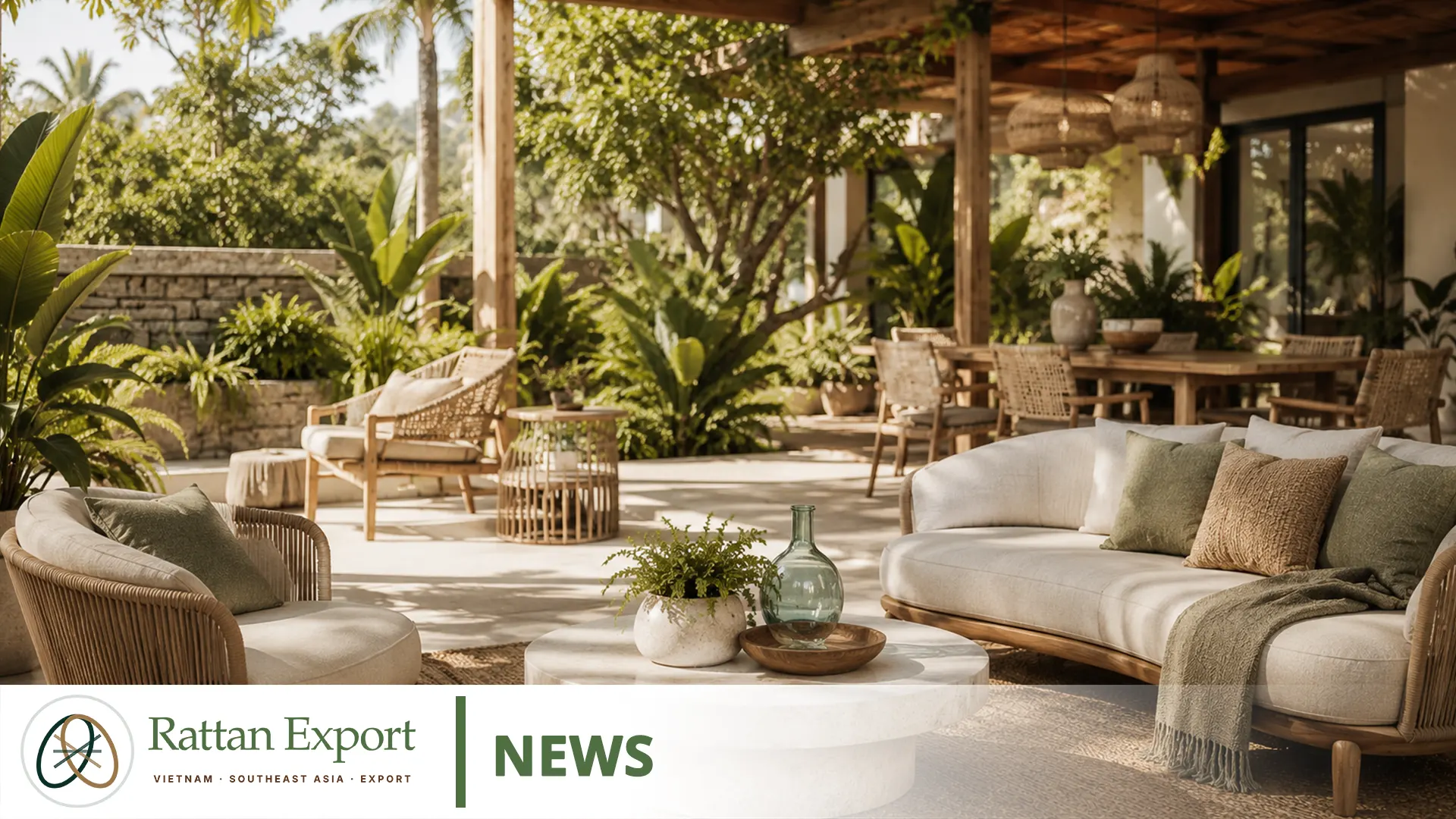
Outdoor furniture entering 2026 is moving toward a more layered design language in which mixed materials, softer silhouettes and tactile natural textures increasingly work together rather than appearing as separate trends. Product launches around the January design calendar show outdoor collections borrowing more comfort, visual softness and material richness from interior furniture while still requiring the durability, cleanability and weather resistance expected outside. For international buyers, this creates opportunities for more differentiated collections but also makes sourcing more complex. A chair may now combine an aluminium or steel structure, timber details, woven fibre, outdoor textile and stone or concrete elements in a single SKU, meaning design evaluation has to be matched by more disciplined material, quality and packaging control.
January 2026 Design Launches Point Toward Softer Outdoor Living
Several product launches surrounding Maison&Objet Paris illustrate the direction. Ethnicraft's Outdoor 2026 collection introduced its first modular outdoor sofa, the Monocle, described around sculptural flexibility and indoor-level comfort for open-air living. The same collection added the Safari lounge chair with a removable durable seat cover and expanded the outdoor Blend table concept using a galvanised bronze-coated steel base with hand-finished concrete top options.
EZEÏS presented its MARAMA outdoor collection using aluminium tubing and outdoor upholstery, translating its design inspiration into light and airy forms. Meanwhile VICAL's January Maison&Objet presentation placed curves at the centre of its visual language, with arches, winding lines and sofas defined by sinuous rounded contours. Its material mix included natural linen, travertine and recycled natural wood alongside lacquered surfaces and other decorative materials.
These examples should not be read as a claim that every outdoor collection will become curved or multi-material. They do, however, show a noticeable shift away from the idea that outdoor furniture must look rigid, purely functional or materially simple.
Mixed Materials Are Becoming a Design System
The important trend is not merely the use of more materials. It is the deliberate assignment of different functions to different materials. Metal can provide a thin, strong structural frame. Timber can bring warmth to armrests or table surfaces. Woven material can soften the visual identity. Outdoor fabric can deliver comfort. Ceramic, stone or concrete can add weight, tactility and perceived permanence.
| Material Role | Typical Outdoor Function | Buyer Consideration |
|---|---|---|
| Aluminium / steel | Structural frame, legs or table base | Corrosion protection, welding and coating quality |
| Wood | Frame, armrest, tabletop or decorative element | Species, moisture, finishing and outdoor suitability |
| Rattan-style or fibre weave | Seat, backrest or visual surface | Natural versus synthetic material, tension and replacement |
| Outdoor textile | Cushions, upholstery and removable covers | UV exposure, drying, cleaning and colour stability |
| Concrete / stone / ceramic | Tabletops and accent surfaces | Weight, edge protection and shipping damage risk |
For sourcing teams, the finished product should therefore be treated as a material system rather than described with a single label. Calling a chair simply “rattan furniture” may hide the fact that the structural frame is steel, the visible weave is synthetic fibre and the cushions use a separate outdoor textile. Accurate product data becomes essential for pricing, testing, quality control and buyer communication.
Curves Are Softening the Traditional Outdoor Silhouette
Outdoor furniture has historically relied heavily on straight frames, square modules and simple stacking geometries because those shapes are efficient to manufacture, pack and ship. The 2026 design direction introduces more rounded backs, curved arms, generous lounge proportions and sculptural profiles.
Softer geometry can make outdoor spaces feel more residential and relaxed. It also supports the wider movement toward patios, terraces, resort areas and hospitality gardens that function visually like extensions of indoor living spaces rather than separate utility zones.
For manufacturers, however, curves create practical consequences. Bent metal tubes require consistent radii. Curved timber elements require controlled machining or lamination. Woven surfaces need repeatable tension across non-linear frames. Upholstery patterns become more complex. Large rounded forms can also consume more carton and container volume.
Natural Texture Is Becoming as Important as Natural Material
Another important distinction for 2026 is the difference between a material being natural and a product visually communicating natural texture. Design platforms tracking Mediterranean and indoor-outdoor styles have highlighted raw wood, stone, ceramics and plant fibres including wicker, rattan and cane as sources of tactile, lived-in surfaces, often paired with soft organic shapes.
For a furniture buyer, this means a collection can achieve a natural visual language in different ways. One SKU may use genuine rattan. Another may use weather-resistant synthetic weave that reproduces a natural fibre appearance. A third may combine timber with textured powder-coated metal, outdoor fabric and a stone-like top.
The sourcing question should therefore not stop at appearance. Buyers need to know which surfaces are genuine natural materials, which are engineered or synthetic alternatives and why each material was selected.
Indoor and Outdoor Furniture Are Moving Closer Together
Ethnicraft's description of indoor-level comfort for its new outdoor modular sofa reflects a broader design objective: outdoor furniture increasingly aims to provide the visual softness and comfort previously associated with living rooms.
This does not mean indoor furniture can simply be moved outdoors. Outdoor use exposes products to moisture, ultraviolet radiation, temperature changes, dirt, coastal air in some markets and substantially different maintenance conditions. The challenge is to reproduce the comfort and visual richness of indoor furniture using a construction system that can tolerate outdoor exposure.
That tension is one reason mixed materials are useful. A weather-resistant structural frame can carry softer cushions or woven panels that can be removed, cleaned or replaced separately.
Natural Fibres Give Vietnamese Suppliers a Design Opportunity
Vietnam's manufacturing base has long experience with rattan, bamboo, seagrass, water hyacinth, timber, basketry and hand weaving. The move toward tactile and natural-looking outdoor collections therefore creates a potentially strong design-development opportunity for Vietnamese suppliers.
The strongest opportunity is not simply to add more woven products to a catalogue. It is to integrate craft materials into contemporary product architecture. A metal lounge frame can use a handwoven back panel. A teak or plantation-wood table can include woven dining chairs. A powder-coated aluminium frame can carry natural-looking rope or fibre details. A hospitality collection can combine hard-wearing structural materials with artisan surfaces that create stronger visual identity.
This is especially relevant for ODM development, where buyers may arrive with a mood board rather than a finished engineering specification and expect the supplier to translate the aesthetic direction into manufacturable products.
Natural Rattan and Outdoor Performance Need to Be Distinguished Carefully
Rattan is highly valuable for texture and craftsmanship, but buyers should not assume that every natural-rattan construction is appropriate for permanent outdoor exposure. Performance depends on species, processing, finishing, climate, drainage, maintenance and whether the product is intended for covered or fully exposed use.
For some collections, genuine natural rattan may be better suited to covered terraces, verandas or semi-outdoor hospitality areas. For fully exposed applications, an outdoor-rated synthetic weave over aluminium or another weather-resistant frame may be more practical while retaining a woven aesthetic.
Product descriptions should therefore distinguish clearly between natural rattan, synthetic rattan-style fibre, rope, bamboo and other woven materials rather than treating all textured outdoor furniture as the same material category.
Outdoor Textiles Are Becoming a More Important Part of the SKU
As silhouettes become softer, cushioning and upholstery become more important. That changes both sourcing and after-sales requirements. Cushion construction, filling, cover removability, drainage and drying can influence whether a visually attractive product works in actual outdoor use.
Removable covers, such as the approach highlighted in Ethnicraft's Safari lounge chair, can make cleaning and long-term maintenance easier. For hospitality buyers, the ability to replace covers or cushions separately can also reduce the need to replace the full chair or sofa when the textile component wears faster than the frame.
Factories should therefore treat textile specifications as part of the product's technical file rather than as a late decorative selection.
Mixed-Material Design Makes Quality Control More Complex
A single-material product may have a relatively straightforward QC plan. Mixed-material outdoor furniture creates multiple failure points. Metal coatings can scratch or corrode. Timber can move with moisture. Weaving can loosen. Cushion colours can vary. Adhesive can react to heat. Stone and concrete tops can chip during transport.
Quality plans should therefore be structured by component and interface. The joint between metal and timber can matter as much as either material independently. Drainage around a cushion platform can matter as much as the fabric itself. A woven panel may be durable but fail visually if tension varies from one production lot to another.
Soft Forms Create a Container-Planning Trade-Off
The visual trend toward wider lounge chairs, deep sofas and rounded forms can conflict directly with container economics. Curved backs and arms may create empty space inside cartons. Fully assembled lounge furniture may have poor nesting performance. Stone or concrete components can add substantial weight even when the cubic volume remains moderate.
For B2B buyers importing by 20ft, 40ft or 40HQ container, product development should therefore include loading economics from an early stage.
| Design Choice | Visual Benefit | Container Risk | Possible Response |
|---|---|---|---|
| Deep curved lounge chair | Soft residential appearance | High CBM per unit | Nesting or removable legs |
| Modular sofa | Flexible layouts | Many carton sizes | Standardise module footprints |
| Concrete tabletop | Tactile premium surface | High weight and breakage risk | Separate protected top packing |
| Woven shell | Natural texture | Difficult stacking | Engineer stackability where possible |
| Large cushions | Indoor-level comfort | Consumes container volume | Compression only where technically suitable |
Modularity Can Support Both Design and Commercial Flexibility
Modular outdoor seating is particularly relevant because the same core components can serve residential, hospitality and project configurations. Corner units, middle modules, ottomans and tables can create multiple layouts while allowing buyers to build collections from a controlled number of production components.
For manufacturers, successful modularity requires dimensional discipline. Seat height, cushion thickness, joining hardware and fabric colour must remain consistent across modules. For international buyers, modular programmes also make replacement and repeat orders more manageable when component codes remain stable.
Hospitality Buyers Need More Than Attractive Photography
Hotels, resorts, restaurants and project buyers may be attracted by softer forms and natural surfaces, but their operational requirements are demanding. Furniture can face frequent movement, repeated cleaning, heavy usage and more exposure than a typical residential terrace.
Project sourcing should therefore evaluate cleanability, replacement components, cushion management, frame repair, surface maintenance and the availability of repeat-order finishes. A beautiful mixed-material product can become expensive if one minor component cannot be replaced after the first season.
2026 Creates Stronger ODM Opportunities for Vietnam
The move toward mixed materials gives manufacturers with several production capabilities a stronger role in product development. A supplier network able to combine metal fabrication, timber processing, weaving, stone or concrete components and sewing can help buyers create more differentiated collections than a factory limited to one material family.
The challenge is coordination. Colour standards, tolerances, lead times and MOQ may differ between material suppliers. ODM programmes should therefore start with an accurate bill of materials and a clear definition of primary, structural, secondary and decorative materials.
What International Buyers Should Ask Suppliers
- Which material carries the structural load and which materials are decorative?
- Is the woven material natural rattan, bamboo, rope or synthetic fibre?
- Is the SKU intended for covered outdoor use or full weather exposure?
- How are metal components protected for the intended environment?
- What timber species and finish are used?
- Are cushion covers removable and replaceable?
- How does water drain from upholstered seating?
- Can damaged woven panels, cushions, glides or hardware be replaced independently?
- What are the final packed dimensions and CBM?
- How many units fit in 20ft, 40ft and 40HQ containers?
- Can rounded products nest or partially knock down without reducing durability?
- Can the factory maintain the same materials and colours for repeat hospitality orders?
What This Means for Rattan Export Vietnam Buyers
The 2026 outdoor direction aligns closely with the multi-material sourcing structure being developed by Rattan Export Vietnam. Buyers increasingly need to search beyond a single category such as “rattan furniture” and evaluate how rattan, bamboo, wood, metal, fabric, stone-like materials and other components work together inside the finished SKU.
Our developing product catalogue is structured around supplier-linked products and clearer classification of primary and secondary materials. Buyers can also review our approach to quality and compliance, learn more about Vietnam sourcing and export, or submit product references, quantities, destination markets, material preferences and 20ft, 40ft or 40HQ requirements through the wholesale inquiry.
The strongest outdoor collections of 2026 are unlikely to be defined by one fashionable material. The more important direction is the combination of comfort, softer geometry, tactile surfaces and fit-for-purpose engineering. For Vietnamese suppliers, that creates room to combine craftsmanship with industrial materials. For international buyers, it increases the importance of accurate specifications, outdoor-performance evaluation and container planning before a visually appealing concept becomes a commercial order.
Sources and Data References
- Ethnicraft, Outdoor 2026 collection press material and Maison&Objet presentation, January 2026.
- EZEÏS, MARAMA outdoor collection announcement, 5 January 2026.
- VICAL, Maison&Objet January 2026 presentation on enveloping curves, natural linen, travertine and recycled natural wood.
- Maison&Objet, January 2026 design coverage of organic forms and combinations of wood, natural stone and metal.
- Archiproducts, 2026 design-style guidance covering outdoor living, plant fibres, tactile natural surfaces and soft organic forms.